

Topic hub
Central European food
Pierogi and borscht can be vegetarian and Halal; bigos is often pork stew and Haram; goulash needs Halal beef.
- Order cheese/potato pierogi and clear borscht
- Skip bigos unless proven non-pork Halal
- Confirm goulash meat
Status overview
How foods in this topic break down by Halal ruling.
- Haram 1
- Halal if verified 3

Frequently asked questions
Is Central European food Halal?
Pork and lard are the default fat and the default meat across Poland, Hungary and the Czech lands, so almost everything needs a question. Goulash, pierogi and borscht are all Halal if verified — each has a Halal-workable version — while bigos is Haram as the dish is defined.
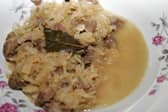
Is bigos Halal?
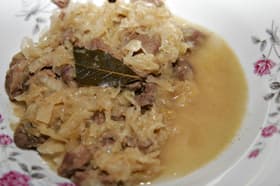
No, not as the dish is made. Bigos is a sauerkraut-and-cabbage stew whose defining ingredient is Polish sausage — kielbasa — usually alongside bacon and pork shoulder. Take the pork out and you have a different dish; any Halal version is a reconstruction rather than bigos.
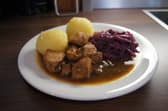
Is goulash Halal?
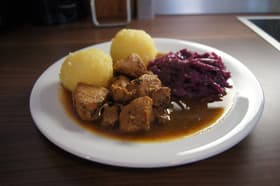
Halal if verified. Goulash is beef, onion and paprika, and beef from Islamic slaughter makes the dish workable. The checks are the fat it was started in — lard is traditional in Hungary — and whether the recipe uses a smoked sausage or a splash of wine alongside the paprika.
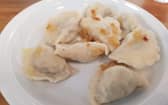
Are pierogi Halal?
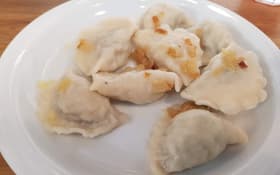
Halal if verified — the dough is flour, water and egg, so the filling decides. Potato-and-cheese (ruskie), sauerkraut-and-mushroom, and fruit pierogi are typically fine once the cheese rennet is checked. Meat pierogi need Islamic slaughter, and many are finished in bacon fat or fried onions cooked in it.
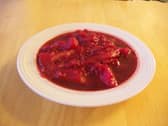
Is borscht Halal?
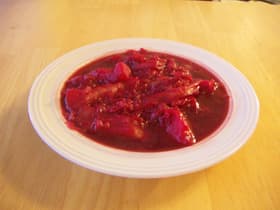
Halal if verified. The beetroot base is plant food and the soured cream on top is dairy. What needs asking is the stock: Ukrainian and Polish borscht is classically built on a pork or bone broth, and some versions add smoked ribs or sausage to the pot.
Related topics
Explore connected ingredients, regions, and certification guidance.