
Is Prawns Halal?
Prawns are shellfish.
Ruling
Scholarly difference
- Applies to
- General ruling; confirm local labels, slaughter, and certification when relevant
- Last reviewed
- 20 July 2026
Check another food
Evidence at a glance
Named sources used for this page. Open the full Sources block for notes and citation numbers.
| Source | Type | Retrieved |
|---|---|---|
| Editorial methodology — isithalal.food isithalal.food | Islamic / scriptural | 2026-07-20 |
Why this ruling
Prawns are shellfish. Many Shafi'i, Maliki, and Hanbali scholars treat them as Halal sea game, but many Hanafi positions do not equate prawns with fish. Because the ruling depends on the school you follow, this page is Scholarly difference rather than a blanket Halal verdict.
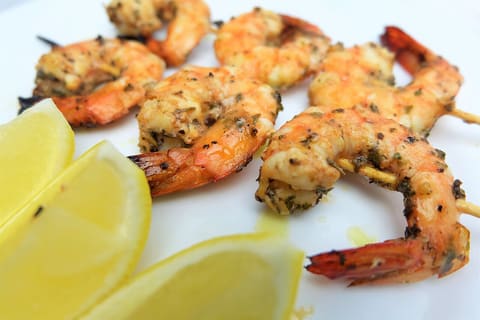
Prawns are elongated marine crustaceans sold worldwide as king prawns, tiger prawns, and cocktail prawns. In shops and restaurants the word often overlaps with shrimp; for Halal purposes the useful question is almost never the English label—it is whether your school treats these crustaceans like fish.
The school split (not a cooking tip)
Many Muslims eat prawns without hesitation because the Shafi'i, Maliki, and Hanbali schools read the Qur'an's permission of sea game broadly. Under that majority Sunni view, prawns are lawful sea creatures; they do not require zabiha slaughter the way sheep or cattle do. That is why prawn curry, grilled prawns, and seafood platters are ordinary Halal-menu items across much of the Arab world, Southeast Asia, and East Africa.
The Hanafi school is the reason this page is not a blanket Halal stamp. Classical Hanafi analysis often limits clear sea permission to fish proper. Prawns and shrimp are crustaceans, so many Hanafi consumers—especially in South Asia and among diaspora communities that follow South Asian Hanafi fatwa culture—avoid them or seek a specific local ruling. Ja'fari (Shia) practice frequently permits shrimp/prawn by particular narration while still excluding crab and some other shellfish, which is another reminder that "seafood" is not one ruling.
This site therefore marks prawns Scholarly difference with depends-on-school, matching the approach used for shrimp and crab: the animal is not pork and not alcohol, but the fiqh answer is not unanimous.
Primary textual reference
The verse most often cited in permissive seafood discussions is Qur'an 5:96 (game of the sea). A widely used English page is quran.com/5/96 (retrieved 20 July 2026). Citing the verse does not settle the Hanafi debate by itself; it explains why majority schools feel comfortable with prawns while Hanafi manuals still distinguish fish from other sea animals.
Kitchen and market distinctions that still matter
Even for someone whose school permits prawns, the plate can fail:
- Shared fryers for breaded scampi next to non-Halal chicken or bacon.
- Wine or brandy in bisques, garlic-butter reductions, and "white wine prawns."
- Pork garnish (bacon-wrapped prawns) or non-Halal shrimp paste in Southeast Asian sauces.
- Surimi "seafood sticks" sometimes sold near prawns—these are fish paste with flavorings, a different product with its own additive questions.
Fresh or frozen plain prawns with salt and water are the cleanest case once your school permits the animal. Flavored, glazed, or restaurant-prepared prawns need the usual label and kitchen questions.
How to decide in practice
- If you already follow a clear school position on shrimp, apply it to prawns.
- If you only eat foods accepted across schools, prefer scaled fish.
- If you eat prawns, verify the cooking fat and sauce the same day you order.
- Do not use a Malaysian or Gulf seafood platter as proof for a Hanafi household that avoids shellfish—or the reverse.
Sources
- Quran.com — Surah Al-Ma'idah 5:96 (retrieved 20 July 2026)
- Related on this site: Shrimp, Crab (same shellfish fiqh pattern)
Where you'll find it
- Grilled or fried king prawns
- Prawn curry and stir-fry
- Prawn cocktail and salads
- Scampi-style breaded prawns
- Sushi and seafood pasta
How to verify
1) Decide which madhhab or local scholar you follow on shellfish vs fish. 2) If you follow a permissive school, prawns themselves need no slaughter—still check sauces, stock, and shared fryers. 3) If you follow a restrictive Hanafi position (or only eat unanimously accepted seafood), choose scaled fish instead. 4) For packaged prawn products, read the label for wine, bacon, or non-Halal seasoning.
- Apply your madhhab on shellfish vs fish—do not mix school answers.
- If school-agnostic and strict, choose scaled fish instead of prawns.
- Check restaurant oil, batter, and alcohol-based sauces separately from the prawn itself.
Conditions for Halal
- Shafi'i, Maliki, Hanbali majority: prawns are permissible seafood; no slaughter required
- Many Hanafi positions: not treated like fish—avoid or follow your local Hanafi authority
- Ja'fari: shrimp/prawn often excepted; other shellfish may still be excluded
- Restaurant prawns: still check batter, garlic butter, wine reductions, and shared oil
Scholarly differences
In everyday English, 'prawn' and 'shrimp' often name the same crustaceans sold in shops; Islamic rulings usually track the shellfish category, not the supermarket label. Majority Sunni schools (Shafi'i, Maliki, Hanbali) permit sea crustaceans under the general permission of sea game (Qur'an 5:96). Classical Hanafi discourse is stricter about non-fish sea creatures—many Hanafi consumers therefore avoid prawns/shrimp or seek a specific fatwa. Ja'fari practice often permits shrimp/prawn by narration while excluding other shellfish. Follow your school consistently rather than mixing answers.
Frequently asked questions
Are prawns the same as shrimp for Halal purposes?
Are prawns Halal in the Hanafi school?
Do prawns need Islamic slaughter (zabiha)?
Can I eat breaded scampi or prawn cocktail at a restaurant?
Is farmed tiger prawn different from wild prawn for Halal?
Where can I read the sea-game verse often cited for seafood?
Sources
Named Islamic, certifier, manufacturer, and regulatory sources used on this page. Inline markers like [1] jump here. Retrieval dates show when we last checked the live URL. Editorial methodology.
Islamic / scriptural
-
Editorial methodology — isithalal.food
isithalal.food
How we classify rulings and cite sources on food pages.
Retrieved: 2026-07-20
People also check
Related ingredients and products for this item.
Browse this topic
Open the parent category hub for more foods in the same group.