
Photo: Food Group from USA · CC BY-SA 2.0
Scholarly differences
Crab is the textbook example of the shellfish divide. Majority Sunni schools: halal under the general permission of sea game. Hanafi: impermissible - crab is not a fish (this is stated explicitly in classical Hanafi texts).
Ja'fari: impermissible - no scales. Watch also for imitation crab (surimi), which is fish-based and halal-relevant for other reasons: it can contain alcohol-processed flavourings and, rarely, non-halal additives.
What decides the answer
-
Maliki, Hanbali: crab is halal - no slaughter required
-
Shafi'i: two views; the stronger one forbids crab
-
Hanafi: impermissible - not a fish
-
Ja'fari (Shia): impermissible - no scales
-
Crab dishes: check for wine/sherry in bisques and sauces, bacon in crab cakes, beer in boils
-
Imitation crab: fish-based (usually pollock) - check flavourings; some carry halal certification
How to verify
- If you follow a school of law or local halal authority, check its ruling on shellfish specifically.
- If you avoid disputed seafood, choose fish instead.
Quick checks
- Crab is Halal in some schools of law and not in others; follow the school or authority you rely on.
- If you avoid disputed seafood, choose fish instead.
- Imitation crab (surimi) is fish, but check its flavourings and binders.
Why this ruling
Crab - from Maryland blues to Alaskan king legs to the soft-shells of summer - is among the most prized seafood on earth, and among the most asked-about foods in halal forums. It is the textbook case of the shellfish divide between the schools of Islamic law.
The Maliki and Hanbali schools permit crab. They read the Quran's permission of 'the game of the sea' (5:96) broadly, and no slaughter is required: asked whether a crab must be slaughtered, Imam Ahmad said no.[4] The Shafi'i school has two views, and its stronger one forbids crab; al-Nawawi wrote that "the frog and the crab are forbidden".[4] For other shellfish that live only in the sea, such as lobster, mussels and squid, the Maliki and Shafi'i schools are permissive.[5] See where the schools differ on food for a side-by-side table.
The Hanafi school disagrees, and not vaguely: classical Hanafi texts name the crab as impermissible. The Hanafi reading limits the sea's permission to fish proper (samak), and a crab is a crustacean, not a fish. South Asian and Turkish Muslims - predominantly Hanafi - inherit this stricter position, which is why 'is crab halal?' produces such different answers across communities. Ja'fari (Shia) jurisprudence also excludes crab: Ayatollah Sistani’s office states it is not permissible to eat marine animals except scaled fish (with shrimp in that permissible category), and shellfish is not Halal.[6]
For those who eat crab, the kitchen deserves its usual scrutiny. Crab bisques are classically finished with sherry or brandy; crab cakes may include Worcestershire (ingredient questions) or bacon; seafood boils sometimes simmer in beer; and sushi 'crab' is often surimi - fish paste whose crab flavouring can be alcohol-processed, though halal-certified surimi exists. Steamed crab with butter and lemon dodges every one of those issues.
Bottom line: follow your school. Maliki or Hanbali - crab is halal, enjoy it cleanly prepared. Hanafi, Shafi'i (on its stronger view) or Ja'fari - the tradition you follow excludes it, and shrimp (for Hanafis per many rulings, and for Shia by clear exception) plus the world of scaled fish remain open.
School split in practice
If you follow Maliki or Hanbali practice, crab meat itself needs no slaughter and is lawful when simply steamed or boiled. If you follow classical Hanafi seafood limits, the stronger Shafi'i view, or Ja'fari scale requirements, crab is off the menu regardless of freshness or price. This site marks crab Scholarly difference because sincere Muslims reach different table decisions, not because crab is pork.
Kitchen traps even when crab is permitted
Bisques classically use sherry or brandy; crab cakes may hide bacon or Worcestershire; seafood boils sometimes use beer. Imitation crab (surimi) is usually pollock-based fish paste—Halal species—but mirin-style flavourings appear on some packs. Ask about sauces and boil liquids separately from the madhhab question.
Ordering and travel
Where crab is commonly eaten, it appears in sushi, steamboat, and hotel buffets; still verify shared fryers and pork stock. Hanafi-oriented travelers who avoid crab can default to scaled fish (salmon, tuna, cod) with cleaner consensus.
Where you'll find it
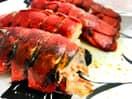
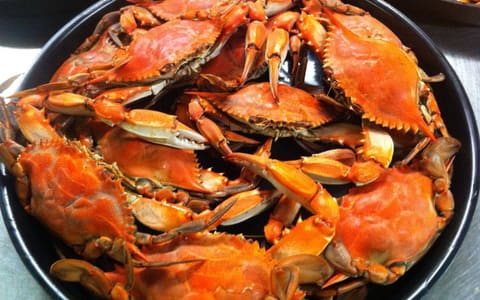
- Steamed crab legs and whole crab
- Crab cakes
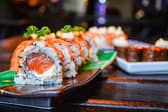
- Sushi rolls (real and imitation crab)
- Crab soups and bisques
- Seafood boils
Frequently asked questions
Is crab halal in the Hanafi school?
Is imitation crab halal?
Are crab cakes and crab bisque halal?
Why does Shia law prohibit crab?
Does crab need any form of slaughter for those who permit it?
Sources
Named Islamic, certifier, manufacturer, and regulatory sources used on this page. Inline markers like [1] jump here. Retrieval dates show when we last checked the live URL. Editorial methodology.
Islamic / scriptural
-
Retrieved
-
IslamWeb 87405 — crabs and school opinions
IslamWeb Retrieved
Names Hanafi / Maliki / Shafi‘i / Hanbali positions on crab (and analogous shellfish).
-
IslamWeb 81789 — sea creatures being Halal
IslamWeb Retrieved
Summarises four-Imam disagreement on non-fish sea animals.
-
Ayatollah Sistani — Fish / seafood Q&A (scales; shellfish not Halal)
Office of Ayatollah Sistani Retrieved
Ja‘fari/Imami: only scaled fish (+ shrimp category); lobster and shellfish not permissible.
Certifier / jurisdiction
-
Retrieved