
Scholarly differences
Scallops are bivalve mollusks, so they follow the shellfish rulings: halal for the majority Sunni schools under the general permission of sea game; impermissible in Hanafi fiqh, which permits only fish; impermissible in Ja'fari fiqh for lack of scales.
SANHA (a Hanafi-oriented authority) accordingly lists scallops as not halaal - a good example of how certifier positions track their school.
What decides the answer
-
Shafi'i, Maliki, Hanbali: scallops are halal
-
Hanafi: not permissible - mollusks are not fish
-
Ja'fari (Shia): not permissible - no scales
-
Restaurant warning: scallops are routinely wrapped in bacon, seared in wine-butter sauces, or plated with pork products
How to verify
- Check the ruling followed by your madhhab or local scholar regarding shellfish.
- If you avoid disputed seafood, choose fish instead of scallops.
Why this ruling
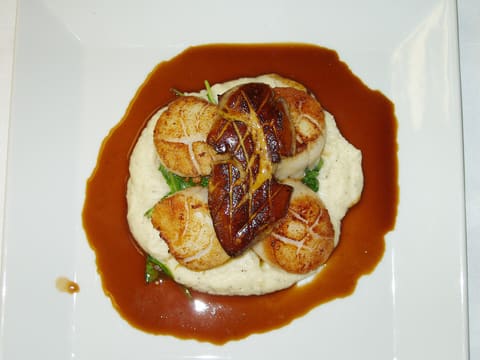
Scallops are the sweet adductor muscle of a bivalve mollusk, seared to golden in restaurants and sliced raw as hotate over sushi rice. Their Halal status is a clean illustration of the shellfish divide—and of why different Halal authorities publish seemingly contradictory answers. The animal itself is not “mystery meat”; the disagreement is madhhab-based.
School map
Under the Shafi‘i, Maliki, and Hanbali schools, scallops are Halal: the Quran’s permission of sea game covers water creatures broadly, mollusks included, with no slaughter requirement. Under the Hanafi school, which limits the permission to fish proper, scallops—being mollusks—are not permissible. That is why SANHA, operating in a Hanafi-influenced context, lists scallops among seafood that is not Halaal, while scholars serving Shafi‘i and Maliki communities readily permit them. Neither side is confused; they are answering from different schools. Ja‘fari (Shia) law also excludes scallops for lack of scales.
English study text for the sea-game verses in Surah Al-Ma’idah is available via quran.com/5 (retrieved 20 July 2026). U.S. seafood identity and labelling for molluscan shellfish sits under FDA seafood guidance (FDA Seafood, retrieved 20 July 2026)—again a food-safety track, not a madhhab ruling.
Restaurant plates vs the mollusk
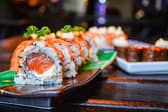
If you follow a permissive school, the restaurant plate often needs more attention than the scallop. Scallops attract Haram companions like few other foods: bacon-wrapped scallops are a menu cliché, pan sauces are built on white wine and butter, and pancetta, chorizo, and prosciutto turn up beside them constantly. Sushi preparations are safer—hotate nigiri is typically just scallop on rice—but confirm no mirin or sake brushing. At home, dry-seared scallops with lemon and a non-wine butter sauce involve nothing questionable for majority-school followers.
Hanafi and Ja‘fari consumers should skip scallops entirely rather than hunt for “Halal bacon-wrapped” workarounds that do not exist. Species prohibition is not cured by lemon garnish.
Buying and labelling
Fresh, frozen, and dry-packed scallops are sold as seafood, not as additive chemicals. “Bay” vs “sea” scallops, wet-processed vs dry-packed, and phosphate treatments are quality and moisture issues—not Islamic status forks for the schools that permit mollusks. Imitation “scallops” formed from fish surimi follow the fish ruling instead; read the label if the price looks too low.
Realistic verification
- Know your school (or your certifier’s school) on shellfish.
- If permitted: order plain seared or nigiri; refuse bacon and wine sauces.
- If not permitted: choose scaled fish (sardines, tuna, etc.).
- Do not treat a restaurant’s “seafood section” as automatically Halal-audited.
As ever with the shellfish family: know your school, then interrogate the recipe. The scallop itself is either Halal or not by madhhab; the bacon around it is Haram for everyone.
Where you'll find it
- Pan-seared scallops
- Scallop sushi and sashimi (hotate)
- Seafood pastas and risottos
- Bacon-wrapped scallops (a haram pairing to avoid)
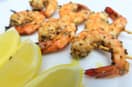
- Grilled scallop skewers
Frequently asked questions
Why does SANHA say scallops are not halal?
Is scallop sushi (hotate) halal?
What should I watch for when ordering scallops?
Do scallops require slaughter?
Sources
Named Islamic, certifier, manufacturer, and regulatory sources used on this page. Inline markers like [1] jump here. Retrieval dates show when we last checked the live URL. Editorial methodology.
Islamic / scriptural
-
Retrieved
-
IslamWeb 87405 — crabs and school opinions
IslamWeb Retrieved
Names Hanafi / Maliki / Shafi‘i / Hanbali positions on crab (and analogous shellfish).
-
IslamWeb 81789 — sea creatures being Halal
IslamWeb Retrieved
Summarises four-Imam disagreement on non-fish sea animals.
Certifier / jurisdiction
-
Retrieved
Hanafi-oriented certifier named in copy as an example of school-linked scallop/shellfish non-permission—not a universal seafood ban.
Regulatory / labelling
-
Retrieved