
What decides the answer
-
Plain salted/unsalted butter from Halal-animal milk
Halal -
Cultured butter listing only milk/cream, salt, and lactic cultures
Halal -
Compound/flavoured sticks (bacon, wine, gelatin): judge the finished product
-
Butter blends with unspecified E471: check the emulsifier source
Where you'll find it
- Spread on bread and toast
- Baking cakes, pastries, and cookies
- Sautéing and finishing sauces
- Clarified butter / ghee for high-heat cooking
Why this ruling
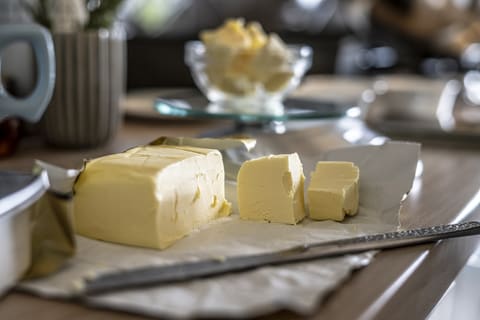
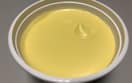
Butter is the semi-solid fat produced by churning cream until butterfat granules coalesce and buttermilk drains away. Typical table butter is about 80% milk fat, with water, milk solids, and optional salt. In Islamic dietary law, that baseline product is Halal: it comes from the milk of Halal animals, and milk does not require zabiha slaughter.
Why plain butter is Halal
Sheep, goats, cows, and buffalo are Halal species. Their milk—and the cream and butter made from it—are lawful food. The Quranic prohibitions that dominate meat discussions (carrion, flowing blood, swine, animals dedicated to other than Allah) do not turn ordinary dairy fat into a doubtful ingredient. An accessible English rendering of that baseline is Qur'an 2:173 on Quran.com (retrieved 25 August 2026); butter is not in that prohibited list.[1]
Codex language defines butter as a milk-fat product obtained from milk or cream (FAO/WHO Codex Standard for Butter CXS 279-1971, retrieved 25 August 2026). Those standards confirm butter is a dairy commodity, not a meat extract, and they do not document how often any factory uses animal enzymes or shares a line with lard.[2]
Cultured or “European-style” sticks that list only cream, salt, and lactic cultures remain ordinary dairy. Animal rennet and pepsin are not normal cultured-butter ingredients.
Compound and flavoured products
Keep these off the plain-stick ruling:
- Compound / flavoured sticks — garlic-herb butter is usually dairy plus herbs; bacon butter, bourbon butter, and wine reductions are mixed foods.
- Blends and spreads — “butter blend” tubs may add vegetable oils plus E471 mono- and diglycerides from an unnamed fat source.
- If a compound pack actually lists animal enzymes — uncommon on table butter; follow the rennet source split (porcine Haram; microbial Halal; Halal-slaughtered animal Halal; conventional slaughter is a scholarly difference, and certifiers may be stricter) rather than guessing.
Ordinary salted butter does not need a certificate.
Butter vs lookalikes
| Product | Typical base | Halal note |
|---|---|---|
| Butter | Milk fat | Halal when plain |
| Ghee / clarified butter | Milk fat | Halal when plain |
| Margarine | Plant oils + emulsifiers | Check emulsifier source; not automatically Halal or vegan |
| Lard / shortening | Animal fat | Pork fat is Haram; beef tallow needs slaughter check |
Kitchen and bakery practice
Home baking with unsalted or salted stick butter is one of the simplest Halal fat choices in Western recipes that otherwise call for lard. Croissants inherit the butter ruling plus any egg wash or gelatin glaze on the finished pastry. In hotels, bread-service butter is almost always dairy; steakhouse “butter baste” may include wine or demi-glace—ask about that sauce.
Realistic verification
- Read the ingredient line: milk/cream ± salt is the cleanest pack.
- Treat flavoured compound butters like any sauce—full ingredient audit.
- When a product claims a Malaysian Halal mark, you can cross-check the claim via JAKIM MYeHALAL (retrieved 25 August 2026); the portal is not a formula for uncertified butter.[3]
Bottom line: Butter from Halal-animal milk is Halal dairy fat. Verify compound flavours and restaurant finishing butters; do not treat margarine or lard as the same ingredient.
How to verify
- Prefer single-ingredient or salt-only butter from cow, sheep, goat, or buffalo milk—no certification needed.
- Treat bacon, wine, bourbon, or gelatin compound sticks as mixed foods and read those labels.
- In restaurants, ask whether a finishing ‘butter’ is plain dairy or a compound with wine, bacon, or meat stock.
- Do not treat margarine or animal shortening as butter—see the margarine page.
Frequently asked questions
Does butter need Islamic slaughter?
Is margarine the same ruling as butter?
Is clarified butter or ghee Halal?
What about restaurant ‘butter’ on steaks or seafood?
Can lactose-intolerant Muslims use butter?
Scholarly view
Classical fiqh treats milk and butterfat from Halal livestock as permissible; there is no slaughter requirement for dairy. Codex CXS 279-1971 defines butter as a milk-fat product from milk or cream—identity, not a Halal certificate. Qur'an 2:173 lists carrion, blood, and swine; plain dairy butter is not in that list.
Sources
Named Islamic, certifier, manufacturer, and regulatory sources used on this page. Inline markers like [1] jump here. Retrieval dates show when we last checked the live URL. Editorial methodology.
Islamic / scriptural
-
Qur'an Retrieved
Baseline prohibitions (carrion, blood, swine); plain dairy butter is not in that list.
Certifier / jurisdiction
-
Portal Halal Malaysia (MYeHALAL)
JAKIM Retrieved
Public directory when a Malaysian Halal mark is claimed on the pack—not evidence of how uncertified butter is made.
Regulatory / labelling
-
Codex Standard for Butter (CXS 279-1971)
FAO/WHO Codex Alimentarius Retrieved
Identity standard for butter as a milk-fat product—not a Halal certificate and not a survey of enzyme use.
Halal-conscious recipes
A substitution-led recipe that uses this analysis.