
Is Vegetable Oil Halal?
Yes — this one is Halal.
"Vegetable oil" names a plant source by definition, so the animal question does not arise: an oil blended with animal fat could not carry that name.
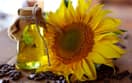
Photo: Rare Grace · CC BY-SA 4.0
What decides the answer
-
"Vegetable oils" followed by named origins
Halal, and you know which oils -
"Vegetable oil" with no origin list on an EU pack
ask the manufacturer which plants -
"Shortening" or unqualified "fat" on a non-EU pack
verify the source before assuming plant -
Fully or partly hydrogenated vegetable oil
still plant, hydrogenation is a processing declaration -
Blend marked "in varying proportions"
the recipe can change between batches
Where you'll find it
- Frying oils and cooking blends
- Biscuits, pastry, and baked goods
- Margarines and spreads
- Crisps and snacks
- Chocolate coatings and fillings
Why this ruling
"Vegetable oil" looks like the kind of vague declaration this site usually tells you to treat with caution. It is not — and the reason is worth being precise about, because the same instinct that makes a shopper wary of flavourings points the wrong way here.
The word already excludes the thing you are worried about
A fat blended with tallow or lard cannot lawfully be sold as vegetable oil. The term is a source declaration, and it declares a plant. So the category that makes an unnamed fat doubtful is ruled out by the name itself, and the default principle of permissibility applies without complication (IslamQA 231261, retrieved 25 August 2026).[2]
That is the difference between this and a genuinely opaque term. Flavourings hides what its components are. Vegetable oil describes them — just not narrowly.
What the label is required to tell you
The remaining question is which plants, and EU law answers it. Refined vegetable oils may be grouped under "vegetable oils" only when that is “followed immediately by a list of indications of specific vegetable origin,” which “may be followed by the phrase ‘in varying proportions’” (Regulation (EU) No 1169/2011, Annex VII Part A, retrieved 25 August 2026).[1]
Two practical consequences:
- The origin list is not optional. If an EU pack groups oils, the plants must be named right there. Read that list, not the heading.
- "In varying proportions" is a real disclosure. It tells you the ratio between the named oils moves between batches, usually with commodity prices. Every oil is still named — only the mix changes — so nothing unknown enters the product.
The same rule requires hydrogenated oils to be declared as fully or partly hydrogenated. That is a nutrition disclosure about trans fats, not a source one; the oil stays a plant oil either way.
The wording that does deserve caution
Not every pack follows EU rules. On older stock and non-EU imports you will still meet:
- "Shortening" — historically a catch-all that has covered animal fats as well as plant ones.
- "Edible fat" or bare "fat" with no origin given.
These are the declarations to query, and the reason is precisely that they do not say vegetable. If you want the contrast, lard is what an unqualified fat declaration can turn out to be.
In a finished product
Vegetable oil resolving cleanly rarely finishes the job, because it usually appears beside things that need their own reading — E471 mono- and diglycerides in a margarine, or emulsifiers and milk solids in a chocolate coating. The oil is settled. Keep going down the list.
How to verify
- Treat vegetable oil as plant-sourced and Halal.
- Read the origin list that must follow the grouped term to see which oils are actually in it.
- Note "in varying proportions" — the blend can change between batches.
- Check separately whether the oil is declared as fully or partly hydrogenated.
Quick checks
- The word vegetable excludes animal fat by definition.
- The origin list beside it names the actual oils.
- Unqualified "shortening" is the wording that needs checking.
Frequently asked questions
Is vegetable oil Halal?
Then why does the label list several oils after it?
What does "in varying proportions" mean?
Is hydrogenated vegetable oil still Halal?
What about a pack that just says "shortening"?
Scholarly view
The word vegetable is itself the answer to the animal question. A fat blended with tallow or lard could not lawfully be declared as vegetable oil, so the category that would make an unnamed fat doubtful is excluded by the name.
That is a different situation from a genuinely opaque term such as flavourings, where the declaration hides components rather than describing them. What remains is a specificity question rather than a permissibility one: which plants, and in what proportions.
EU law answers it by requiring the grouped term to be followed by the specific origins, so a shopper who wants to know is not left guessing. Where caution is genuinely warranted is an older or non-EU pack that says only shortening or vegetable fat with no origin list, and historically that wording has covered animal fats in some markets.
Sources
Named Islamic, certifier, manufacturer, and regulatory sources used on this page. Inline markers like [1] jump here. Retrieval dates show when we last checked the live URL. Editorial methodology.
Islamic / scriptural
-
IslamQA 231261 — Everything Is Permissible in Islam Until Proven Prohibited
IslamQA Retrieved
Cites Ibn Taymiyah that in principle all things are permissible and pure, and al-Uthaymeen that the basic principle for foods and drinks is permissibility absent evidence to the contrary.
Regulatory / labelling
-
Regulation (EU) No 1169/2011 — Annex VII, Part A
European Parliament and Council Retrieved
Point 8 permits refined vegetable oils to be grouped as "vegetable oils" only when followed immediately by a list indicating the specific vegetable origin, optionally with "in varying proportions", and requires hydrogenated oils to be declared as fully or partly hydrogenated. Labelling law, not a Halal ruling.
People also check
Related ingredients and products for this item.