Photo: Rare Grace · CC BY-SA 4.0
Why this ruling
Palm oil is pressed from the fruit of the oil palm, a tree native to West Africa and now grown mostly in Indonesia and Malaysia. It is the most widely used vegetable oil in the world, and as a plant fat it is Halal.[2][1]
The forms you will meet
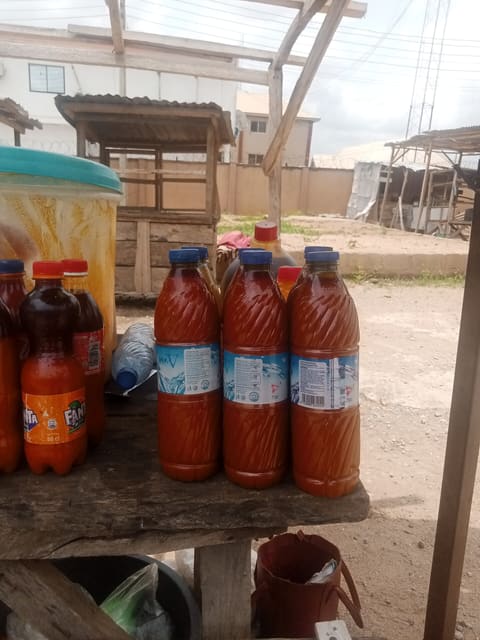
- Red palm oil – unrefined, deep orange, with a strong flavour. It is a staple of West African cooking, in palm nut soup, stews and jollof; see fufu and jollof.
- Refined palm oil – pale and neutral, the version in processed foods.
- Palm olein and palm stearin – the liquid and solid fractions, used for frying and for firm fats.
- Palm kernel oil – from the seed rather than the fruit, closer to coconut oil.
Where it is used
Palm oil is solid at room temperature and does not go rancid quickly, so it is used in margarine and spreads, biscuits, pastry, chocolate spreads, instant noodles, crisps, ice cream and frying oils. Under EU and UK labelling rules, "vegetable oil" must name the plant, so you will see "palm oil" or "vegetable fat (palm)" on the ingredient list.[3]
Why palm matters for emulsifiers
Many additives are made from fatty acids, and their Halal status depends on where that fat came from: E471 and other emulsifiers, stearates and glycerol. Palm oil is the most common plant source for all of them. When a brand says its emulsifier is "vegetable" or "from palm", that is what settles the question.
Sustainability is a separate question
Palm oil is criticised for deforestation and plantation practices, and some people avoid it or look for certified sustainable palm oil for that reason. That is an ethical and environmental choice. It does not make the oil Haram.
The product still decides
Palm oil in a product is fine; the product's other ingredients still need their own check. For example, see Nutella for a spread, margarine for spreads in general, and chocolate.
How to verify
- Palm oil / palm olein / palm stearin → Halal plant fat.
- “Vegetable oil” blends may include palm—still plant.
- Open Nutella, biscuit and snack pages for emulsifiers and milk.
Quick checks
- Palm oil, palm kernel oil and palm fat are Halal.
- Emulsifiers such as E471 made from palm are plant-based; ask the maker when the label does not say.
- Biscuits, spreads and instant noodles still need their other ingredients checked.
Frequently asked questions
Is palm oil Halal?
Is palm kernel oil Halal?
Why does palm oil matter for E471?
Is palm oil Haram because of deforestation?
Sources
Named Islamic, certifier, manufacturer, and regulatory sources used on this page. Inline markers like [1] jump here. Retrieval dates show when we last checked the live URL. Editorial methodology.
Islamic / scriptural
-
Qur'an Retrieved
Eat of what is lawful and good on the earth: food is permitted unless a text forbids it.
Regulatory / labelling
Context / background
-
Wikipedia Retrieved
Culinary identity: Edible vegetable oil from the fruit pulp of the African oil palm. Identity context, not a Halal certificate.