
Is Glycerin (Glycerol, E422) Halal?
It depends on what the label says.
Glycerin (glycerol, E422) can be plant (palm/soy/coconut), synthetic, or animal-fat derived.
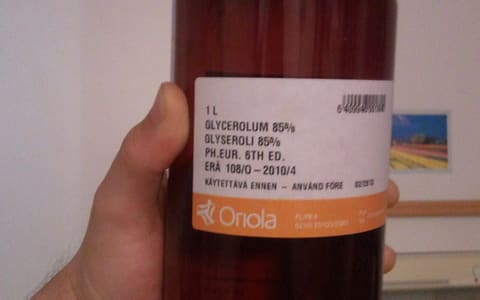
Photo: Lauri Rantala · CC BY 2.0
Additive identity
Possible source pathways
The finished molecule can be identical across feedstocks. The Halal ruling follows the pathway, not the code alone.
E422 Possible source pathways
- plant Halal Typical Palm, soy, or coconut glycerol.
- synthetic Halal Synthetic glycerol is Halal.
- animal Halal if verified Tallow glycerol follows slaughter; pork is haram.
- undisclosed Halal if verified Typical Bare glycerin/E422 on a pack is mashbooh until vegetable or Halal-certified.
How to verify
- Prefer packs that say 'vegetable glycerin' or 'veg. glycerol', or carry a Halal mark.
- For supplements, check the COA or brand FAQ for palm/soy vs tallow.
- Ask one question: plant, animal, or synthetic?
- USP grade is purity—not a Halal feedstock claim.
What decides the answer
-
Vegetable / plant glycerin
Halal -
Synthetic glycerin from non-animal routes
Halal -
Animal glycerin from Halal-slaughtered fat — if certified
Halal -
Unspecified glycerin / E422
Halal if verified -
Pork or non-zabiha animal glycerin
Haram
Why this ruling
Glycerin = glycerol = E422. It is not automatically Halal or Haram. Plant (“vegetable glycerin”) and non-animal synthetic routes are Halal; pork or non-zabiha animal glycerin is Haram; unlabeled glycerin/E422 is Halal if verified until the feedstock is known.
Name map
| Label wording | Same substance? |
|---|---|
| Glycerin | Yes |
| Glycerol | Yes (preferred chemical name) |
| E422 | Yes (EU additive code) |
| Vegetable glycerin / veg. glycerol | Same molecule + plant feedstock claim |
Source map
| Route | Halal status |
|---|---|
| Palm, soy, coconut (“vegetable glycerin”) | Halal |
| Synthetic (propylene-derived USP glycerin, non-animal) | Halal |
| Beef/sheep fat from Halal slaughter | Halal if certified |
| Lard / non-zabiha tallow | Haram |
| Undisclosed | Halal if verified |
Industrial glycerin is often a by-product of soap or biodiesel production. Plants can switch fat streams; that is why Halal programs require supplier declarations rather than assuming “glycerin = plant” from chemistry textbooks alone.[5]
Regulatory naming
U.S. food-ingredient literacy for glycerin/glycerol sits under FDA’s ingredients framework.[2] In Europe, glycerol is authorised as E422.[3] Those listings confirm a permitted humectant; they do not print palm vs tallow on every consumer pack—hence the Halal if verified default when the label is silent.
Label cues that actually help
“Vegetable glycerin” is the clean consumer phrase. EU packs may show only E422. U.S. supplements sometimes bury glycerin in inactive ingredients without origin. Kosher marks can help filter pork routes but are not identical to Halal audit scope. Pair this check with E471 (mono- and diglycerides) when both appear on the same sweet or bakery label—related fat chemistry, separate line items.
Realistic verification
- Prefer packs that print vegetable glycerin or carry a Halal mark.
- For daily supplements, email once: plant, animal, or synthetic? Also ask about capsule shells (gelatin).
- Do not assume “USP glycerin” means plant.
- When a protein bar lists both glycerin and mono- and diglycerides, clear each line separately.
Where you'll find it
- Cakes, bars, and soft sweets (moisture retention)
- Toothpaste, mouthwash, and cough syrups
- Food flavour solvent and capsule fills
- Some frostings, fillings, and dried fruit
Frequently asked questions
Is glycerin Halal?
Is glycerol Halal?
Is glycerin Haram?
Is E422 the same as glycerin?
Does 'USP glycerin' mean it is Halal?
Scholarly view
Chemically, glycerol is the same molecule regardless of feedstock. Fiqh and certifier practice track the source fat or the synthetic route. Vegetable glycerin and USP synthetic glycerin from non-animal routes are treated as Halal. Animal glycerin from lard or non-zabiha tallow is not. Soap/biodiesel by-product streams can historically mix fats—Halal programs require supplier declarations rather than assuming 'glycerin = plant.'
Sources
Named Islamic, certifier, manufacturer, and regulatory sources used on this page. Inline markers like [1] jump here. Retrieval dates show when we last checked the live URL. Editorial methodology.
Certifier / jurisdiction
-
IFANCA Halal Product Directory
IFANCA Retrieved
Use finished-product certificates when glycerin feedstock is covered under a branded Halal program.
-
Portal Halal Malaysia (MYeHALAL)
JAKIM Retrieved
Finished-product / supplier audit trails when glycerin is covered by a Halal mark.
-
Retrieved
Ingredient-class / E-number consumer guidance when named; homepage is not a product certificate.
Regulatory / labelling
-
U.S. eCFR Retrieved
U.S. identity / GRAS or colour-additive listing—not a Halal ruling.
-
FDA Food Ingredients & Packaging
U.S. Food and Drug Administration Retrieved
Label literacy for glycerin/glycerol identity; does not disclose feedstock on every pack.
-
-
European Commission — Food additives
European Commission Retrieved
EU food-additives framework; glycerol is authorised as E422. Identity/authorisation context—not a Halal ruling.
People also check
Related ingredients and products for this item.

Browse this topic
Open the parent category hub for more foods in the same group.