

Additive identity
Possible source pathways
The finished molecule can be identical across feedstocks. The Halal ruling follows the pathway, not the code alone.
E471 Possible source pathways
- plant Halal Typical Palm, soy, or sunflower oils reacted with glycerol.
- animal Halal if verified Tallow or lard glycerides. Pork or non-zabiha fat is haram.
- undisclosed Halal if verified Typical Most packs only say mono- and diglycerides or E471.
How to verify
- Look for a Halal certification mark on the product.
- Look for a vegetarian or vegan claim, or "vegetable mono- and diglycerides" in the ingredients.
- If neither is there, ask the manufacturer whether its E471 is plant-based; large brands answer this routinely.
- With no answer, treat the product as doubtful and choose a certified alternative if it matters to you.
What decides the answer
-
Plant (palm, soy, sunflower) or synthetic E471
Halal -
E471 in a Halal-certified product
Halal -
Vegetarian or vegan claim on the pack
Halal -
Source not stated, no certificate
Halal if verified -
E471 from pork, or from animals not slaughtered Islamically
Haram
Why this ruling
On EU and many international labels this additive appears as E471;[7] US labels more often spell out "mono- and diglycerides",[5] Australian and New Zealand labels write "emulsifier (471)", and ingredient suppliers call the purest form glyceryl monostearate (GMS). All of these are this page's topic. There is no separate ruling for the code and the words.
What they are
Mono- and diglycerides of fatty acids are the workhorse emulsifiers of industrial food. They are made by joining fatty acids to glycerol, giving a molecule with one end that holds on to fat and one that tolerates water. That lets bread stay soft for days, margarine stay blended, ice cream stay smooth, and chocolate coatings stay glossy. They are in more products than any other additive with a Halal question mark, which is why this one is worth understanding once.
Where the question comes from
The chemistry does not care about the source. The fatty acids can come from palm, soy, rapeseed or sunflower oil (most of world supply), from synthesis, or from animal fat, meaning beef tallow or pork lard. The finished molecule is the same, the label usually says only "mono- and diglycerides", and that is the whole issue.
| Source | Halal? |
|---|---|
| Plant oil or synthetic | Yes |
| Fat from Halal-slaughtered cattle, in a certified product | Yes |
| Pork fat, or fat from animals not slaughtered Islamically | No |
| Not stated, no certificate | Check |
Plant and synthetic E471 are Halal. E471 from the fat of Halal-slaughtered cattle is Halal, and certified products do use it.[4] E471 from pork, or from animals not slaughtered Islamically, is Haram in the rulings we cite; arguments that the fat is chemically transformed are discussed academically, but certifiers do not rely on them. Darul Ifta Birmingham rules the same way: E471 not from an animal source is Halal, and E471 whose origin is unstated and in doubt should be avoided.[1] E471 with no stated source is doubtful (mashbooh), and is the example scholars usually give when teaching that category.
How to settle it
The doubt is easier to resolve than the code's reputation suggests:
- A Halal certificate on the product means the emulsifier's source was audited. That settles it.
- A vegetarian or vegan claim means the maker states no animal fat was used, and such a claim would be misleading otherwise. Most people accept it as enough.
- "Vegetable mono- and diglycerides" or "(plant origin)" on the label says it outright.
- Asking the manufacturer works. Large brands are asked the plant-or-animal question constantly and answer it, often with a standard reply.
With none of these, practice varies. The cautious leave the product; others rely on the fact that palm and soy supply dominates. Both sides agree a certificate is better than a guess. Codex materials give the international naming context.[6]
Related additives
The family around it raises the same question: E472 is made from E471 with added acids, and E470 and E476 also start from fatty acids. Lecithin (E322), a common alternative emulsifier, is almost always soy or sunflower, and glycerin (E422) has its own source question.
A practical approach
Treat E471 with a system rather than worry. Check the handful of staples you buy every week once (bread, spread, ice cream, peanut butter), prefer certified products where it matters to you, and read the letters on each new label as a question with three quick ways to an answer, not as a verdict.
Where you'll find it
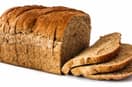
- Breads and baked goods (crumb softener)
- Margarine and spreads
- Ice cream and whipped toppings
- Chocolate and candy coatings
- Peanut butter, coffee creamers, and countless processed foods
Frequently asked questions
What are mono- and diglycerides?
Why is E471 the most flagged additive in Halal guides?
Does "vegetable mono- and diglycerides" on a label settle it?
Is most E471 actually animal-based?
Is E471 from Halal-slaughtered beef fat acceptable?
Is emulsifier 471 the same as E471?
Is emulsifier 471 Halal in Australia?
Does a kosher symbol mean E471 is Halal?
Does 'vegan' or 'suitable for vegetarians' mean the E471 is Halal?
Which foods usually contain E471?
Scholarly view
E471 is the highest-volume emulsifier in processed food and the most-asked-about E-number. It can be made from palm, soy and other plant oils (most supply) or from animal tallow or lard. Verified plant or synthetic E471 is Halal; E471 from Halal-slaughtered animal fat is Halal; E471 from pork or non-zabiha fat is Haram in the majority view.
Some scholars discuss chemical transformation (istihala) arguments, but certifiers do not rely on them. Undisclosed E471 is doubtful (mashbooh) until a certificate or manufacturer statement resolves it.
Sources
Named Islamic, certifier, manufacturer, and regulatory sources used on this page. Inline markers like [1] jump here. Retrieval dates show when we last checked the live URL. Editorial methodology.
Islamic / scriptural
-
Darul Ifta Birmingham (via IslamQA.org) Retrieved
Hanafi. Shaykh Sayeedur Rahman: E471 is normally made from soya bean oil but also from animal sources; if it is not from an animal source it is Halal, and if its origin is in doubt and not stated on the packaging it should be avoided.
Certifier / jurisdiction
-
Portal Halal Malaysia (MYeHALAL)
JAKIM Retrieved
Finished-product Halal marks imply emulsifier chains were audited for that product.
Regulatory / labelling
-
EFSA — Re-evaluation of mono- and di-glycerides of fatty acids (E471)
European Food Safety Authority Retrieved
Substance identity—not a Halal certificate for a finished pack.
-
21 CFR § 184.1324 glyceryl monostearate
U.S. eCFR Retrieved
U.S. identity / GRAS or colour-additive listing—not a Halal ruling.
-
FDA food ingredients / packaging
U.S. Food and Drug Administration Retrieved
Label literacy for US packs spelling out mono- and diglycerides.
-
-
European Food Safety Authority Retrieved
EU E-number context for E471; not a Halal certificate.
People also check
Related ingredients and products for this item.

Halal-conscious recipes
A substitution-led recipe that uses this analysis.
Browse this topic
Open the parent category hub for more foods in the same group.