
Is Goat Halal?
It depends on what the label says.
Domestic goat (Capra aegagrus hircus) is a Halal livestock species.
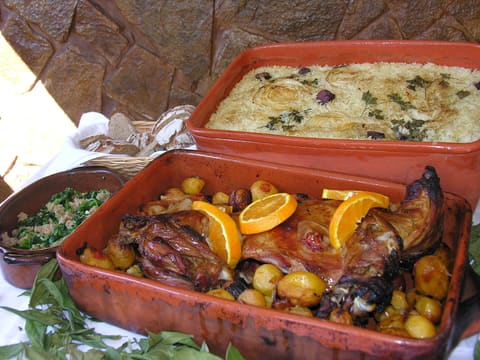
Photo: MunParedes · CC BY-SA 4.0
How to verify
- Require Islamic slaughter certification or a trusted Halal butcher—do not assume supermarket goat is zabiha.
- Ask about stunning and whether the animal was alive at the cut if that matters to your school.
- In restaurants, verify meat supply plus shared knives, grills, and gravy bases.
- For processed goat sausages or ready meals, read labels for wine, pork fat, and non-Halal stock.
What decides the answer
-
Goat species: Halal livestock
-
Requires lawful Islamic slaughter (zabiha) or an accepted scholarly position on the meat source
-
Supermarket non-Halal goat: do not assume permissibility
-
Restaurant goat dishes: verify meat source and shared kitchen practices
-
Processed goat products: still check fat, enzymes, and marinades
Why this ruling
Goat meat—often sold as chevon (adult) or cabrito (young goat)—comes from the domestic goat (Capra aegagrus hircus). It is a staple across South Asia, the Middle East, Africa, the Caribbean, and parts of Latin America, and appears in curries, kebabs, stews, and grilled chops. In Islamic dietary law the species is Halal. The decisive question is almost always how this animal was killed and what touched the meat afterward.
Species vs slaughter
Goats are classic Halal livestock alongside sheep and cattle. Qur'an 5:3 forbids carrion, blood, swine, and animals dedicated to other than Allah, including animals killed by strangling or a violent blow. English text for study is available via quran.com/5/3 (retrieved 20 July 2026). Goat is not listed among prohibited species.
For everyday shoppers the practical rule is:
- Goat as meat → Halal species.
- This pack / this restaurant → depends on slaughter audit, tasmiyah practice per your school, stunning policy, and later ingredients.
That is why this page's status is Halal for the food category with conditions, not a blank check for every goat curry on earth.
Industrial meat and certification
National food-safety systems inspect livestock for hygiene. In the United States, FSIS oversees meat inspection (fsis.usda.gov, retrieved 20 July 2026). Inspection does not equal Halal. Halal marks come from Islamic certifiers who audit slaughter lines—JAKIM in Malaysia (MYeHALAL, retrieved 20 July 2026), and bodies such as IFANCA, HFA, HMC, SANHA, or MUI in other markets.
Machine slaughter and electrical stunning are major fatwa fault lines. If your local scholar requires hand slaughter without lethal stunning, filter certifiers accordingly rather than assuming every green logo is identical.
Goat milk is not this page
This article is about goat meat. Milk from living Halal goats is dairy, not a slaughter question—see milk. Do not transfer a Halal goat-meat certificate onto flavoured goat cheeses or processed dairy without reading those labels (enzymes and rennet still matter for cheese).
Processed goat and restaurants
Once goat leaves the slaughterhouse, new risks appear:
- Marinades with wine, beer, or pork enzymes
- Sausages mixed with non-Halal fat or casing
- Shared grills and knives with pork or non-Halal meats
- Restaurant gravies built on unclear animal stock
A Halal-certified butcher for home cooking is usually simpler than assuming every 'goat special' is zabiha.
Realistic verification
- Prefer certified Halal goat when you lack a known slaughter source.
- Ask restaurants two questions: meat certifier/source, and shared oil or prep surfaces.
- Read sausage and ready-meal labels fully.
- Organic or free-range claims never substitute for zabiha.
- When traveling, reset assumptions—goat supply programs differ sharply by country.
Where you'll find it
- Curries, stews, and biryani
- Grilled kebabs and chops
- Roasts and slow-cooked shoulder
- Ground goat burgers and sausages
Frequently asked questions
Is all goat meat Halal?
What is chevon or cabrito?
Is goat different from lamb for Halal?
Does stunning make goat Haram?
Where is the Qur'anic baseline for forbidden meat?
Scholarly view
There is no classical dispute that goats are a Halal species—unlike debates over some seafood or reptiles. Qur'an 5:3 forbids carrion, blood, swine, and unlawfully killed animals; it does not list goat among prohibited species.
The live question for modern shoppers is slaughter audit, stunning policy, and kitchen cross-contact. Commercial 'goat' on a menu without Halal supply is not automatically zabiha.
Sources
Named Islamic, certifier, manufacturer, and regulatory sources used on this page. Inline markers like [1] jump here. Retrieval dates show when we last checked the live URL. Editorial methodology.
Islamic / scriptural
-
Retrieved
Certifier / jurisdiction
-
Retrieved
Regulatory / labelling
-
Retrieved