
Is Sausage Halal?
It depends on what the label says.
Sausage is Halal only when made from Halal-slaughtered permissible meat, in a Halal casing, without Haram additives.
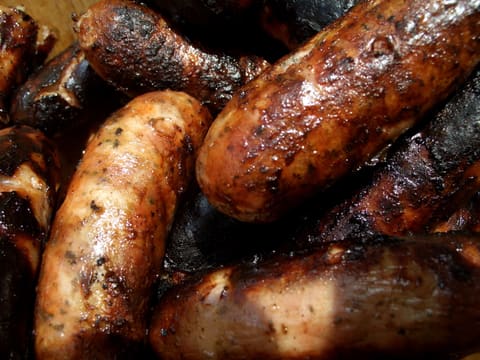
Photo: 彩色琪子 · CC BY-SA 3.0
How to verify
- Reject pork sausages outright.
- For beef/chicken/lamb links, require Halal/zabiha certification—not just species.
- Check casing: hog casing is haram; cellulose or Halal collagen/sheep casing is fine.
- Skip recipes with wine, beer, or unspecified “natural flavors” of meat origin.
- Buy from a trusted Halal butcher or certified brand (Midamar, Al Safa, Crescent, etc.).
Quick checks
- Four checks: species, slaughter, casing, additives.
- “Natural casing” often means hog intestine.
- Uncertified supermarket chicken sausage ≠ Halal.
- Cooking does not purify haram meat or casings.
What decides the answer
-
Certified halal sausage (any permissible meat, verified casing)
Halal -
Pork sausages (most breakfast links, bratwurst, chorizo)
Haram -
Beef/chicken/lamb sausage from conventional slaughter
Not Halal -
Sausage in hog casing — regardless of the filling
Haram -
Recipes using wine or beer (some chorizo, boudin, beer brats)
Haram
Why this ruling
Sausage is one of humanity's oldest processed foods: seasoned ground meat in a casing, fresh or cured, from breakfast links to bratwurst to chorizo. It is also a category where haram components stack up in ways a quick glance never reveals - which is why 'is sausage halal?' has no one-word answer.
Work through the four checkpoints. Species: the majority of Western sausages are pork - breakfast links, most bratwurst, traditional chorizo, andouille - and those are haram outright. Slaughter: a beef or chicken sausage clears the species test but still fails unless the animal was slaughtered Islamically; supermarket 'chicken apple sausage' is not zabiha. Casing: 'natural casing' frequently means hog intestine, which makes even a hypothetically halal filling haram; sheep and beef casings must themselves come from halal slaughter, while cellulose and certified collagen casings are safe. Additives: wine in Spanish-style chorizo, beer in bratwurst recipes, alcohol-based flavour carriers, and occasionally pork gelatin or emulsifiers.
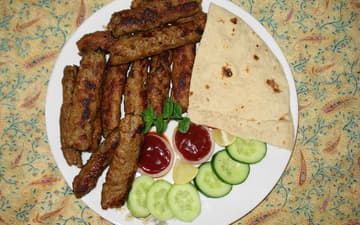
Because every one of those factors is invisible at the meat counter, the practical rule is simple: buy certified, or buy from a Muslim butcher you trust. The certified market is strong - Zabiha Halal dominates Canadian supermarkets, Midamar and Al Safa ship beef and chicken sausages across the US, Crescent Foods makes poultry links, and halal butchers everywhere stuff fresh merguez, Italian-style, and kofta-spiced sausages daily. Merguez in particular - the chili-and-cumin lamb sausage of North Africa - is arguably the best grilling sausage ever made, and it is halal by heritage.
One final note for labels: 'meat', 'meat by-products', and 'natural flavors' in cheap sausages can conceal any species. If a sausage is not certified and the label cannot tell you the species, the slaughter, and the casing, the doubt itself is reason enough to pass.
Buying certified and cooking at home
Western sausage counters stack invisible risks: pork fillings, non-zabiha beef/poultry, hog casings, and beer or wine in speciality recipes. Certified Halal sausages audit the full chain. Merguez (North African lamb) is a classic Halal grilling sausage by heritage. USDA consumer materials on sausage labelling help decode “meat by-products” language: fsis.usda.gov (retrieved 20 July 2026). Compare hot dogs, pepperoni, and salami.
At home, grind zabiha beef or lamb with fennel, chili, and garlic into fresh links or patties using cellulose casings. Hotel breakfast buffets and pizza toppings are where uncertified sausage most often appears—ask or skip. Qur'anic meat rules begin at 5:3: quran.com/5/3 (retrieved 20 July 2026).
Freezer aisle and breakfast buffets
Frozen breakfast sausages and pizza toppings are where uncertified product most often slips into Muslim households. A “chicken” or “turkey” claim only answers species. Ask whether the plant is Halal-audited and whether casings are cellulose or Halal collagen. Hotel and campus breakfast lines rarely have certificates—skip sausage links there unless labelled. For grilling season, keep a pack of certified merguez or Italian-style chicken sausage on hand so guests are not offered a doubtful tray. Cross-check related cured meats on our salami and hot dogs pages when the label language looks similar.
Where you'll find it
- Breakfast links and patties
- Italian sausage in pasta and subs
- Bratwurst and grilling sausages
- Chorizo, merguez, and spiced sausages
- Sausage rolls and stuffing
Frequently asked questions
What makes a sausage haram besides pork meat?
Are sausage casings really made from pork?
Is chicken or turkey sausage from the supermarket halal?
What halal sausages exist for grilling?
Does cooking destroy the haram elements in sausage?
Scholarly view
Four checkpoints decide a sausage's status: species (no pork), slaughter (zabiha), casing (hog casing is haram; sheep/beef casing must be from halal slaughter; cellulose and halal-collagen are fine), and additives (alcohol in flavourings, pork-derived emulsifiers, or wine in recipes like some chorizo). Because all four are invisible at the counter, scholars advise certified products or trusted Muslim butchers.
Sources
Named Islamic, certifier, manufacturer, and regulatory sources used on this page. Inline markers like [1] jump here. Retrieval dates show when we last checked the live URL. Editorial methodology.
Islamic / scriptural
-
Retrieved
Certifier / jurisdiction
-
Retrieved
Regulatory / labelling
-
USDA FSIS — sausages / labelling
Retrieved
People also check
Related ingredients and products for this item.
Halal-conscious recipes
A substitution-led recipe that uses this analysis.