
Additive identity
Possible source pathways
The finished molecule can be identical across feedstocks. The Halal ruling follows the pathway, not the code alone.
E460 Possible source pathways
- plant Halal Typical Botanical identity. No animal tissue is required for standard food grade.
What decides the answer
-
E460–E469
Halal plant cellulose -
Gelatin capsules remain a separate source question
Why this ruling
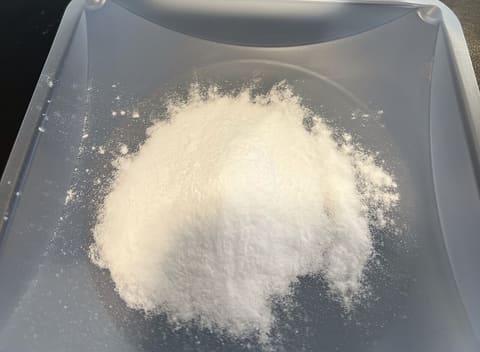
Cellulose (E460) is the fibre that makes up plant cell walls. For food it is purified from wood pulp or cotton, and it can be modified into a range of cellulose ethers, E461–E469. None of them involves an animal, so all of them are Halal.[2][4] EFSA reviewed the whole group together.[1]
The family, by the names on labels
| Code | Name on the label | What it does |
|---|---|---|
| E460 | Microcrystalline cellulose, powdered cellulose | Bulk, anti-caking, fibre |
| E461 | Methylcellulose | Binds and holds shape, especially when hot |
| E463 | Hydroxypropyl cellulose | Film-former and binder |
| E464 | Hydroxypropyl methylcellulose (HPMC, hypromellose) | Vegetable capsules, gluten-free baking |
| E466 | Carboxymethylcellulose, cellulose gum | Thickener in sauces and ice cream |
| E468 | Croscarmellose sodium | Makes tablets break up |
E462, E465 and E469 are rarer variants of the same idea. Certifier E-number lists put the group with the additives that need no source check.[5]
Where you will find them
- Grated and shredded cheese – powdered cellulose stops the shreds clumping.
- Plant-based burgers and sausages – methylcellulose holds the patty together.
- Gluten-free bread – HPMC does part of gluten's job.
- Ice cream, sauces and dressings – cellulose gum adds body and stops ice crystals.
- Reduced-fat and high-fibre foods, as a bulking agent.
- Tablets and capsules – as filler, binder, coating and the capsule shell itself.
Vegetable capsules and gelatin
This is where cellulose matters most to Halal shoppers. A supplement capsule is made either of gelatin, which may come from pork or from non-Halal-slaughtered cattle, or of HPMC. Look for hypromellose, HPMC, vegetable capsule or vegan capsule on the pack. If the capsule is listed as gelatin or bovine gelatin, it is a separate question; see gelatin.
The rest of a tablet still counts: the lubricant magnesium stearate has its own source question; see E470b.
Cellulose does not settle the food
Cellulose in grated cheese is fine, but the cheese itself carries the rennet question; see cheese. Cellulose in a sausage says nothing about the meat. For other plant thickeners, see plant gums, including gum arabic and locust bean gum.
How to verify
- Match E460–E469, cellulose, HPMC, MCC, or CMC.
- Halal.
- Gelatin capsules are a different page.
Quick checks
- Cellulose and the cellulose ethers (E460–E469) are plant fibre: Halal.
- “Hypromellose”, “HPMC” or “vegetable capsule” means a plant capsule, not gelatin.
- Powdered cellulose on grated cheese is fine; the cheese's rennet is separate.
Frequently asked questions
Are HPMC capsules Halal?
Is CMC from animals?
Is cellulose in grated cheese Halal?
Is methyl cellulose in vegan burgers Halal?
Scholarly view
Cellulose is not an animal hydrocolloid. A 'vegetable capsule' claim is the practical Halal tell versus gelatin.
Sources
Named Islamic, certifier, manufacturer, and regulatory sources used on this page. Inline markers like [1] jump here. Retrieval dates show when we last checked the live URL. Editorial methodology.
Certifier / jurisdiction
Regulatory / labelling
-
EFSA — Re-evaluation of celluloses (E460–E469)
European Food Safety Authority Retrieved
Substance identity—not a Halal certificate for a finished pack.
-
Regulation (EC) No 1333/2008 on food additives
European Union Retrieved
Union-list identity—not a Halal certificate.
-
-
-
U.S. Food and Drug Administration Retrieved
US identity / labelling context—not a Halal ruling.
People also check
Related ingredients and products for this item.