
Are Fatty Acid Salts (E470a, E470b) Halal?
It depends on what the label says.
E470a (sodium, potassium and calcium salts of fatty acids) and E470b (magnesium salts) are the soap-like salts of the same fats that feed E471.
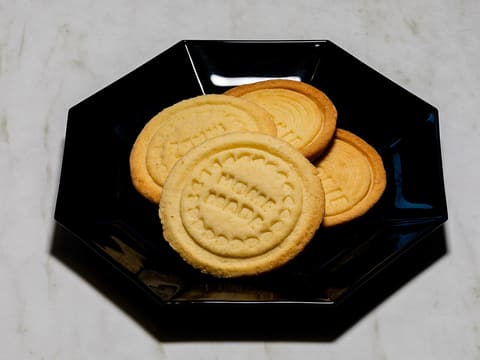
Photo: Dietmar Rabich · CC BY-SA 4.0
Additive identity
Possible source pathways
The finished molecule can be identical across feedstocks. The Halal ruling follows the pathway, not the code alone.
E470a Possible source pathways
- plant Halal Typical Palmitic and stearic acids from palm, soy, or coconut, then converted to Na/K/Ca (E470a) or Mg (E470b) salts. Vegetarian claims confirm this route.
- animal Halal if verified Tallow or lard fatty acids yield the same salts. Pork or non-zabiha fat is haram; audited zabiha tallow can be Halal.
- undisclosed Halal if verified Typical US labels often name a specific salt (magnesium stearate, sodium palmitate) without the fat origin.
How to verify
- Match E470, E470a, E470b, magnesium stearate, calcium stearate, sodium palmitate, or 'salts of fatty acids'.
- Prefer vegan/vegetarian or Halal-certified packs.
- Ask supplement brands whether magnesium stearate is vegetable.
- Do not treat a kosher pareve mark as automatic Halal slaughter proof, but it does rule out pork fat.
Quick checks
- E470a/E470b = salts of fatty acids = often 'magnesium stearate' in the US.
- Fat source decides Halal status.
- Vegetarian or Halal mark is the practical fix.
What decides the answer
-
Plant-fat E470a/E470b, or vegan/vegetarian claim
Halal -
Halal-certified product
Halal -
Pork or non-zabiha animal fat salts
haram -
Unspecified magnesium stearate / E470
Halal if verified
Why this ruling
E470a and E470b are the sodium/potassium/calcium and magnesium salts of fatty acids—the same palmitic and stearic acids that appear in soap, chocolate, and tablet coatings. EU law splits them by mineral; Codex numbers them INS 470(i) and 470(ii). US dietary-supplement labels almost never say E470: they say magnesium stearate or calcium stearate. Those names belong on this page.[1][2]
EFSA’s re-evaluation is explicit that the fatty acids may be vegetable or animal. That sentence is the entire Halal issue. Plant salts are Halal. Animal salts follow slaughter: pork and non-zabiha tallow are haram; audited Halal tallow can be used. Unspecified magnesium stearate is mashbooh.[2][5]
Do not confuse these salts with E570 (the free fatty acids) or E471 (mono- and diglycerides). All three share a feedstock question; they are not the same additive. A vegan tablet claim, a Halal mark, or a brand FAQ that says “vegetable magnesium stearate” closes E470 for that product.
At a glance
| Source | Ruling |
|---|---|
| Salts made from vegetable oils | Halal |
| From audited tallow of a Halal-slaughtered animal | Halal |
| From pork or non-zabiha tallow | Haram |
| Unspecified magnesium stearate | Mashbooh |
Where you will find it
Magnesium stearate is the anti-stick agent in most tablets, capsules and supplements, so it is the form most shoppers meet. Salts of fatty acids also appear in some sweets, baking powders and dried foods as anti-caking agents or emulsifiers.
Frequently asked questions
Is magnesium stearate Halal?
What is the difference between E470a and E470b?
Is this the same as E471?
Scholarly view
E470a and E470b share one Halal question (the parent fatty acid) and differ only in the mineral counter-ion. Magnesium stearate on a US supplement facts panel is usually E470b. Certifier mashbooh lists treat unspecified fatty-acid salts as source-dependent; they do not treat the magnesium ion as the problem.
Sources
Named Islamic, certifier, manufacturer, and regulatory sources used on this page. Inline markers like [1] jump here. Retrieval dates show when we last checked the live URL. Editorial methodology.
Certifier / jurisdiction
-
SANHA Retrieved
Source-dependent fatty-acid emulsifiers listed mashbooh pending origin.
Regulatory / labelling
-
Regulation (EC) No 1333/2008 on food additives
European Union Retrieved
Union-list identity for E470a and E470b.
-
European Food Safety Authority Retrieved
Identity: salts of fatty acids that may be of vegetable or animal origin. Safety opinion, not Halal.
-
-
People also check
Related ingredients and products for this item.