
Is Pork Halal?
No — this one is Haram.
Pork is explicitly forbidden in the Quran in four separate verses.
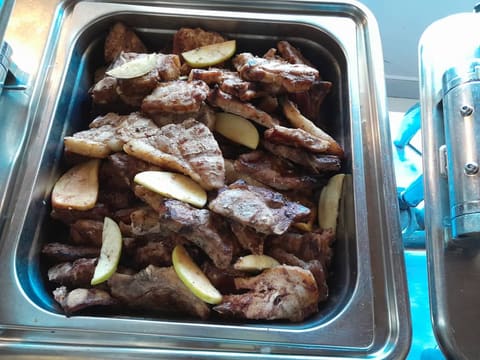
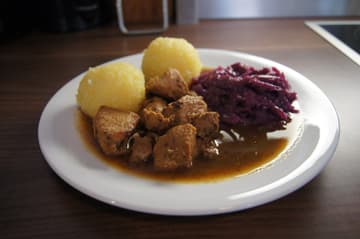
Photo: Shark2025 · CC BY-SA 4.0
Why it is Haram
The prohibition covers the entire animal - flesh, fat, skin, bones, and everything extracted from them, including lard, pork gelatin, and pork-derived enzymes. The Quran describes swine flesh as rijs (impurity), and the only exception in Islamic law is genuine life-threatening necessity (darurah).
Unlike many food questions, there is no minority opinion to weigh here: the ruling is by consensus (ijma) across Sunni and Shia scholarship.
Quranic guidance
-
Surah Al-Baqarah 2:173
"He has only forbidden to you dead animals, blood, the flesh of swine, and that which has been dedicated to other than Allah."
-
Surah Al-Ma'idah 5:3
"Forbidden to you are dead animals, blood, the flesh of swine, and that which has been dedicated to other than Allah."
-
Surah Al-An'am 6:145
"...or the flesh of swine - for indeed, it is impure (rijs)..."
-
Surah An-Nahl 16:115
"He has only forbidden to you dead animals, blood, the flesh of swine..."
Where it shows up
- Bacon, ham, prosciutto, and cured meats
- Sausages, hot dogs, and pepperoni
- Lard in baking and frying
- Gelatin in candy, desserts, and capsules
- Hidden in stocks, flavourings, and enzymes
Why this ruling
Pork is the meat of the domestic pig, one of the most widely eaten meats on earth - and the most unambiguously forbidden food in Islam. The Quran prohibits the flesh of swine in four separate verses (2:173, 5:3, 6:145, 16:115), uniquely describing it as rijs - impurity. No school of Islamic law, Sunni or Shia, classical or contemporary, permits it. Among all the debated questions of halal eating, pork is the settled center: the prohibition is by complete consensus.
The ruling covers far more than pork chops and bacon. Islamic law extends the prohibition to the entire animal and everything derived from it: the fat (lard), the skin, the bones, gelatin extracted from its collagen, enzymes from its organs, and stock made from its bones. A food containing any amount of these - even trace amounts deliberately included - takes the ruling of pork itself. This is why halal consumers scrutinize gelatin in candy, 'animal fat' in pastry, enzymes in cheese, and flavour bases in restaurant kitchens.
The only exception Islamic law recognizes is darurah - life-threatening necessity. The same verses that prohibit pork state that one who is compelled by starvation, without willful desire, bears no sin for eating the minimum needed to survive. Short of that extreme, the prohibition admits no flexibility for convenience, taste, or small quantities.
Muslims living in pork-eating societies develop practical radar: asking about bacon bits and lard in restaurant food, checking gelatin sources in medicine and sweets, watching for 'shortening' and 'natural flavors' of unspecified origin, and being alert to shared fryers and grills. The market has responded generously - halal beef bacon, turkey ham, beef pepperoni, halal franks, and plant-based pork alternatives replicate essentially every pork product, so avoiding the original costs nothing in culinary terms.
Hidden pork and everyday vigilance
Pork hides in gelatin sweets, pastry shortenings, restaurant stocks, and shared fryers. The prohibition is repeated in 2:173, 5:3, 6:145, and 16:115—see quran.com/5/3 (retrieved 20 July 2026) and quran.com/2/173 (retrieved 20 July 2026). FSIS species labelling helps decode processed meats: fsis.usda.gov (retrieved 20 July 2026).
Muslim markets now supply beef bacon, turkey ham, Halal pepperoni, and plant-based analogues—avoiding pork no longer means giving up the dish format.
Medicine, candy, and shared kitchens
Capsule shells and gummy vitamins are frequent gelatin vectors—ask pharmacists for HPMC alternatives. Shared barbecue grills with pork hot dogs contaminate adjacent buns and vegetables; request a clean surface or foil barrier. “Natural flavors” in savoury snacks are not automatically pork, but opacity is why certification helps. Teaching children the four Qur’anic citations builds confidence that this ruling is textual, not cultural preference alone.
How to verify
- Halal beef, lamb, chicken, and turkey versions now exist for nearly every pork product: beef bacon, turkey ham, halal pepperoni and franks, and plant-based substitutes.
- For gelatin, look for halal beef, fish, or plant-based gelling agents.
Quick checks
- Pork is Haram by Qur'anic text and ijma.
- Derivatives (lard, pork gelatin, enzymes) share the ruling.
- Tiny intentional amounts still render food Haram.
- Darurah (starvation necessity) is the only classical excuse.
Frequently asked questions
Why is pork haram in Islam?
Are pork derivatives like gelatin and lard also haram?
What if pork is a tiny ingredient in a food?
Is there any situation where eating pork is excused?
Where does pork hide in everyday products?
Sources
Named Islamic, certifier, manufacturer, and regulatory sources used on this page. Inline markers like [1] jump here. Retrieval dates show when we last checked the live URL. Editorial methodology.
Islamic / scriptural
-
Retrieved
-
Retrieved
-
Qur’anic text Retrieved
He has only forbidden to you dead animals, blood, the flesh of swine, and that which has been dedicated to other than Allah.
-
Qur’anic text Retrieved
Forbidden to you are dead animals, blood, the flesh of swine, and that which has been dedicated to other than Allah.
-
Qur’anic text Retrieved
...or the flesh of swine - for indeed, it is impure (rijs)...
-
Qur’anic text Retrieved
He has only forbidden to you dead animals, blood, the flesh of swine...
Regulatory / labelling
-
Retrieved
People also check
Related ingredients and products for this item.
Halal-conscious recipes
A substitution-led recipe that uses this analysis.