
How to verify
- Identify the source: porcine (Haram), bovine (needs Halal slaughter/cert), or marine/fish (Halal species, no zabiha).
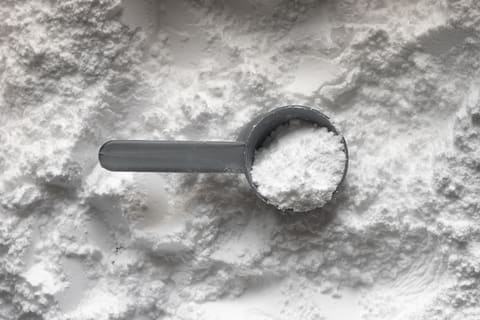
- Reject unsourced 'collagen peptides' powders and beauty blends.
- Check gummy collagen for a second gelatin matrix—often pork even when peptides are marine.
- Prefer Halal-certified bovine or clearly labelled marine collagen for anything you swallow.
Quick checks
- Confirm species source on the tub.
- Require Halal certification for bovine collagen.
- Avoid beauty products that hide collagen source.
What decides the answer
-
Halal bovine or fish collagen
Halal. -
Unspecified collagen
Halal if verified. -
Porcine collagen
Haram.
Why this ruling
Collagen is the structural protein that holds animal bodies together - skin, bones, tendons, cartilage. The supplement industry extracts it from three main sources: cattle hides and bones (bovine), fish skin and scales (marine), and pig skin (porcine), then hydrolyzes it into the soluble peptides sold as powders, capsules, drinks, and gummies for skin, hair, and joint health.
The Islamic ruling is straightforward once you know the source, because collagen follows exactly the same logic as gelatin. Porcine collagen is haram by scholarly consensus - the Quran's prohibition of pork covers all its derivatives. Bovine collagen is halal only when the cattle were slaughtered according to Islamic rites; collagen from conventionally slaughtered Western cattle does not meet the standard, which is why certifiers require slaughterhouse-level verification before certifying a bovine collagen product.
Fish collagen is the easier case: fish requires no ritual slaughter, so fish-derived collagen carries none of the slaughter conditions in the Sunni schools. Ja'fari practice permits fish that have scales, and "marine" on a label names an origin rather than a species — so the easy case is fish that is actually named, not "marine" as a category.
The problem is that finished products often hide the source. 'Hydrolyzed collagen', 'collagen peptides', or 'collagen blend' can describe bovine, marine, or porcine material—EU hygiene law defines collagen as an animal-origin protein product (Reg. (EC) No 853/2004, retrieved 2 August 2026). Species disclosure varies by brand: e.g. Vital Proteins Collagen Peptides states bovine hide (retrieved 2 August 2026)—that discloses species, not Halal slaughter. Gummy supplements add a second trap: even when marketed peptides are marine, the gummy matrix may still use gelatin. Shared lines and non-Halal processing aids are why third-party certification matters for bovine products.
Practical guidance: choose clearly labelled marine collagen, or bovine collagen with a recognised Halal mark (check MYeHALAL / IFANCA-type directories for certified products in your market). Treat unsourced collagen as Halal if verified. For topical creams, positions differ: Darul Iftaa Birmingham treats hydrolyzed collagen like gelatin and does not permit porcine/non-zabiha sources even in lotions (fatwa, retrieved 2 August 2026); other consumers still distinguish topical from ingested caution. For anything you swallow, Askimam requires a lawful slaughter pathway for bovine gelatine/collagen and notes kosher ≠ Halal (Askimam 124486, retrieved 2 August 2026).
Why collagen needs checking
Collagen powders rarely print a fatwa on the lid. “Hydrolyzed collagen,” “collagen peptides,” and “beauty blend” can mean cattle, fish, or pig. Without species wording or a Halal mark, this site’s status stays Halal if verified—do not assume marine or Halal bovine from marketing language alone.
Source-by-source ruling
- Porcine: Haram by consensus—same family as pork gelatin.
- Bovine: Lawful species only with Halal slaughter and segregation from pork streams—mirror beef gelatin logic; buy certified.
- Fish: no zabiha required; the straightforward case in the Sunni schools, with Ja'fari practice permitting scaled fish. "Marine" alone does not name the species. Still check companion ingredients in drinks and gummies.
Gummies, drinks, and capsules
Gummy collagen often uses a gelatin shell or matrix—frequently pork even when the marketed peptides are marine. Ready-to-drink collagen may add “natural flavors,” sweeteners, or emulsifiers. Capsules may be gelatin (animal) or HPMC (plant). Verify each layer, not only the headline protein.
Topical vs ingested
If you swallow the product, apply full dietary rules (Askimam 124486). Topical rulings are not uniform—see Darul Iftaa Birmingham 19398 for a stricter lotion position. Prefer recognised Halal marks on bovine collagen; prefer explicit “fish/marine collagen” wording for the easier animal-side pick.
Where you'll find it
- Collagen peptide powders and drinks
- Beauty and joint-health supplements
- Protein bars and fortified snacks
- Gummy supplements (often with gelatin too)
- Skincare creams and serums
Frequently asked questions
Is collagen Halal?
Is marine collagen always safe?
Does 'hydrolyzed collagen' tell me the animal?
Is collagen in skincare the same ruling as supplements?
Is beef collagen the same as beef gelatin?
Scholarly view
The ruling follows the source animal, exactly as with gelatin. Fish collagen needs no ritual slaughter, which is why the Sunni schools treat it as the straightforward case; Ja'fari practice permits fish that have scales, so a label reading only "marine" does not settle it.
Bovine collagen requires zabiha slaughter - collagen from conventionally slaughtered Western cattle is not accepted by certifiers. Pig collagen is haram by consensus. For topical skincare, scholarly positions differ (some fatwas treat hydrolyzed collagen like gelatin even in lotions); ingestion rules remain the stricter everyday check.
Sources
Named Islamic, certifier, manufacturer, and regulatory sources used on this page. Inline markers like [1] jump here. Retrieval dates show when we last checked the live URL. Editorial methodology.
Islamic / scriptural
-
Qur'an 5:3 (swine prohibition)
Qur'an Retrieved
-
Darul Iftaa Birmingham — hydrolyzed collagen/elastin in creams
Darul Iftaa Birmingham Retrieved
Hydrolyzed collagen follows gelatin ruling; porcine/non-zabiha sources not permitted even topically per this fatwa.
-
Askimam — beef gelatine / collagen in supplements; kosher ≠ Halal
Askimam Retrieved
Requires zabiha for bovine gelatine/collagen; kosher certification is not automatically Halal.
Certifier / jurisdiction
-
JAKIM / Portal Halal Malaysia (MYeHALAL)
JAKIM Retrieved
Manufacturer / product
-
Vital Proteins — Collagen Peptides (bovine hide)
Vital Proteins Retrieved
Named bovine collagen peptides product — species disclosed; not a Halal certificate.
Regulatory / labelling
-
FDA dietary supplements overview
U.S. FDA Retrieved
-
EU Regulation (EC) No 853/2004 — gelatine and collagen definitions
European Union Retrieved
Defines gelatine/collagen as foods of animal origin (hygiene rules)—not as Annex II E-number additives.
Browse this topic
Open the parent category hub for more foods in the same group.