
Halal-conscious recipe
Pork-, mirin- and sake-free ramen
Chicken and kombu ramen with a soy-sugar tare that skips mirin and sake. Shop-bought noodles and sauces are not assumed Halal.
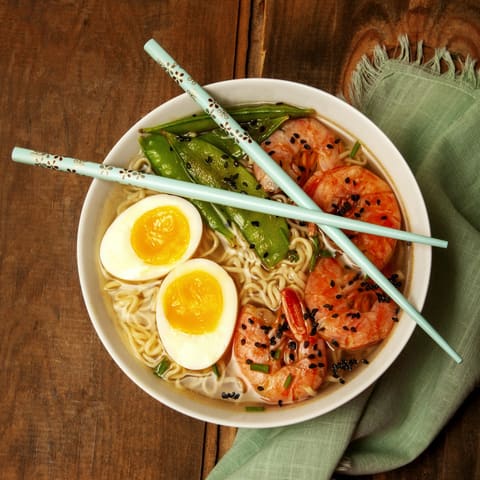
Each method follows published technique for the dish, and every Halal substitution is checked against the ingredient pages we cite. Photographs come from our ingredient library rather than the finished dish.
Why Halal checks matter here
Tonkotsu and many shop bowls use pork bones; tare often includes mirin and sake; noodles and ready sauces are not automatically Halal.
This is a practical home bowl, not a claim that every Tokyo shop can be made Halal. Pork bone broth, mirin, and sake are the usual problems; shop noodles and sauces stay a label check. Read the ramen analysis, soy sauce, sake, and pork (what this broth is not).
Halal-critical ingredients
- Broth Tonkotsu is pork; many restaurant bowls use mixed pork/chicken bones. Home chicken + kombu only, from Halal chicken.
- Tare and sauces Mirin and sake are rice wines; some soy sauces add spirit. Read every bottle. See Soy sauce and Sake.
- Noodles and condiments Shop noodles, chilli oil, and tare packs are not automatically Halal. Ingredient list on the pack in hand — never the dish name.
Safe substitutes
- Pork bones / tonkotsu → Halal chicken bones plus kombu and shiitake
- Mirin in tare → Sugar plus a little rice vinegar Alcohol-free ‘mirin-style’ seasonings still need a label check; some still list alcohol.
- Sake in marinade → Water, soy, and sugar only
- Mystery instant noodles → Dried wheat noodles with a short, readable list — or skip the seasoning sachet
Allergens
gluten (wheat noodles and soy sauce), soy, egg (if using egg noodles or ajitama)
Ingredients
Broth
- 1.2 kg (2.6 lb) Halal-slaughtered chicken wings and backs
- 10 g (a 10 cm sheet) dried kombu
- 15 g (4–5 caps) dried shiitake
- 2.5 litres (10½ cups) water
- 80 g (4 whites) spring onions, whites
- 30 g (a 3 cm piece) fresh ginger, sliced
Tare (no mirin, no sake)
- 80 ml (5 tbsp) naturally brewed soy sauce with no added alcohol, mirin, or wine
- 20 g (1½ tbsp) caster sugar
- 15 ml (1 tbsp) rice vinegar
- 8 g (1¼ tsp) fine salt
- 40 ml (3 tbsp) water
Bowls
- 400 g (14 oz) dried wheat ramen noodles — read the pack (egg, fat, E-numbers)
- 400 g (14 oz) Halal chicken thigh, for chashu-style roast
- 40 g (a small bunch) spring onion greens, sliced
- 4 g (2 sheets) toasted nori sheets, optional
Method
- Kombu steep. Cover kombu and shiitake with the cold water and soak 30 minutes. Heat slowly until small bubbles form (about 80 °C); do not boil the kombu or it turns slimy. Lift out the kombu. This is a standard dashi start, not a pork bone stock.
- Chicken broth. Add chicken bones, spring-onion whites, and ginger. Simmer gently 75–90 minutes, skimming. Strain. You need a light, clear chicken-kombu broth — not tonkotsu. Confirm the chicken is Halal-slaughtered.
- Alcohol-free tare. Warm soy sauce, sugar, rice vinegar, salt, and water just until the sugar dissolves. Cool. Do not use honjozo soy that lists alcohol, and do not use mirin or sake ‘for authenticity’. Sweetness here is sugar; acidity is vinegar. See Soy sauce and Sake.
- Toppings. Salt the chicken thighs and roast at 200 °C for 25–30 minutes until cooked through; slice. Optional jammy eggs: boil 7 minutes, ice, peel. Season eggs in leftover tare mixed with extra water — not a mirin marinade. Shop ramen eggs in packets often contain mirin; read them.
- Noodles are a separate product. Boil noodles according to the pack. Wheat ramen may include egg, kansui, and fats. Do not assume a Japanese brand is Halal. Prefer packs with a short ingredient list or a Halal mark.
- Assemble. Put 30–40 ml tare in each bowl, add 350 ml hot broth, then noodles, chicken, spring onion, and nori. Taste and add tare, not a mystery bottled ‘ramen sauce’.
How this recipe was researched
Method specified editorially from Japanese broth technique (kombu steep, chicken simmer, aromatic tare) and this site's Ramen, Soy sauce, and Sake pages. Timings follow published technique rather than a kitchen test.
Technique and ingredient sources
-
How to make dashi — Just One Cookbook
— Just One Cookbook
Retrieved:
Kombu steep and temperature control for a Japanese stock base. Used as technique, not as a Halal ruling.
-
Ramen analysis — isithalal.food
— isithalal.food
Retrieved:
Why restaurant ramen is Halal if verified: pork, alcohol tare, and unverified toppings.
-
Soy sauce analysis — isithalal.food
— isithalal.food
Retrieved:
Added alcohol versus brewing traces.