
How to verify
- Ask if the soup is tonkotsu (pork bone), chicken, fish, or vegetable.
- Ask what chashu and extra toppings are.
- Ask whether tare uses sake or mirin, and whether dashi includes katsuobushi.
- Ask if the kettle is shared with pork bowls.
- Order only from a kitchen that can name Halal-slaughtered meat and a pork-free, alcohol-free broth—or choose a certified Halal ramen shop.
Quick checks
- Tonkotsu is pork-bone broth and chashu is usually pork: skip both.
- Ask what the broth is made from, and whether the tare contains sake or mirin.
- Look for a Halal certificate; Japan has a growing number of Halal-certified ramen shops.
What decides the answer
-
Halal-slaughtered chicken or beef, pork-free kettle, no sake/mirin
Halal -
Katsuobushi/niboshi dashi with plant tare, no meat
Halal -
Unverified shop bowl
Halal if verified -
Tonkotsu (pork-bone) broth or pork chashu
Haram
Why this ruling
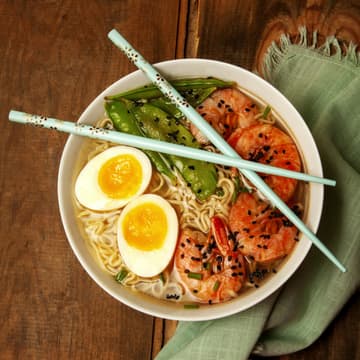
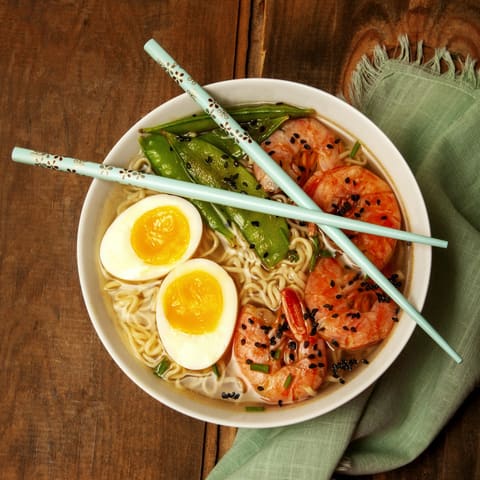
Ramen is Japan's noodle soup: wheat noodles in a rich broth, seasoned with a concentrated sauce called tare, and topped with meat, egg and vegetables. A bowl from an ordinary ramen shop is not Halal, and it helps to know where the pork and alcohol sit, because almost every part of the bowl can carry them.[1]
The bowl, part by part
| Part | Usually | The question |
|---|---|---|
| Broth | Pork bones, chicken bones, or both; sometimes fish | Tonkotsu is pork bone, boiled for hours[2] |
| Tare | Soy sauce (shoyu), salt (shio) or miso base | Often made with sake or mirin[3] |
| Fat | Aromatic oil on top | Often pork back fat (seabura) or lard |
| Chashu | Sliced braised meat | Almost always pork |
| Egg (ajitama) | Soft-boiled, marinated | The marinade is often soy with mirin |
| Menma, nori, spring onion, bean sprouts | Plant | Fine |
| Naruto | Fish cake | Usually fine |
The names shoyu, shio and miso describe the tare, not the broth. A "shoyu ramen" can still be built on pork stock. Many shops use one broth pot for every bowl.
Fish and chicken ramen
Some styles use a fish-based dashi made from bonito flakes (katsuobushi) or dried sardines, and fish is Halal. Chicken-based tori paitan is popular too, but chicken needs Halal slaughter. In both cases the tare and oil still need checking, and the kitchen still needs to keep the pork pot separate.
Halal ramen
Tokyo, Osaka, Kyoto and other cities now have Halal-certified ramen shops, mostly serving chicken or beef broth with no alcohol in the tare, as well as vegan ramen shops that avoid the question entirely. Outside Japan, Halal ramen restaurants are common in Malaysia, Indonesia and cities with large Muslim communities.
Instant ramen
Instant noodles are a separate label check. The noodle block is usually wheat fried in palm oil, but the flavour sachet often contains pork or chicken extract, and "tonkotsu" and "chashu" flavours are pork. Look for a Halal mark; many brands made in Muslim-majority countries carry one. See palm oil.
For Japan's rice wine, see sake, and for the Vietnamese noodle soup, phở.
Where you'll find it
- Japanese ramen-ya and chain shops
- Instant noodle cups (separate product check)
- Halal-labelled ramen kitchens in Muslim markets
Frequently asked questions
Is ramen Halal?
Is tonkotsu ramen Halal?
What about shoyu, shio, or miso ramen?
Are instant ramen cups Halal?
Scholarly view
Pork bone, pork meat, and pork gelatin are Haram. Alcohol in cooking sauces is prohibited. Fish-based dashi is generally accepted as seafood; the slaughter rule still applies to chicken or beef in the same bowl.
Sources
Named Islamic, certifier, manufacturer, and regulatory sources used on this page. Inline markers like [1] jump here. Retrieval dates show when we last checked the live URL. Editorial methodology.
Islamic / scriptural
-
Qur'an Retrieved
Swine prohibition covers pork bone, pork meat, and pork gelatin in broth or toppings.
-
Context / background
-
Ramen — broths, chashu, and regional styles
Wikipedia Retrieved
Culinary identity: Chinese-style wheat noodles in broth; soy, miso, and salt tare; chashu pork; Kyushu tonkotsu pork-bone soup; dashi stock from kombu, niboshi, or katsuobushi. Identity context, not a Halal certificate.
Halal-conscious recipes
A substitution-led recipe that uses this analysis.