
How to verify
- Confirm the broth is beef or chicken, not pork.
- Ask whether the bones and meat are Halal-slaughtered.
- If the bowl includes rare steak or tendon, that meat still needs Halal slaughter.
- Ask about pork (phở thịt heo) and shared stockpots.
- Nước mắm is fish sauce—usually acceptable as seafood; it does not make non-Halal beef Halal.
Quick checks
- Beef, chicken, or pork broth?
- Halal slaughter for bones and steak?
- Pork in the pot or on the plate?
- Shared stockpot?
What decides the answer
-
Halal-slaughtered beef or chicken phở, no pork stock
Halal -
Unverified restaurant bowl
Halal if verified -
Pork phở or pork-bone stock
Haram -
Rare beef, tendon, or meatballs in the bowl still need Halal slaughter
Why this ruling
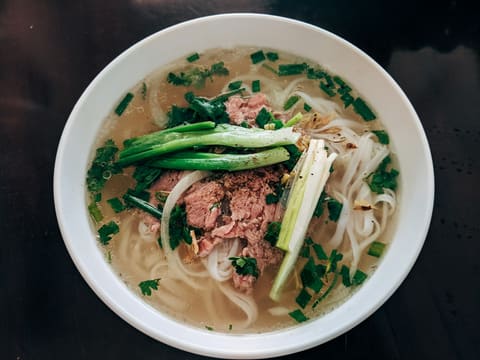
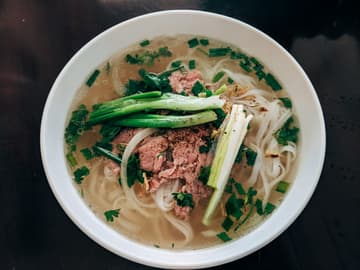
Phở is a Vietnamese rice-noodle soup built on a clear, spice-scented bone broth. The classic versions are beef (phở bò) and chicken (phở gà), finished with herbs, lime, chilli and nước mắm, fish sauce.[1] Beef and chicken are Halal species, but the bowl is only Halal when the meat, and the bones in the stock, come from animals slaughtered Islamically.[2]
What goes into a bowl
A beef phở broth simmers for hours from marrow and knuckle bones, sometimes oxtail, with charred onion and ginger, star anise, cinnamon, cloves and coriander seed. The toppings are where the variety is, and each one is a separate meat question:
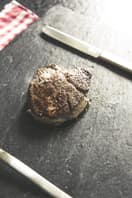
- Tái – raw, thinly sliced steak that cooks in the hot broth at the table.
- Chín – well-done brisket or flank simmered in the pot.
- Gân and sách – tendon and tripe.
- Bò viên – beef balls. Commercial beef balls can be bulked out with pork fat, so check these even in a beef-only kitchen.
Phở gà uses a chicken-carcass broth with poached chicken. Vegetarian phở chay uses a vegetable and mushroom stock.
What the fish sauce does and does not settle
Nước mắm is fermented anchovy and salt. It is a fish product, so it is permissible across the schools, and it is not an alcoholic drink. But it seasons the broth; it says nothing about the meat or bones underneath it.
Bowl by bowl
| Bowl | Broth | What to ask |
|---|---|---|
| Phở bò (beef) | Beef bones, sometimes oxtail | Halal-slaughtered beef for both bones and toppings; what is in the beef balls |
| Phở gà (chicken) | Chicken carcasses | Halal-slaughtered chicken; is the pot shared with pork |
| Phở chay (vegetarian) | Vegetables and mushrooms | Is it a separate stock, or beef broth with the meat left out |
| Seafood phở | Varies: fish, shrimp, chicken or beef base | Which base; seafood itself needs no slaughter |
A "vegetarian" bowl ladled from the beef pot is a beef-broth bowl, so ask about the stock, not the topping.
Ordering phở
The safest bowl comes from a Muslim or Halal-certified Vietnamese kitchen. Vietnam itself has a Muslim Cham community, and Halal phở is common across Malaysia and Indonesia. Elsewhere, ask three things: is the stock made only from beef or chicken bones, is that meat Halal-slaughtered, and is any pork cooked in the same pot or ladled from the same kettle. Herbs, lime and bean sprouts do not change the answer if the broth is not Halal. See also bánh mì for Vietnam's other street-food staple.
Where you'll find it
- Vietnamese street stalls and phở shops
- Diaspora restaurants
- Home pots of beef or chicken phở
Frequently asked questions
Is phở Halal?
Is beef phở (phở bò) automatically Halal?
What about nước mắm?
Does pork phở exist?
Scholarly view
Beef and chicken are Halal-eligible only with Islamic slaughter. Pork phở is Haram. Fish sauce is a seafood condiment for most Sunni practice; it does not certify the broth meat.
Sources
Named Islamic, certifier, manufacturer, and regulatory sources used on this page. Inline markers like [1] jump here. Retrieval dates show when we last checked the live URL. Editorial methodology.
Islamic / scriptural
-
Qur'an Retrieved
Swine prohibition for pork phở; slaughter rule for cattle and poultry in the broth.
Context / background
-
Phở — Vietnamese rice-noodle soup
Wikipedia Retrieved
Culinary identity: Vietnamese rice noodles in spiced beef or chicken bone broth; phở bò and phở gà; rare beef and other cuts in the bowl; regional Hanoi vs Saigon styles. Identity context, not a Halal certificate.
Halal-conscious recipes
A substitution-led recipe that uses this analysis.
Browse this topic
Open the parent category hub for more foods in the same group.