

How to verify
- Treat oxtail as beef—require Zabiha/Halal slaughter certification matching your school.
- Buy from a trusted Halal butcher or certified supplier, not unmarked supermarket packs.
- Reject recipes with wine, stout, or beer.
- Restaurant stews: ask meat source and alcohol in the braise.
- Natural collagen melting from Halal oxtail is fine; do not confuse it with unlabeled industrial gelatin.
Quick checks
- Oxtail = beef cut → slaughter status decides everything.
- Buy Zabiha/Halal-certified oxtail only.
- No wine, stout, or beer in braises.
- Natural collagen from Halal meat ≠ unlabeled industrial gelatin risk.
What decides the answer
-
Oxtail from Zabiha-slaughtered cattle
Halal -
Supermarket oxtail (conventional slaughter) — for cautious practice
Not Halal -
Braised with wine, beer, or stout
Haram -
Halal butcher oxtail in an alcohol-free recipe: fully Halal
Why this ruling
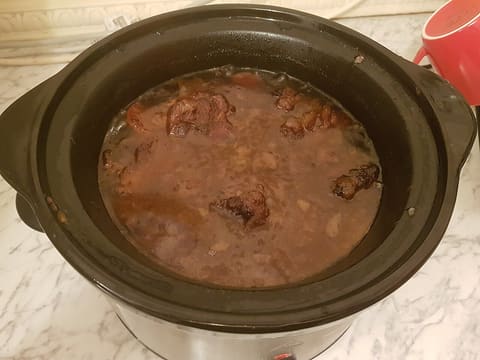
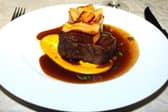
Oxtail is exactly what the name says: the tail of a cow (historically an ox), cut into bone-in rounds and braised until its abundant collagen melts into silky gravy. It anchors Jamaican oxtail stew, Korean kkori gomtang, Indonesian sop buntut, and soul-food Sundays across the American South.
Same ruling as beef
In Islamic law, oxtail carries no special status—it is beef, and the ruling follows the animal’s slaughter. If the cow was slaughtered by Zabiha, every part of it is Halal, the tail included; Islamic law excludes the flowing blood drained at slaughter, not any particular cut. Conversely, oxtail from a conventionally slaughtered supermarket cow is not Halal for consumers who require Islamic slaughter, however it is cooked. Qur'an 5:3 frames the carrion and improper-killing prohibitions (quran.com/5, retrieved 20 July 2026). USDA/FSIS inspection confirms hygiene, not Halal status (fsis.usda.gov, retrieved 20 July 2026).
Sourcing
Sourcing is easy in practice: oxtail is a staple at Halal butchers, beloved across Caribbean, West African, South Asian, and Southeast Asian Muslim communities, and certified online suppliers ship it frozen. Look for recognized Halal marks where available—JAKIM’s portal is one reference for certified programs (MYeHALAL, retrieved 20 July 2026).
Recipe checkpoints
Two recipe notes matter:
- Some Caribbean oxtail recipes add stout or use browning sauces—ask or read labels; excellent versions need neither.
- The luxurious body of oxtail gravy comes from the animal’s own collagen converting in the pot: if your oxtail is Halal, that gelatinous stock is Halal. Site warnings about gelatin concern industrially extracted gelatin of unknown origin, not what your own Zabiha meat releases into a braise.
With a Halal butcher and an alcohol-free recipe, oxtail is one of the most rewarding fully Halal dishes you can cook. Cross-check related beef pages such as beef and beef gelatin.
Restaurant practice
Ask two questions at restaurants: Is the oxtail from a Halal/Zabiha supplier? Does the braise include wine, beer, or stout? A beautiful stew with conventional meat or alcohol is still the wrong answer for Halal practice.
Butcher questions and leftovers
At a Halal butcher, ask for oxtail cut into rounds with the joints intact so collagen distributes evenly in the braise. Confirm the animal’s Halal slaughter program if the shop sells both Halal and non-Halal meat counters—never assume a shared cold case is certified. For slow cookers and pressure cookers, brown the pieces first, then braise with onion, tomato, spices, and stock; skip stout, red wine, and beer recipes circulating online.
Leftover oxtail meat shredded into rice or pasta is still Halal if the original braise was clean; the chilled gravy will set firmly because of natural gelatin from the bones. That set gel is not an industrial additive scare—it is the same collagen story as a Halal bone broth. If you buy frozen imported oxtail, read the pack for Halal marks from recognized bodies rather than trusting country-of-origin alone. Restaurant “oxtail ragu” in non-Halal kitchens is a double question: meat source and wine. When either answer is unclear, choose another dish.
A published answer
Asked directly whether oxtail may be eaten, Imam Senad Agic answered on eShaykh in 2012 that it is permissible to eat Halal oxtail [4]. There is no separate rule for the tail: it follows the animal and its slaughter, which is why the butcher's certificate matters more than the cut.
Where you'll find it
- Jamaican oxtail stew
- Oxtail soups (Korean kkori gomtang, Indonesian sop buntut)
- Braised oxtail in Southern and Caribbean cooking
- Rich stocks and broths
Frequently asked questions
Is oxtail a special part of the cow with its own ruling?
Where do I find Halal oxtail?
Is Jamaican oxtail stew Halal?
Why is oxtail so gelatinous—is that gelatin Haram?
Does USDA inspection make supermarket oxtail Halal?
Has a scholar answered whether oxtail is Halal?
Scholarly view
No special ruling attaches to the tail: it is beef, and follows the slaughter status of the animal. Qur'an 5:3 forbids carrion and improper killing. USDA meat inspection confirms safety, not Halal (fsis.usda.gov, retrieved 20 July 2026).
Quranic guidance
-
Surah Al-Ma'idah 5:3
"Forbidden to you are dead animals, blood, the flesh of swine, and that which has been dedicated to other than Allah, and those animals killed by strangling or by a violent blow or by a headlong fall or by the goring of horns."
Sources
Named Islamic, certifier, manufacturer, and regulatory sources used on this page. Inline markers like [1] jump here. Retrieval dates show when we last checked the live URL. Editorial methodology.
Islamic / scriptural
-
Retrieved
-
eShaykh: Oxtail halal or haram?
eShaykh.com Retrieved
Imam Senad Agic (Islamic Association of Bosniaks in North America), 25 January 2012: it is permissible to eat halal oxtail.
-
Qur’anic text Retrieved
Forbidden to you are dead animals, blood, the flesh of swine, and that which has been dedicated to other than Allah, and those animals killed by strangling or by a violent blow or by a headlong fall or by the goring of horns.
Certifier / jurisdiction
-
Retrieved
Regulatory / labelling
-
Retrieved
.jpg)