
How to verify
- Buy from a Halal butcher or a pack with a certifier's mark.
- Check which standard that certifier follows on stunning and machine slaughter.
- In mixed kitchens, ask about shared knives, boards and gravy bases.
- For marinades and ready meals, check for wine, bacon wraps and non-Halal stock.
Quick checks
- Species OK (sheep) is not slaughter OK: check the certifier's mark.
- Match the certifier's stunning rule to the standard you follow.
- Watch shared knives, grills, bacon wraps and wine marinades.
What decides the answer
-
The meat — when slaughtered to the standard you follow
Halal -
Sheep meat: Halal species
-
Stunning and machine slaughter: certifiers differ; HMC certifies neither
-
Country of origin or 'lamb' on a menu: not evidence of Halal slaughter
Why this ruling
Lamb is meat from a young domestic sheep, milder and more tender than mutton from older animals. Sheep are a Halal species. Species permissibility is not the same as plate permissibility: the carcass must meet the slaughter and handling rules you follow.
Species vs slaughter
Qur'an 2:173 names what is forbidden: carrion, blood, swine, and what is dedicated to other than Allah.[1] Sheep are not on that list. What decides a given piece of lamb is:
- How it was slaughtered. Certifiers publish their own criteria. HMC, for example, requires the animal to be alive at the cut, the blood to drain, and a Muslim slaughterman to recite bismillah on each animal, rather than a blessed blade or a recording.[3]
- No swine contamination: shared slicers, bacon-wrapped racks, pork stock.
- No dedication to other than Allah.[1]
A supermarket leg labelled "lamb" is sheep biologically. That says nothing about how it was slaughtered.
Stunning and machine slaughter
Certifiers disagree here, so match the mark to your standard.
- HMC (UK) will not certify stunned meat or machine slaughter. It says stunning is disliked for the animal's suffering, and that stunned animals can die before they reach the slaughterman, which would make them unlawful.[3]
- Other certifiers set their own rules on stunning. Read the standard behind the mark on your pack rather than assuming all Halal marks mean the same thing.
Meat of the People of the Book
Qur'an 5:5 makes the food of those given the Scripture lawful for Muslims.[2] How that applies to today's commercially slaughtered supermarket meat is a question scholars answer differently. If you rely on it, ask your scholar what it covers.
Country of origin is not a certificate
New Zealand's Ministry for Primary Industries runs a Halal assurance system for animal-product exports.[4] That is an export control system. A "Product of New Zealand" label on a pack tells you where the lamb came from, not whether that pack was Halal-slaughtered: read the Halal mark on the pack itself. Food-safety inspection, such as USDA FSIS in the US, is likewise hygiene, not zabiha.[5]
Lamb, hogget, mutton
- Lamb: young sheep; milder.
- Hogget: an intermediate age term in some markets.
- Mutton: older sheep; stronger flavour for long curries.
Age changes cookery, not the species ruling.
Ready meals and mince
Lamb burgers, kofta and frozen curries can contain wine, other meats or non-Halal stock even when the front says "lamb". Read the ingredient list and look for a Halal mark on the pack.
Butcher questions
- Is this Halal-slaughtered, and to which certifier's standard?
- Is any equipment shared with pork?
- For mince: any mixed trim or wine-based seasoning?
Shoulder, leg and other cuts
The cut does not change the ruling. A Hanafi answer from MuftiSays says every part of a correctly slaughtered Halal animal may be eaten except seven: flowing blood, the male and female private parts, the testicles, glands, the bladder and the gallbladder.[6] So a lamb shoulder, leg or rack is Halal when the lamb was slaughtered the Halal way; ask the butcher about the slaughter, not the cut.
Bottom line: lamb is a Halal animal and conditionally Halal meat. Buy from a Halal butcher or a certified pack whose standard you accept.
Where you'll find it
- Roasts, chops, and racks
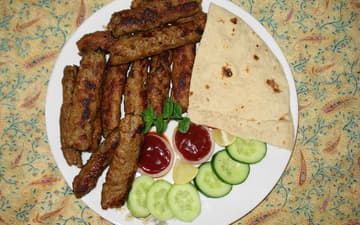
- Grilled kebabs and kofta
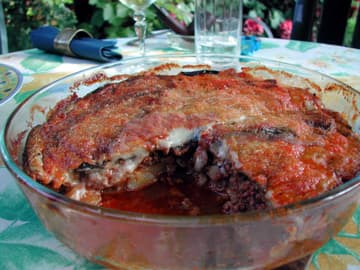
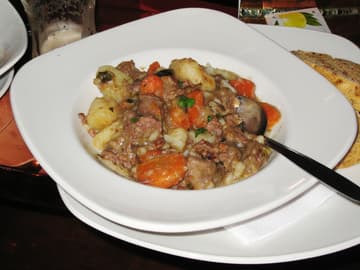
- Curries and stews
- Biryani and pilaf
Frequently asked questions
Is lamb different from mutton for Halal?
Is all restaurant lamb Halal?
Does stunning make lamb Haram?
Is lamb from the People of the Book Halal?
Where is the Qur'anic baseline for forbidden meat?
Is lamb fat or lamb stock automatically Halal?
Is lamb shoulder Halal?
Scholarly view
Sheep are not among the prohibited categories in Qur'an 2:173, so the question is slaughter and contamination. Qur'an 5:5 makes the food of the People of the Book lawful; how that applies to today's commercially slaughtered meat is a question for your scholar.
Certifiers set their own rules on stunning and machine slaughter: HMC, for example, rejects both, holding that stunning can kill the animal before the cut. Match the mark on the pack to the standard you follow.
Sources
Named Islamic, certifier, manufacturer, and regulatory sources used on this page. Inline markers like [1] jump here. Retrieval dates show when we last checked the live URL. Editorial methodology.
Islamic / scriptural
-
Qur'an Retrieved
Lists carrion, blood, swine and what is dedicated to other than Allah. Sheep are not among them.
-
-
What parts of a chicken are halal and is it permissible to consume all parts?
MuftiSays (Darul Uloom London), via IslamQA.org Retrieved
Moulana Qamruz Zaman: 'All parts of a Halal animal is Halal to consume (which has been correctly slaughtered according to Shari'ah), except seven': flowing blood, the male and female private parts, scrotum, glands, bladder and gallbladder (Fatawa Alamgiriyya; Ahsan al-Fatawa).
Certifier / jurisdiction
-
Issues of mechanical slaughter and stunning
Halal Monitoring Committee (HMC) Retrieved
HMC's own position: rejects machine slaughter without a Muslim slaughterman reciting bismillah on each animal, and stunning, because stunned animals can die before the cut. HMC's standard, not the only one.
Regulatory / labelling
-
Halal assurance system for exports from New Zealand
Ministry for Primary Industries, New Zealand Retrieved
New Zealand's government system for Halal animal-product exports. An export assurance system, not a statement about every retail pack of New Zealand lamb.
-
U.S. Department of Agriculture — Food Safety and Inspection Service Retrieved
Hygiene inspection is not a Halal or zabiha certificate.
Halal-conscious recipes
A substitution-led recipe that uses this analysis.