How to verify
- Plain pasta with olive oil, tomato, or vegetables is usually fine.
- Ask whether meat sauces use Halal-slaughtered meat and no pork.
- Ask about wine in the sauce.
- Treat hard Italian cheeses as rennet-conditional.
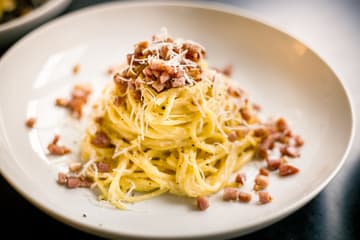
- Skip carbonara-style dishes unless the kitchen confirms a non-pork recipe.
Quick checks
- Dried pasta is wheat and water or egg: Halal.
- Ask about pancetta, guanciale, sausage and wine in the sauce.
- Check the cheese's rennet if that matters to you; Parmigiano Reggiano is made with calf rennet.
What decides the answer
-
Plain wheat/egg pasta + vegetable or tomato sauce
Halal -
Meat ragù
Halal only with Halal slaughter and no pork/wine -
Cheese-heavy dishes
rennet-conditional -
Pork pasta (carbonara with guanciale, sausage, etc.)
Haram
Why this ruling
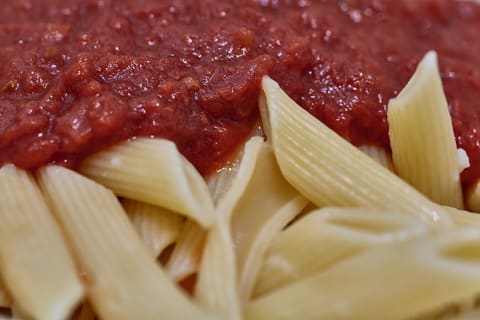
Pasta itself is simple. Dried pasta is durum wheat semolina and water; fresh egg pasta is flour and eggs. Barilla's spaghetti, for example, lists only durum wheat semolina and water.[9] Both are Halal. What decides a plate of pasta is the sauce, the filling and the cheese grated over it, and Italy's classic sauces differ a great deal.
The classic sauces
| Dish | What is in it | Halal? |
|---|---|---|
| Aglio e olio, arrabbiata, pomodoro | Garlic, olive oil, chilli, tomato | Yes |
| Puttanesca | Tomato, olives, capers, anchovies | Yes |
| Alla Norma | Tomato, aubergine, salted ricotta | Check the cheese |
| Cacio e pepe | Pecorino and black pepper | Depends on the rennet |
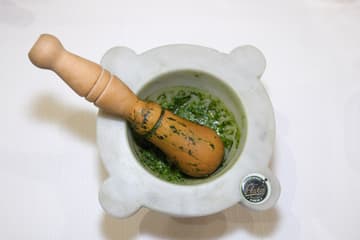
| Pesto | Basil, pine nuts, cheese | Depends on the rennet; see pesto |
| Carbonara, amatriciana, gricia | Guanciale (cured pork cheek) | No |
| Bolognese ragù | Beef and pork mince, often wine | Usually no |
| Vongole | Clams, white wine | No as made; clams are a scholarly difference |
Carbonara, amatriciana and gricia are all built on guanciale, and many ragùs mix beef and pork and add wine.[1][2] Parmigiano Reggiano is made only with calf rennet,[10] and pecorino with animal rennet; rennet from an animal not slaughtered Islamically is a point of scholarly difference, microbial rennet is Halal and pork rennet is not.
Filled pasta
Filled pastas carry their own filling. Bologna's tortellini are traditionally filled with pork loin, prosciutto and mortadella; ravioli and agnolotti may hold meat, ricotta and spinach, pumpkin or mushrooms. Read the filling on a pack, and in a restaurant ask what is inside. For baked pasta, see lasagna.
Ordering and cooking
When unsure, order a tomato, garlic-and-oil or vegetable pasta, and ask for no cheese or a cheese whose rennet you know. For meat sauces, choose a Muslim-run or Halal-certified kitchen. At home, Halal beef or lamb, tomato and a splash of stock instead of wine make a good ragù; see also carbonara and risotto.
Pasta kits are a different product
The plain dried pasta on this page is rarely the problem; the sachet is. In early 2026 a report that pork DNA had been found in San Remo's La Pasta Carbonara Flavour Pasta and Sauce went viral in Malaysia. JAKIM said on 31 January that the product had no JAKIM halal certificate and was not sold in Malaysia, and San Remo said the range it sells there is certified by the Islamic Co-ordinating Council of Victoria, a body JAKIM recognises [12]. The lesson carries beyond one brand: a carbonara, bolognese or cheese-sauce kit needs its own Halal mark, even from a company whose plain pasta has one.
Where you'll find it
- Italian restaurants
- Home cooking
- Supermarket dried pasta
- Ready meals and meal kits
Frequently asked questions
Is pasta Halal?
Is spaghetti Halal?
Is pasta sauce Halal?
Can Muslims eat pasta in Italy?
Can a pasta brand be Halal certified and still sell a pork sauce?
Scholarly view
The noodle itself is rarely the issue. Pork and intoxicants in sauces are clear prohibitions; meat slaughter and cheese rennet follow the usual conditional rules.
Sources
Named Islamic, certifier, manufacturer, and regulatory sources used on this page. Inline markers like [1] jump here. Retrieval dates show when we last checked the live URL. Editorial methodology.
Islamic / scriptural
-
Qur'an Retrieved
Swine prohibition—frames pork toppings (guanciale, pancetta, sausage) on pasta plates.
-
Qur'an Retrieved
Intoxicants prohibition—frames wine reductions and wine deglazes in sauces/risotto.
-
SeekersGuidance — Is rennet in cheese Halal?
SeekersGuidance Retrieved
Hanafi-oriented ruling on animal vs microbial rennet in cheese.
-
Askimam — rennet from slaughtered / carrion / porcine sources
Askimam Retrieved
Details conditions for animal rennet permissibility.
-
IslamQA 7327 — ruling on alcohol / khamr
IslamQA Retrieved
-
IslamQA 148690 — alcohol in food
IslamQA Retrieved
Certifier / jurisdiction
-
IFANCA Retrieved
Certifier practice for dairy enzymes/rennet in hard Italian cheese and processed sauces when a Halal mark is used.
Manufacturer / product
-
Barilla — Spaghetti No.5 product page
Barilla Retrieved
Dried durum-wheat pasta example — noodle base without sauce risks.
-
Parmigiano Reggiano PDO — production specification (calf rennet)
Consorzio del Formaggio Parmigiano-Reggiano Retrieved
PDO standard: milk coagulation exclusively with calf rennet.
Regulatory / labelling
-
FDA Food Ingredients & Packaging
U.S. FDA Retrieved
Ingredient/enzyme labelling context for cheese, pasta products, and jarred sauces.
Context / background
-
BBC Good Food — How to make risotto
BBC Good Food Retrieved
Classic technique includes optional wine absorption step plus stock and cheese finish.
-
Malay Mail: San Remo reassures Malaysians; carbonara sauce not distributed locally
Malay Mail Retrieved
9 February 2026: after a report that pork DNA was found in San Remo's La Pasta Carbonara Flavour Pasta and Sauce, JAKIM said on 31 January that the product has no JAKIM halal certificate and is not sold in Malaysia. San Remo said its Malaysian range is certified by the Islamic Co-ordinating Council of Victoria, a JAKIM-recognised body.
People also check
Related ingredients and products for this item.

Halal-conscious recipes
A substitution-led recipe that uses this analysis.
Browse this topic
Open the parent category hub for more foods in the same group.