
Is Pesto Halal?
It depends on what the label says.
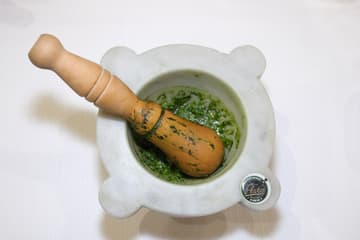
Classic Genovese pesto blends basil, olive oil, pine nuts, garlic, and hard Italian cheese (Parmigiano and/or Pecorino).
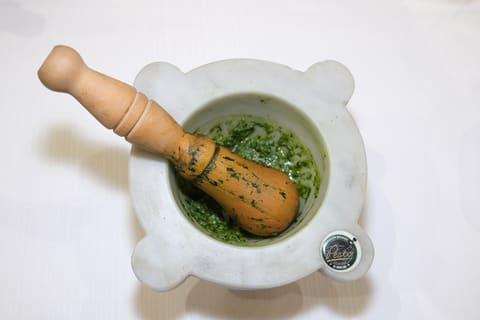
Photo: AlfonsoLucifredi · CC BY-SA 4.0
How to verify
- Homemade pesto without cheese is Halal.
- With cheese, confirm microbial/vegetable or Halal-certified rennet.
- Read jar labels for cheese type and additives.
- At restaurants, ask whether the pesto uses Parmesan/pecorino and whether the pasta finish adds wine or meat stock.
Quick checks
- Cheese in the recipe?
- Rennet source stated or Halal-marked?
- Any wine or meat stock on the finished plate?
What decides the answer
-
Basil, oil, nuts, garlic only
Halal -
With Parmesan/pecorino
Halal if rennet verified -
Unlabelled jar cheese
Halal if verified
Why this ruling
Pesto alla genovese comes from Genoa, on the Ligurian coast: young basil leaves pounded in a marble mortar with garlic, coarse salt and pine nuts, loosened with Ligurian olive oil and finished with grated Parmigiano Reggiano and Pecorino. In Liguria it is tossed with trofie or trenette, often with boiled potatoes and green beans cooked in the same pot. The herbs, nuts, garlic and oil are plant food and Halal; the one real question is the cheese.
What decides it
| Part | Usually | Halal? |
|---|---|---|
| Basil, garlic, pine nuts, salt | Plant | Yes |
| Olive oil | Plant | Yes |
| Parmigiano Reggiano | Hard cow's milk cheese, calf rennet | Depends on the rennet |
| Pecorino (Fiore Sardo or Romano) | Hard sheep's milk cheese, animal rennet | Depends on the rennet |
| Jarred pesto extras | Whey powder, "cheese", flavourings | Check the label |
Parmigiano Reggiano is made only with calf rennet, by the rules of its protected designation.[10] Pecorino and Grana Padano are also traditionally made with animal rennet. Rennet is Halal when it is microbial or from an animal slaughtered Islamically; pork rennet is not; rennet from a calf or lamb not slaughtered Islamically is a point of scholarly difference, which the SeekersGuidance answer on cheese rennet sets out.[5] A basil pesto made without cheese has no question at all.
Jars and restaurants
Supermarket pesto usually names its cheese. Barilla's Pesto alla Genovese, for example, lists Parmigiano Reggiano PDO, so it carries the calf-rennet question.[9] Cheaper jars may say only "cheese" or add whey powder, and vegan pestos replace the cheese with nuts or nutritional yeast. Other styles follow the same rule: Sicilian pesto alla trapanese uses almonds and tomato, pesto rosso sun-dried tomatoes, and both usually add cheese.
In a restaurant, ask which cheese goes into the pesto and whether anything else is added to the plate: pancetta, a splash of wine in the pan, or a meat stock to loosen the sauce.[2]
At home
Pound or blend basil, garlic, pine nuts and salt, add olive oil, and stir in a hard cheese made with microbial rennet, or leave it out and add a little extra salt and nuts. For the cheese question in detail, see cheese; for what it goes on, pasta, pizza and lasagna.
Where you'll find it
- Pasta sauces
- Sandwiches and focaccia
- Jarred supermarket pesto
- Italian restaurants
Frequently asked questions
Is pesto Halal?
Is jarred pesto Halal?
Is pesto pasta Halal?
Scholarly view
Plant ingredients in pesto are fine. Hard cheese rennet follows the usual cheese ruling; when uncertain, choose cheese-free pesto.
Sources
Named Islamic, certifier, manufacturer, and regulatory sources used on this page. Inline markers like [1] jump here. Retrieval dates show when we last checked the live URL. Editorial methodology.
Islamic / scriptural
-
Qur'an Retrieved
Swine prohibition—frames pork toppings (guanciale, pancetta, sausage) on pasta plates.
-
Qur'an Retrieved
Intoxicants prohibition—frames wine reductions and wine deglazes in sauces/risotto.
-
SeekersGuidance — Is rennet in cheese Halal?
SeekersGuidance Retrieved
Hanafi-oriented ruling on animal vs microbial rennet in cheese.
-
Askimam — rennet from slaughtered / carrion / porcine sources
Askimam Retrieved
Details conditions for animal rennet permissibility.
-
IslamQA 7327 — ruling on alcohol / khamr
IslamQA Retrieved
-
IslamQA 148690 — alcohol in food
IslamQA Retrieved
Certifier / jurisdiction
-
IFANCA Retrieved
Certifier practice for dairy enzymes/rennet in hard Italian cheese and processed sauces when a Halal mark is used.
Manufacturer / product
-
Barilla — Pesto alla Genovese ingredients
Barilla Retrieved
Jar lists Parmigiano Reggiano PDO cheese (and whey powder)—rennet-conditional cheese path.
-
Parmigiano Reggiano PDO — production specification (calf rennet)
Consorzio del Formaggio Parmigiano-Reggiano Retrieved
PDO standard: milk coagulation exclusively with calf rennet.
Regulatory / labelling
-
FDA Food Ingredients & Packaging
U.S. FDA Retrieved
Ingredient/enzyme labelling context for cheese, pasta products, and jarred sauces.
Halal-conscious recipes
A substitution-led recipe that uses this analysis.
Browse this topic
Open the parent category hub for more foods in the same group.