
Halal-conscious recipe
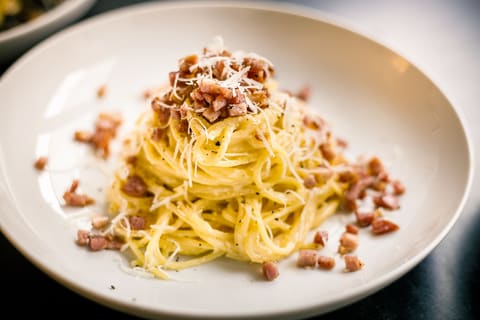
Halal carbonara-style pasta
Egg, pecorino, and black-pepper pasta using Halal beef instead of guanciale, with no wine in the pan.
Each method follows published technique for the dish, and every Halal substitution is checked against the ingredient pages we cite. Photographs come from our ingredient library rather than the finished dish.
Why Halal checks matter here
Classic Roman carbonara uses pork jowl (guanciale) or pancetta; some kitchens add wine; pecorino is rennet-conditional.
This is carbonara-style: the emulsion is the Italian technique; the meat is not guanciale. Do not order “just a little pancetta” in a restaurant and call it this recipe. See carbonara and pasta.
Halal-critical ingredients
- Guanciale / pancetta Pork. Haram. Halal beef or turkey only, from a Halal butcher or certified pack.
- Cheese Pecorino Romano and Parmigiano often use animal rennet. Named microbial/Halal-certified cheese, or a hard cheese your practice accepts. See Cheese.
- Wine Some ‘carbonara’ recipes deglaze with white wine. None in this method. See Wine.
Safe substitutes
- Guanciale → Smoked Halal beef, Halal beef bacon, or Halal turkey lardons Flavour will not be identical to pork jowl; that is the point of a Halal plate.
- Animal-rennet pecorino → Microbial-rennet pecorino-style or a Halal-certified hard cheese
- Wine deglaze → Pasta water only
Allergens
gluten, egg, milk
Ingredients
Pasta and sauce
- 400 g (14 oz) dried spaghetti or rigatoni
- 80 g (4 yolks) egg yolks
- 50 g (1 large) whole egg
- 80 g (1 cup loosely packed) pecorino or Parmesan-style cheese with microbial, vegetable, or Halal-certified rennet, finely grated
- 4 g (1½ tsp) coarsely ground black pepper
- 12 g (2 tsp) fine salt, for the pasta water
Halal cured-meat stand-in
- 150 g (5 oz) Halal beef bacon, smoked Halal beef, or Halal turkey lardons (not guanciale, not pancetta)
- 10 ml (2 tsp) olive oil, only if the beef is very lean
Method
- Cheese and egg bowl. Beat yolks, whole egg, most of the cheese, and a generous amount of black pepper to a thick paste. No cream. No wine.
- Render the Halal meat. Cut the Halal beef or turkey into small batons. Render in a cold pan, raising the heat until the edges crisp. Do not use pork fat left in a restaurant pan. If the meat is very lean, add a little olive oil. Take off the heat.
- Cook pasta. Boil pasta in well-salted water until just shy of al dente. Reserve 250 ml starchy water. This starch is what emulsifies carbonara-style sauce.
- Emulsify off the boil. Tip drained pasta into the meat pan (heat off or very low). Toss. Wait 30 seconds so the pan is not scorching, then add the egg-cheese mix and a splash of pasta water, stirring hard until glossy. If it scrambles, the pan was too hot — loosen with more water, do not add cream to ‘fix’ it.
- Serve. More cheese and pepper. This plate is Halal only if the meat and cheese checks passed. Classic restaurant carbonara is still pork until proven otherwise — see Carbonara.
How this recipe was researched
Method specified editorially from the standard carbonara emulsion (egg, hard cheese, pasta water, no cream) plus this site's Carbonara, Pork, Cheese, and Wine pages. Timings follow published technique rather than a kitchen test. This is carbonara-style, not a claim to be trattoria carbonara.
Technique and ingredient sources
-
Spaghetti carbonara — BBC Food
— BBC Food
Retrieved:
Egg, cheese, pasta water emulsion. BBC’s published version uses pancetta — pork — which this recipe replaces.
-
Carbonara analysis — isithalal.food
— isithalal.food
Retrieved:
Why the dish name tracks pork until the kitchen says otherwise.