
Is Ham Halal?
No — this one is Haram.
Ham is cured pork from the hind leg of a pig (or products named ham that are still pork-based).
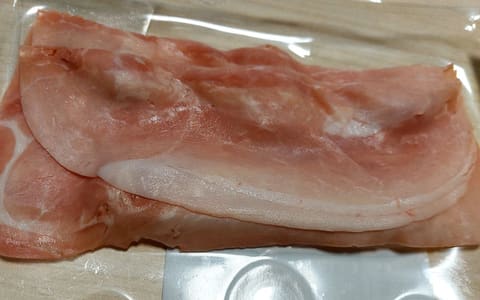
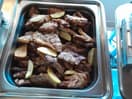
Photo: Anna.Massini · CC BY 4.0
Why it is Haram
Ham is not a borderline additive question. It is a named pork product. The Quran prohibits swine flesh in multiple verses; cured, smoked, salted, or cooked preparation does not lift the ban. 'Halal ham' marketing, when legitimate, refers to turkey or beef analogues—not pork certified as Halal. Necessity (darurah) is the only classical exception and does not cover ordinary deli preference.
Quranic guidance
-
Surah Al-Baqarah 2:173
"He has only forbidden to you dead animals, blood, the flesh of swine, and that which has been dedicated to other than Allah."
-
Surah Al-Ma'idah 5:3
"Forbidden to you are dead animals, blood, the flesh of swine, and that which has been dedicated to other than Allah."
Where it shows up
- Deli slices for sandwiches
- Holiday glazed roast hams
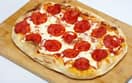
- Pizza toppings and omelets
- Prosciutto and Serrano on charcuterie boards
- Soups, beans, and stews flavoured with ham hock
What decides the answer
-
Pork ham of every style (prosciutto, honey ham, ham hock, etc.)
Haram -
Turkey ham / beef ham: different products—require their own Halal checks
-
Shared deli slicers with pork ham contaminate neighboring 'Halal' slices for strict consumers
-
Pizza 'ham' in non-Halal shops = pork
Why this ruling
Looking for jamón, Serrano, Black Forest, honey ham, gammon, or speck? Same ruling as ham — if it is pork curing, it is Haram. Italian dry-cured styles have a dedicated page at prosciutto; turkey/beef “ham” analogues are different products and need their own Halal check.
Ham is a cured pork product, traditionally the hind leg of a pig preserved by salting, smoking, or sweet glazes. From supermarket honey ham to Italian prosciutto and Spanish jamón Serrano, the culinary family is large—and for Muslims the ruling is uniform: Haram, because it is swine flesh.
Quranic evidence (not a preference)
The Quran forbids the flesh of swine expressly. A clear English rendering of one of the central verses is available at quran.com/2/173 (retrieved 20 July 2026): carrion, blood, swine, and animals dedicated to other than Allah are forbidden, with only genuine necessity excepted. Parallel wording appears in 5:3 and elsewhere. Islamic schools do not carve out an exception for cured pork, smoked pork, or expensive heritage hams.
Curing is a preservation and flavour method. It is irrelevant to the species ban the way cooking wine is irrelevant to the intoxicant ban: process does not rewrite the source.
Entity-specific forms people ask about
- Cooked deli ham / honey ham — pork, Haram.
- Prosciutto, Parma, Serrano, Iberico — dry-cured pork, Haram.
- Ham hock / hambone soups — pork flavour base, Haram.
- Pizza ham / Hawaiian pizza — pork topping unless a Halal restaurant substitutes turkey and says so.
- Turkey ham / beef ham — not pork; judge as turkey or beef products (slaughter, additives, shared equipment).
There is no authentic "Halal pork ham." Marketing that says Halal ham means a non-pork analogue or it is misuse of the word.
Cross-contamination in real kitchens
Even when you order turkey, a deli slicer that just cut pork ham matters to many Muslims. Shared pizza cutting boards and soup pots simmered with ham bones are common non-Halal restaurant patterns. The safe pattern is dedicated Halal shops or clear allergen/ingredient answers—not scraping ham off a sandwich.
Alternatives
Halal turkey slices, roast beef, chicken loaf, and plant-based deli slices cover the sandwich use-case. For smoky depth in beans or collards, use Halal smoked turkey or spices instead of ham hock.
Practical ruling
Pork ham is Haram by clear text and consensus. Spend verification energy only on lookalike turkey/beef products and on hidden ham stock—not on finding a Halal certifier for prosciutto.
Everyday places ham hides
Beyond the obvious glazed holiday roast, pork ham shows up in:
- Breakfast plates — ham and eggs, omelet mix-ins, croissant sandwiches.
- Picnic and lunch meat — honey ham, smoked ham, chopped ham salad.
- Bean pots and greens — ham hock or hambone as the flavour base.
- Quiche, fried rice, and fried noodles — diced ham as a default protein.
- Charcuterie — prosciutto, speck, and similar cured legs marketed as premium, still pork.
Menu English sometimes softens the word ("northern Italian cured meat," "jamón") without saying pig. If the animal is swine, the ruling does not soften with the branding. Only an explicit non-pork species plus a Halal supply chain changes the analysis.
For Muslims stocking a mixed household fridge, keep pork ham on separate boards and knives from Halal foods; washing helps hygiene, but many families simply keep pork products out of the Halal kitchen entirely.
How to verify
Check labels carefully for alternate names or derivatives linked to ham, and choose clearly Halal or plant-based alternatives instead.
Quick checks
- Ham / prosciutto / jamón without another species word = pork = Haram.
- Turkey or beef 'ham' needs its own Halal slaughter proof.
- Watch deli slicers, pizza toppings, and ham-hock stocks.
Frequently asked questions
Is ham always pork?
Why is ham Haram if it is cooked or cured?
Is prosciutto or Serrano ham different?
What about turkey ham—is that Halal?
Can a tiny amount of ham in a soup be ignored?
Where can I read the Quranic prohibition?
Sources
Named Islamic, certifier, manufacturer, and regulatory sources used on this page. Inline markers like [1] jump here. Retrieval dates show when we last checked the live URL. Editorial methodology.
Islamic / scriptural
-
Retrieved
-
Qur’anic text Retrieved
He has only forbidden to you dead animals, blood, the flesh of swine, and that which has been dedicated to other than Allah.
-
Qur’anic text Retrieved
Forbidden to you are dead animals, blood, the flesh of swine, and that which has been dedicated to other than Allah.
People also check
Related ingredients and products for this item.