
How to verify
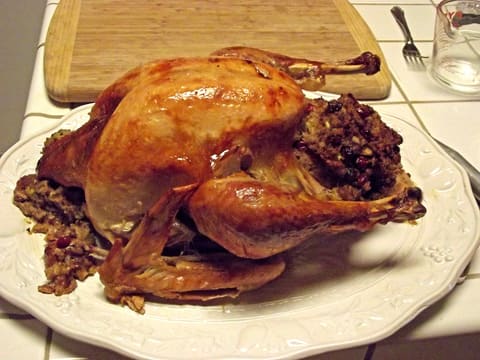
- For whole birds, order from certified suppliers (Midamar, Crescent Foods, local zabiha farms) - especially ahead of Thanksgiving when halal turkeys sell out.
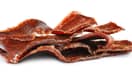
- For deli turkey and turkey bacon, look for the certifier's mark; 'turkey' on the label says nothing about slaughter.
Quick checks
- Turkey is a Halal bird, but the meat is Halal only from Islamic slaughter.
- For deli turkey, turkey bacon and whole birds, look for a Halal certifier's mark.
- Order Halal turkeys early for Thanksgiving and Christmas; they sell out.
What decides the answer
-
Turkey slaughtered by zabiha
Halal -
Certified halal turkey products
Halal -
Conventional supermarket turkey (including 'natural' and kosher brands)
Not Halal -
Processed turkey products (bacon, ham, deli slices) without certification
Not Halal
Why this ruling
Turkey is the large North American ground bird at the center of Thanksgiving - and increasingly, of everyday eating through deli slices, ground turkey, turkey bacon, and turkey sausage marketed as leaner swaps for beef and pork. As a species, turkey is halal without controversy: it is a seed- and ground-feeding bird without talons, nothing like the birds of prey the Prophet (peace be upon him) prohibited, and all schools of Islamic law place it alongside chicken, duck, and geese in the permissible category.
As always with meat, the species answer is only half the question. A turkey must be slaughtered according to Islamic requirements - alive and healthy at the cut, the name of Allah pronounced, throat vessels severed swiftly, blood drained - for its meat to be halal. The frozen supermarket turkey, the 'all natural' premium bird, and the kosher brand alike do not meet zabiha requirements. In commercial poultry, stunning is standard practice, and the halal world splits the same way it does for chicken: many certifiers accept reversible stunning that leaves the bird alive for the cut, while stricter standards certify only non-stunned slaughter.
The American halal market has made the whole-bird question easy: Midamar, Crescent Foods, and a network of zabiha farms sell certified whole turkeys, with pre-orders spiking every November for Muslim families cooking Thanksgiving dinner. If you want a halal holiday bird, order early - certified turkeys genuinely sell out.
Processed turkey deserves the most label attention. Turkey bacon, turkey ham, turkey sausage, and deli turkey involve brines, flavourings, casings, and shared processing lines beyond the bird itself, so certification needs to cover the finished product. Certified versions of all of them exist - halal turkey bacon and deli turkey breast are stock items at Muslim grocers - making turkey one of the easiest meats to keep fully halal year-round.
Whole bird vs processed turkey
A plain turkey is a lawful bird when slaughtered Islamically. Supermarket holiday turkeys in non-Muslim markets are usually not zabiha—same rule as chicken. Deli turkey, turkey bacon, turkey ham, and seasoned roasts add curing agents, shared lines, and occasionally wine or pork-derived enzymes; certification or clear plant documentation matters more as processing increases.
Restaurant and deli practice
Turkey clubs often include bacon by default. Gravies may use non-Halal stock. Ask for no bacon, confirm gravy base, and prefer carved plain turkey over mystery “turkey specials.” Halal butchers and certified brands solve Thanksgiving-style meals without guesswork.
Comparison with other poultry
Chicken, duck, and goose share the bird-slaughter framework. Turkey bacon is not a pork loophole—see bacon. Ground turkey in frozen burgers still needs Halal meat sourcing.
Frozen turkey burgers and seasoned turkey mince still need Halal meat sourcing—seasoning packets do not convert conventional poultry into zabiha.
A published ruling
Darul Ifta Birmingham, asked whether turkey meat is halal or haram, answered that turkey, like any other poultry, is Halal with no stated prohibition, provided it is slaughtered according to Islamic law [4]. The answer adds a caution about buying turkey in order to imitate a non-Muslim festival. For a shopper, the working test is the same as for chicken: a Halal slaughter mark on the bird or the product.
Where you'll find it
- Thanksgiving and holiday roast turkey
- Deli turkey slices and turkey ham
- Turkey bacon and turkey sausage
- Ground turkey in burgers and chili
Frequently asked questions
Is turkey halal?
Is Butterball turkey Halal?
Can Muslims celebrate with a Thanksgiving turkey?
Is 'turkey ham' halal?
Are deli turkey slices halal?
Is stunned turkey halal?
What does a published fatwa say about turkey?
Scholarly view
Turkeys are ground-feeding birds without talons, so they fall in the permissible category with chicken, duck, and geese - all four schools agree. The practical questions are identical to chicken: zabiha slaughter, and for processed products (turkey bacon, deli turkey), verified halal processing.
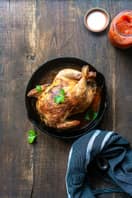
Certified whole halal turkeys are now easy to order in the US around the holidays from suppliers like Midamar and Crescent.
Sources
Named Islamic, certifier, manufacturer, and regulatory sources used on this page. Inline markers like [1] jump here. Retrieval dates show when we last checked the live URL. Editorial methodology.
Islamic / scriptural
-
Darul Ifta Birmingham: Is turkey meat halal or haram?
Darul Ifta Birmingham (via IslamQA.org) Retrieved
Maulana Moinul Abu Hamza, checked by Mufti Mohammed Tosir Miah: turkey, like any other poultry, is halal with no stated prohibition provided it is slaughtered according to Islamic law (dhabiha). Cautions against buying it to emulate non-Muslim festivals.
Certifier / jurisdiction
-
Retrieved
Regulatory / labelling
-
USDA FSIS — turkey food-safety context
Retrieved
Context / background
-
Were Butterball Turkeys Sold in the United States 'Blessed by Allah'?
TruthOrFiction Retrieved
Quotes Butterball's November 2011 statement: 'Our domestic products are not halal certified.' The article (2015, updated 2021) adds that Butterball certifies some turkeys as Halal for export.