
How to verify
- Require zabiha/Halal patties for meat burgers.
- In US/UK, treat McDonald’s/BK/Wendy’s beef as not Halal; same brands may be Halal in Muslim-majority countries.
- Ask about shared grills with bacon—even for plant-based patties.
- Check gourmet sauces for wine, beer batter, or bacon jam.
- Prefer dedicated Halal burger restaurants with displayed certificates.
Quick checks
- Patty slaughter status is decisive.
- Geography and certificates beat brand loyalty.
- Shared bacon grills contaminate veggie orders.
- Kosher burgers ≠ automatically Halal.
What decides the answer
-
Burger from certified halal patty, clean toppings, and dedicated grill
Halal -
Same chains in Muslim-majority countries (Gulf, Malaysia, etc.) — locally certified
Halal -
McDonald's, Burger King, Wendy's, etc. in the US/UK — non-zabiha beef, shared grills with bacon
Not Halal -
Burgers topped with bacon or cooked in unspecified 'meat flavouring'
Haram -
Veggie/plant-based burgers at mainstream chains: meat-free but cooked on shared surfaces - ask about preparation
Why this ruling
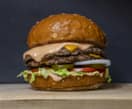
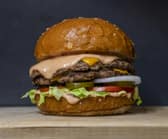
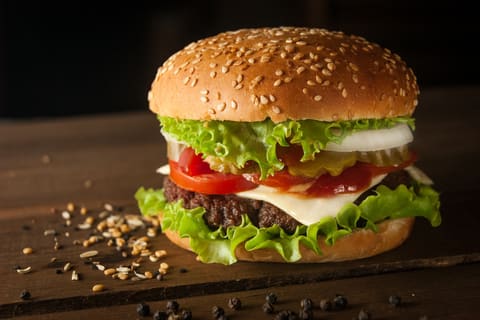
The hamburger is the world's default meal - a ground meat patty in a bun with cheese, sauce, and toppings - and its halal status is decided ingredient by ingredient, kitchen by kitchen. Nothing about a burger is inherently haram; almost everything about a mainstream Western burger chain fails the test in practice.
Start with the patty. Ground beef must come from zabiha-slaughtered cattle, and at McDonald's, Burger King, Wendy's, and their peers in the US and UK, it does not - the companies themselves state their menus are not halal certified. The same brands operate fully halal in Muslim-majority markets (Saudi Arabia, UAE, Malaysia, Pakistan and others), where national certification governs the entire supply chain - which is why travelers get confused. The rule of thumb: the brand means nothing; the country and the location's certificate mean everything.
Beyond the patty, burgers hide smaller questions. Bacon toppings and beef-tallow flavouring are outright haram elements; cheese slices are usually made with microbial enzymes (fine), but speciality cheeses vary; sauces can include wine, beer (beer-battered onions), or Worcestershire of unclear composition; and some commercial buns use L-cysteine dough conditioner, which is debated when sourced from human hair or non-halal feathers. The grill itself matters most: a plant-based patty cooked beside bacon on a shared flat-top inherits the contamination problem, which is why scholars advise asking about preparation even for meat-free orders.
The encouraging reality is that halal burgers have never been easier to eat well. Dedicated halal smash-burger joints and chains have multiplied across the US, UK, and Canada, many carrying formal certification - and a home griddle with zabiha ground chuck from your halal butcher produces a burger that answers every question above by construction. When in doubt: check for a certificate, ask about the grill, and skip the bacon jam.
Fast food versus Halal smash culture
Mainstream Western burger chains state they are not Halal certified; Gulf and Malaysian outlets of the same logos often are. Impossible/Beyond patties can be Halal as products yet fail on a bacon-shared flat-top. See McDonalds, beef, L-cysteine for buns. FSIS ground beef labelling: fsis.usda.gov (retrieved 20 July 2026). Certification literacy: ifanca.org (retrieved 20 July 2026), MYeHALAL (retrieved 20 July 2026).
Smash burgers, food trucks, and university campuses
Food trucks with “Halal” stickers vary in rigor—ask which certifier audited the patties and whether bacon shares the plancha. University dining Halal lines are often better documented than street trucks. Veggie burgers at bacon-heavy smash shops need the grill question every time. At home, 80/20 zabiha chuck, salt, and a hot steel surface recreate the trend without supply-chain fog.
Where you'll find it
- Fast-food and smash burgers
- Homemade grilled burgers
- Gourmet and steakhouse burgers
- Turkey, chicken, and veggie burgers
Frequently asked questions
Is McDonald's halal in the US?
Are Impossible or Beyond burgers halal?
What about the cheese and sauces on burgers?
Are halal burger restaurants actually certified?
Is a kosher burger halal?
Scholarly view
The burger stacks several rulings: the patty (zabiha meat required), added fats and flavourings (beef tallow flavour, bacon), cheese (enzyme source), sauces (wine vinegar is fine; wine itself and some Worcestershire-based sauces are not), the bun (L-cysteine from hair/feathers in some doughs is debated), and the grill (pork cross-contact).
Fast-food chains in Muslim-majority countries operate fully halal; the same brands in the US/UK explicitly state they are not halal certified.
Sources
Named Islamic, certifier, manufacturer, and regulatory sources used on this page. Inline markers like [1] jump here. Retrieval dates show when we last checked the live URL. Editorial methodology.
Certifier / jurisdiction
-
Retrieved
-
Retrieved
Manufacturer / product
-
McDonald's UK — why are some restaurants Halal?
McDonald's UK Retrieved
UK FAQ: none of the McDonald's restaurants in the U.K. offer Halal-certified meat.
-
Impossible Foods — Halal or Kosher FAQ
Impossible Foods Retrieved
Named Impossible products are IFANCA Halal-certified; preparation/kitchen still decide the plate; some products are not certified.
Regulatory / labelling
-
Retrieved