
How to verify
- Require Islamic slaughter certification or a trusted Halal poultry source—do not assume holiday roast goose is zabiha.
- Clarify stunning: bird alive at the cut?
- For foie gras, confit, and pâtés, verify slaughter plus alcohol, pork fat, and gelatin in the recipe.
- At restaurants, ask about shared ovens, gravies, and stuffing mixes.
What decides the answer
-
Goose species: Halal poultry
-
Requires lawful Islamic slaughter or accepted meat-source rules
-
Foie gras/pâté: slaughter + recipe additives (wine, pork fat, gelatin)
-
Rendered goose fat inherits the bird's slaughter status
Why this ruling
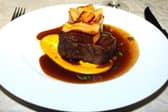
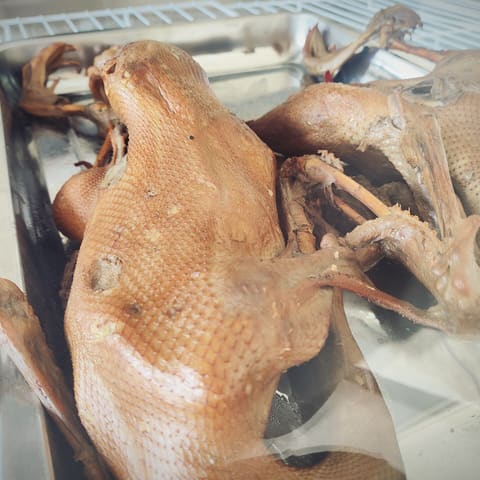
Goose is a large waterfowl in the family Anatidae (with ducks and swans), raised for meat, fat, eggs, and down. Roast goose is festive in many European and Asian cuisines; goose fat is prized for potatoes; foie gras is a speciality product from fattened liver. In Islamic law the bird species is Halal—geese are not birds of prey. The live question is slaughter and what the kitchen adds.
Species vs slaughter
Non-predatory birds such as goose are treated as lawful species because they are not the taloned hunters the Prophet forbade (Sahih Muslim 1934a, retrieved 15 August 2026). Confirm slaughter for the carcass you buy. Qur'an 5:3 forbids carrion, blood, swine, and unlawfully killed animals (quran.com/5/3, retrieved 20 July 2026). For shoppers:
- Goose as poultry → Halal species.
- This roast / this foie gras → depends on slaughter audit, stunning policy, and recipe.
Status on this page is Halal with conditions, matching duck and chicken framing.
Industrial poultry and certification
Food-safety inspection of poultry addresses hygiene, not religion. U.S. FSIS poultry inspection information is at fsis.usda.gov (retrieved 20 July 2026). Halal marks require Islamic certifiers—JAKIM's public portal is one lookup example (MYeHALAL, retrieved 20 July 2026). Machine slaughter and water-bath stunning remain disputed operational details; match the certifier to your school's standard.
Stunning, machine slaughter and wild geese
- Species: Ordinary domestic goose is Halal poultry (not a bird of prey). Foie gras and pâtés still need recipe checks (alcohol, pork fat, gelatin).
- Stunning / machine slaughter: Contested. Prefer a named certifier’s published poultry standard—compare e.g. HMC and IFANCA (retrieved 20 July 2026)—rather than assuming “farm goose” or FSIS inspection equals zabiha.
- Hunted wild goose: Separate hunted-game rules (valid wound, naming where required)—see IslamQA 194080 (retrieved 15 August 2026); not the same as certified farmed poultry.
Foie gras, confit, and fat
Speciality goose products need extra reading:
- Foie gras — still requires a Halal bird; many restaurant presentations use alcohol-based glazes or non-Halal pastry.
- Confit — traditionally preserved in its own fat; fat must come from a Halal carcass.
- Pâté and mousse — watch pork fat, gelatin, and wine.
- Rendered goose fat — Halal only from Halal-slaughtered birds; unlabeled restaurant fat is often conventional.
Welfare debates about force-feeding do not rewrite the species ruling, but many Muslims avoid foie gras for ethical reasons while still accepting ordinary goose meat from a trusted slaughter source.
Restaurants and holidays
Christmas or wedding goose specials in non-Halal restaurants rarely come with zabiha paperwork. Ask about the bird's source and whether stuffing, gravy, or glaze contains pork sausage, bacon, or wine. Shared carving boards with ham are a cross-contact issue for cautious diners.
Realistic verification
- Buy Halal-certified goose when available.
- Treat foie gras and pâté as product-level checks.
- Ask restaurants about fat source for 'goose-fat potatoes.'
- Do not equate free-range or heritage-breed labels with Halal.
- Goose eggs are a dairy-adjacent poultry product from living birds—not the same certificate as goose meat.
Wild goose and hunting contexts
Some communities eat wild goose taken in hunting seasons. Species permissibility still holds for ordinary geese that are not birds of prey, but the kill method must meet your school's rules for hunted game (valid wound, naming of Allah where required, and not eating an animal found already dead). A hunter's freezer bag is not automatically zabiha supermarket poultry. If you do not hunt under those rules, buy farmed Halal-certified goose instead of assuming wild equals pure.
Stuffing mixes for roast goose often include sausage meat, bacon bits, or wine-soaked fruit. Even a perfectly slaughtered bird becomes a problem dish when the cavity is packed with pork. Ask for plain herb stuffing or cook at home with known Halal ingredients. Gravy made from pan drippings is fine from a Halal bird; gravy stretched with non-Halal stock cubes is not.
Where you'll find it
- Roast goose for festive meals
- Confit and slow-cooked legs
- Foie gras and pâtés
- Rendered goose fat for roasting potatoes
Frequently asked questions
Is goose Halal like chicken?
Is foie gras Halal?
Is goose fat Halal for roasting potatoes?
Does stunning change the ruling?
Where is the Qur'anic baseline?
Scholarly view
Geese are not birds of prey. Classical permission for non-predatory birds applies; the modern bottleneck is industrial or farm slaughter and speciality products like foie gras. Ethical debates about force-feeding are separate from the species Halal ruling—Muslims who avoid foie gras on welfare grounds may still eat zabiha goose meat. Goose fat from a Halal-slaughtered bird is Halal; fat from an unlawful carcass is not.
Sources
Named Islamic, certifier, manufacturer, and regulatory sources used on this page. Inline markers like [1] jump here. Retrieval dates show when we last checked the live URL. Editorial methodology.
Islamic / scriptural
-
Retrieved
Carrion, blood, swine, and unlawfully killed animals—slaughter frame, not a goose-species ban.
-
Sahih Muslim 1934a — birds with talons
Sahih Muslim (sunnah.com) Retrieved
Forbids birds that hunt with talons; domestic goose is not that class.
-
IslamQA Retrieved
Hunted-game conditions (trained animal/tool, tasmiyah, valid wound)—not a farmed-goose certificate.
Certifier / jurisdiction
-
Retrieved
-
Retrieved
-
Retrieved
Regulatory / labelling
-
Retrieved