
How to verify
- Confirm it is duck or goose liver, not a pork pâté sold under a similar name.
- Require Islamic slaughter of that bird.
- Ask whether the terrine or pan uses brandy, Sauternes, port, or another wine.
- Ask whether pâté or mousse is mixed with pork fat or other pork.
- Ask whether aspic or gelatin seals the terrine.
- Order only when the kitchen can name a Halal bird and an alcohol-free, pork-free recipe—or skip the plate.
Quick checks
- Duck or goose liver, Halal-slaughtered?
- Brandy, Sauternes, or port in the recipe?
- Pork fat or pork in pâté/mousse?
- Gelatin aspic on the terrine?
What decides the answer
-
Halal-slaughtered duck or goose liver, no alcohol, no pork, named gelatin or none
Halal -
Unverified restaurant plate
Halal if verified -
Non-Halal slaughter of the bird
not Halal -
Brandy, Sauternes, port, or other alcohol in the pan or terrine
Haram -
Pâté or mousse mixed with pork
Haram
Why this ruling
Foie gras ("fat liver") is the liver of a duck or goose that has been fattened by gavage, feeding it more grain than it would eat on its own for the last two weeks or so of its life. Most is now made from ducks, mainly in south-west France (Gers, Landes, Périgord), with goose foie gras still associated with Alsace; Hungary and Bulgaria are the other large producers. It is served hot, as thick slices seared in a dry pan, or cold, as a terrine, torchon or tin.[1]
Duck and goose are Halal-eligible birds, so the liver is not a species problem. The questions are the ones for any poultry, slaughter first, then what the kitchen adds.
What decides it
| Part | Usually | Halal? |
|---|---|---|
| The bird | Duck (most), goose (some) | Needs Halal slaughter |
| Seasoning | Salt, pepper, sugar | Yes |
| Alcohol | Cognac, Armagnac, port or Sauternes in terrines and sauces | No |
| Pâté and mousse | At least 50% liver; the rest can include pork | Check the list |
| Aspic glaze | Gelatin, source rarely named | Check |
| Served with | Fig or onion chutney, brioche, a glass of Sauternes | Check the chutney |
Slaughter decides the liver exactly as it decides roast duck or goose.[2] After that, alcohol is the most common problem. Classic terrine recipes marinate the liver in cognac, Armagnac or port before cooking, and restaurants often deglaze seared foie gras with Sauternes or port.[3] Cooking does not make a wine sauce acceptable.
Reading a French label
French rules set names by how much liver the product holds, and the name tells you what else might be in it:
- Foie gras entier: one or more whole lobes, only seasoning added.
- Foie gras: pieces of lobe pressed together.
- Bloc de foie gras: liver blended with water and seasoning, then set.
- Parfait de foie: at least 75% foie gras.
- Pâté, médaillon or mousse de foie: at least 50% foie gras. The remainder can be other liver, meat or fat, and that can be pork.
On any of them, read the ingredients for cognac, armagnac, porto, vin or alcool, and for gélatine or gelée, which is gelatin and often of pork origin. Mi-cuit (half-cooked) and cuit describe the cooking, not the ingredients.
Halal foie gras
Some French producers make Halal-certified foie gras for Muslim customers, sold through Halal butchers and some supermarkets, especially around the end-of-year holidays. As with any meat, the certifier's name should be printed on the tin, and the ingredient list should still be free of alcohol.
The welfare question
Force-feeding is widely criticised, and producing foie gras by gavage is banned in several countries, including the UK, although its sale there is still allowed. That debate does not change the Halal ruling: a Halal-slaughtered bird with an alcohol-free, pork-free recipe is Halal. Many Muslims still decline foie gras on welfare grounds, as Islamic ethics also asks for kindness to animals. That is a personal choice this page leaves to you.
Where you'll find it
- Pan-seared foie gras with sweet wine
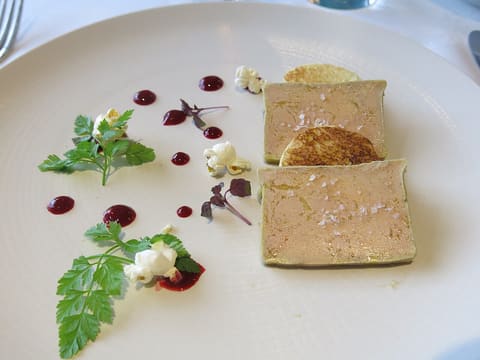
- Cold terrine and torchon
- Pâté and mousse (often mixed, not 100% liver)
- Tasting-menu garnish
Frequently asked questions
Is foie gras Halal?
Does force-feeding make foie gras Haram?
Is pan-seared foie gras safer than terrine?
Is this the same as eating duck or goose?
Scholarly view
Duck and goose are lawful waterfowl when slaughtered Islamically. Pork in pâté is Haram. Brandy, Sauternes, and port are intoxicants. Unnamed gelatin in aspic follows the gelatin ruling. Force-feeding (gavage) is an animal-welfare debate; it does not replace zabiha, and it is not a species prohibition. Muslims may still refuse the dish on welfare grounds.
Sources
Named Islamic, certifier, manufacturer, and regulatory sources used on this page. Inline markers like [1] jump here. Retrieval dates show when we last checked the live URL. Editorial methodology.
Islamic / scriptural
-
Qur'an Retrieved
Carrion, blood, swine, and unlawfully killed animals—slaughter frame for the bird; swine prohibition if pâté is mixed with pork.
-
Qur'an Retrieved
Intoxicants — frames brandy, Sauternes, and port in terrines or pan sauces.
Context / background
-
Foie gras — fattened duck or goose liver, terrine, and pâté
Wikipedia Retrieved
Culinary identity: French-law product is duck or goose liver fattened by gavage; sold whole, as terrine, pâté, mousse, or parfait (pâté/mousse may be 50%+ liver); terrines often flavoured with cognac or Armagnac; hot seared preparations. Identity context, not a Halal certificate.