
Is Bread Halal?
Yes — this one is Halal.
Plain bread—flour, water, yeast or culture, and salt—is Halal.
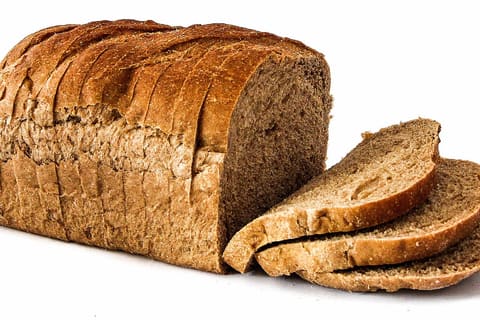
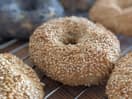
Photo: FranHogan · CC BY-SA 4.0
What decides the answer
-
Simple breads (flour, water, yeast or culture, salt)
Halal -
Traditional recipes that actually use lard
Haram -
Pack listing L-cysteine/E920 with no source or certificate: mashbooh until the route is named—do not infer the feedstock
-
Pack listing E471 or unspecified shortening: check the fat source separately
-
Filled or alcohol-glazed bakery items: judge the filling or glaze
Where you'll find it
- Sandwich loaves and rolls
- Bagels, pizza dough, and flatbreads
- Croissants and enriched breads
- Breadcrumbs and stuffing
Why this ruling
Plain bread is Halal. Flour, water, salt, and baker’s yeast or a sourdough culture raise no slaughter question, and the named answers below treat the yeast’s trace fermentation alcohol as ordinary food chemistry, not as khamr.
SeekersGuidance’s Maliki ruling (Shaykh Rami Nsour) permits leavened bread: traces formed while dough rises do not make the loaf impure, and bread cannot intoxicate.[1] A Hanafi SeekersGuidance-line answer by Shaykh Faraz Rabbani likewise permits yeast bread and sourdough when that alcohol is incidental, not used as an intoxicant, and not present in an intoxicating amount.[2] Qur'an 5:90 addresses intoxicants as drinks, not a baguette.[5]
When a label lists improvers
The usual commercial extra is L-cysteine (E920), a dough conditioner on some soft sandwich breads, buns, bagels, and pizza bases. SANHA lists E920 as mushbooh because the feedstock may be animal or human hair, chicken feathers, or synthetic—the listing is source-dependent, not a census of bakery supply.[3] Askimam 19249, a named Hanafi fatwa, rejects human-hair cysteine and accepts feather/non-pig and synthetic routes in that ruling.[4] A pack that only says “L-cysteine” or “E920” does not tell you which route was used. Do not read an unidentified loaf as hair-derived, porcine, or synthetic. See L-cysteine and bagels.
Other label lines are separate jobs: mono- and diglycerides (E471) follow plant-or-animal fat logic; “shortening” can mean lard in some traditional biscuits or old-style flour tortillas when that is the recipe. Alcohol-washed glazes belong to the finishing syrup, not to the crumb. FDA labelling pages are how to read a US ingredient list, not a fiqh source.[6]
What needs no extra check
Sourdoughs, artisan loaves, most pittas, many naans (check only if the fat is unspecified), and ordinary flatbreads stay Halal as wheat and water. You do not need a Halal logo for that formula. If a pack claims a Malaysian Halal mark, MYeHALAL can confirm the claim; the portal does not prove yeast or E920 by itself.[7]
Practical hierarchy
- Short-ingredient bread—eat freely.
- A listed E920/E471 line—one manufacturer question or a named source, not a weekly certification hunt.
- Products that actually use lard, or glazed/filled bakery items—read or ask about those extras.
Stuffing mixes and flavoured croutons are processed foods with their own flavourings; they do not inherit the loaf’s simplicity.
How to verify
- Simple loaves listing flour, water, salt, and yeast or sourdough culture are Halal—no certification needed.
- If a pack lists L-cysteine or E920, treat the source as undisclosed—do not infer hair, feather, porcine, or synthetic origin from the label; see the L-cysteine page.
- If E471 or ‘shortening’ appears, that is a separate fat-source check.
- Ask about lard only where a traditional recipe actually uses it (some biscuits, some tortillas).
- Filled or alcohol-glazed bakery items are mixed foods—check the filling or glaze, not the crumb.
Quick checks
- Plain flour-water-yeast-salt bread is Halal.
- E920/L-cysteine, if listed, is source-dependent—do not guess the feedstock.
- Filled breads and alcohol glazes need separate checks.
- Lard is Haram where a recipe actually uses it.
Frequently asked questions
Why would bread contain human hair?
Does the alcohol from yeast fermentation make bread Haram?
Is sourdough Halal?
Are croissants and brioche Halal?
Do I need Halal-certified bread?
Scholarly view
SeekersGuidance (Maliki, Shaykh Rami Nsour) permits leavened bread and treats rising-dough traces of alcohol as incidental and non-intoxicating. A Hanafi SeekersGuidance-line answer (Shaykh Faraz Rabbani) likewise permits yeast bread, including sourdough, when the alcohol is incidental and non-intoxicating.
SANHA lists E920 as mushbooh because the feedstock may be hair, feathers, or synthetic; Askimam 19249 is a named Hanafi ruling against human-hair L-cysteine. A label that only says L-cysteine does not identify the route.
Sources
Named Islamic, certifier, manufacturer, and regulatory sources used on this page. Inline markers like [1] jump here. Retrieval dates show when we last checked the live URL. Editorial methodology.
Islamic / scriptural
-
SeekersGuidance — eating bread with trace alcohol (Maliki)
SeekersGuidance (via islamqa.org) Retrieved
Maliki: leavened bread is permissible; trace rising-dough alcohol that cannot intoxicate is not treated as khamr. Not a four-school census.
-
SeekersGuidance / Qibla Hanafi — bread yeast, alcohol, and permissibility
SeekersGuidance (Shaykh Faraz Rabbani, via islamqa.org) Retrieved
Hanafi: yeast and sourdough bread remain Halal when fermentation alcohol is incidental and non-intoxicating.
-
Askimam 19249 — is L-cysteine permissible?
Askimam (via islamqa.org) Retrieved
Named Hanafi ruling: human-hair L-cysteine impermissible; feather/non-pig and synthetic routes permitted in that fatwa. Not a claim about an unidentified pack.
-
Qur'an Retrieved
Intoxicants prohibition—distinguishes drinkable khamr from non-intoxicating food.
Certifier / jurisdiction
-
SANHA — E920 cysteine hydrochloride
SANHA Retrieved
Lists E920 as mushbooh; source may be animal or human hair, chicken feathers, or synthetic. Does not identify any supermarket loaf’s feedstock.
-
JAKIM Retrieved
Directory lookup when a Malaysian Halal bakery mark is claimed—not proof of yeast permissibility or of any loaf’s E920 source.
Regulatory / labelling
-
U.S. FDA Retrieved
Label-literacy context only—not a Halal ruling on yeast, E920, or bakery formulas.
People also check
Related ingredients and products for this item.