What decides the answer
-
Traditional/simple-ingredient bagels
Halal -
Commercial bagels listing L-cysteine, uncertified — source undisclosed
Doubtful -
Bagel-shop sandwiches: verify meats (bacon/ham common) and shared prep surfaces
-
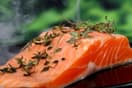
Cream cheese, lox, plain butter: Halal-friendly toppings (lox is scaled fish)
Where you'll find it
- Plain, sesame, and everything bagels
- Bagels with cream cheese and lox
- Breakfast sandwiches
- Bagel chips
Why this ruling
The bagel—boiled, baked, chewy, and perfect—is built from flour, water, yeast, salt, and a touch of malt: a fully Halal formula that has fed generations without a fiqh footnote. Its two modern complications are an additive and a menu.
On the shelf
Plain bagels are usually a short list. Aldi UK's Rowan Hill bagels list flour, water, rye flour, yeast, sugar, rapeseed oil, salt, a preservative and ascorbic acid, and are labelled vegetarian;[4] Abe's bagels in Australia and New Zealand are labelled vegan.[6] The caveat below is real, though: Lender's onion bagels in the US list "distilled monoglycerides" and "l-cysteine" among their dough conditioners, neither with its source stated.[5] See L-cysteine and E471.
The additive: L-cysteine (E920)
Industrial bakeries sometimes add L-cysteine to relax bagel dough’s famous stiffness for machine shaping. E920’s possible sources span human hair (prohibited by scholarly agreement), duck feathers (permitted by many, debated by some), and synthetic production (Halal)—indistinguishable on a label that just reads “L-cysteine.” The practical response is proportionate: check your regular supermarket brand once (many list no E920 at all), prefer certified brands where available, and note that artisan and traditional shops hand-rolling dough rarely bother with conditioners. This is easy to check, not a reason to fear breakfast. See also bread and L-cysteine. Label reading help: fda.gov (retrieved 20 July 2026).
The menu: pork-heavy sandwich lines
Bagel shops often run pork-heavy sandwich lines—bacon-egg-cheese is a category bestseller, ham and sausage builds crowd the board, and slicers and grills serve every order. The Halal-friendly path is well marked: lox and cream cheese (salmon being universally Halal fish), egg and cheese with attention to the grill, whitefish salad, and vegetable-and-schmear builds. Asking for a cleaned surface or a paper-wrapped untoasted build is routine in neighborhoods with observant customers.
Bottom line
The bagel itself is about as Halal as baked goods get—one label check for E920 covers the factory kind, and at the shop your concern is what they put on it, not what it is. Halal bakery certification (for example via programs referenced at JAKIM’s MYeHALAL, retrieved 20 July 2026) collapses additive questions when you want stronger confidence. Pair with salmon for the classic lox build.
Freezer bags, bagel chips, and hotel breakfasts
Supermarket freezer bagels and soft “grocery circle” bagels are the products most likely to include dough conditioners; artisan boil-and-bake shops are the least likely. Bagel chips and flavoured crisps need a second label read for cheese powders, meat seasonings, and emulsifiers. Hotel breakfast bagel bars often share toasters with pork sausage sandwiches—request an untoasted bagel or a clean slot when you are strict about cross-contact.
Cream cheese tubs are typically Halal dairy; whipped flavoured schmears can add gelatin or wine-based smoked-salmon flavourings in rare cases—plain remains safest. Everything-bagel seasoning itself (sesame, poppy, garlic, onion, salt) is Halal; the sandwich assembled on top is the variable. If you bake bagels at home, you control the dough completely—flour, water, yeast, salt, malt—and skip E920 without sacrificing chew.
How to verify
- Traditional/simple-ingredient bagels are Halal.
- Scan commercial labels once for L-cysteine/E920—prefer certified or brands without it.
- At shops, avoid bacon/ham builds and ask about shared grills/slicers.
- Lox and cream cheese is a strong Halal-friendly order when cross-contact is managed.
- Do not confuse bakery marketing with slaughter or additive audits.
Quick checks
- Simple bagel formula = Halal.
- One-time L-cysteine/E920 check on your supermarket brand.
- Shop risk is toppings and shared equipment, not the bagel species.
- Lox + cream cheese is a strong default order.
Frequently asked questions
Are bagels Halal by default?
What is L-cysteine doing in bagels?
Is a bagel with lox and cream cheese Halal?
What should I avoid at bagel shops?
Does yeast alcohol make bagels Haram?
Scholarly view
The classic boiled-then-baked bagel is additive-light and Halal. L-cysteine appears in some commercial bagel doughs (E920), carrying human-hair/feather/synthetic source questions. FDA labelling context: fda.gov, retrieved 20 July 2026.
Sources
Named Islamic, certifier, manufacturer, and regulatory sources used on this page. Inline markers like [1] jump here. Retrieval dates show when we last checked the live URL. Editorial methodology.
Islamic / scriptural
-
Qur'an 5 (lawful foods context)
Retrieved
Certifier / jurisdiction
-
Retrieved
Manufacturer / product
-
Rowan Hill Bakery (Aldi) plain bagels, UK (20720018)
Open Food Facts (pack record) Retrieved
Record updated September 2026; labelled vegetarian. Ingredients: wheat flour, water, rye flour, yeast, sugar, rapeseed oil, maize, salt, calcium propionate, wheat gluten, malted barley spirit vinegar, 'Flour Treatment Agent: Ascorbic Acid'.
-
Lender's onion bagels, US (0076800006931)
Open Food Facts (pack record) Retrieved
Record updated February 2026. Ingredients include 'distilled monoglycerides, dough conditioners (calcium sulfate, l-cysteine), enzymes'.
-
Abe's natural bagels, Australia and New Zealand (9421001850028)
Open Food Facts (pack record) Retrieved
Record updated August 2026; labelled vegan. Ingredients: flour, water, cornmeal, bagel blend (wheat flour, barley flour, wheat gluten, enzymes), wheat gluten, vinegar, salt, yeast, dough conditioner (wheat flour, enzymes), calcium acetate.
Regulatory / labelling
-
Retrieved
People also check
Related ingredients and products for this item.