How to verify
- Confirm lamb or beef, not a mixed unidentified sausage.
- Require Halal slaughter.
- Ask about the casing (sheep, collagen, or unspecified).
- Prefer a Halal Maghrebi butcher.
- Do not assume a French café merguez is Halal.
Quick checks
- Ask whether it is lamb, beef or mixed, and whether the meat is Halal-slaughtered.
- Ask about the casing: sheep casing from Halal slaughter is fine; unnamed collagen is unverified.
- In French supermarkets, look for a Halal logo on the pack; café merguez-frites needs a question.
What decides the answer
-
Halal-slaughtered lamb or beef, Halal casing
Halal -
Unverified supermarket or café sausage
Halal if verified -
Non-Halal meat or pork-contact casing
not Halal
Why this ruling
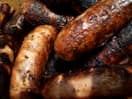
Merguez is the spicy red sausage of the Maghreb: minced lamb, mutton or beef with harissa, paprika, cumin, fennel seed and garlic, filled into a thin casing and grilled. It is eaten across Tunisia, Algeria and Morocco, and in France it is a barbecue and street-food staple, from merguez-frites to couscous royal.[1] Unlike most European sausages, it is not a pork sausage. It still has three checks.
1. The meat
Lamb, mutton and beef are permissible meats, but they need Halal slaughter.[2] Merguez from a North African Muslim butcher is made that way as a matter of course. Supermarket and café merguez in Europe may be ordinary meat unless labelled Halal.
2. The casing
The traditional casing is sheep's intestine, which follows the same rule as the meat: it must come from a Halal-slaughtered animal. Many commercial merguez use collagen casings instead, usually made from beef hide. Neither is pork, but neither is Halal unless the source is. A Halal certification covers the casing too.
3. What else is in it
Read the ingredient list for any added fat and for the meat mix. Most merguez list only lamb or beef, fat, spices, salt and water. A "merguez-style" or "spicy sausage" in a non-Halal range is not necessarily made to the traditional recipe.
Where to find Halal merguez
In France, Belgium and other countries with Maghrebi communities, Halal merguez are sold at Halal butchers and in the Halal section of most supermarkets, with a certification mark on the pack. At a market grill or barbecue, ask whether the merguez are Halal and whether pork sausages are cooked on the same grill.
Served with
Merguez are grilled and eaten in a baguette with harissa and chips, added to couscous with vegetables and chickpeas, or cooked in shakshuka. See couscous, shakshuka, and the Maghreb guide. For how sausages are judged in general, see sausage.
Where you'll find it
- Maghrebi grills and couscous plates
- French café merguez-frites
- Halal butcher merguez
Frequently asked questions
Is merguez Halal?
Does merguez contain pork?
Are casings the issue?
Is supermarket merguez in France Halal?
Scholarly view
Traditional merguez is lamb or beef, not pork—but slaughter and casings still decide. Unnamed collagen casings are unverified.
Sources
Named Islamic, certifier, manufacturer, and regulatory sources used on this page. Inline markers like [1] jump here. Retrieval dates show when we last checked the live URL. Editorial methodology.
Islamic / scriptural
-
Qur'an Retrieved
Slaughter rule for lamb and beef; swine prohibition if casings or grinders contact pork.
Context / background
-
Merguez — Maghrebi spicy sausage
Wikipedia Retrieved
Culinary identity: North African sausage of lamb or beef with chilli and spices, often eaten grilled. Identity context, not a Halal certificate.
Halal-conscious recipes
A substitution-led recipe that uses this analysis.