
Is Fish Gelatin Halal?
Scholars differ on this one.
Verified fish gelatin is permissible in the cited Hanafi ruling.
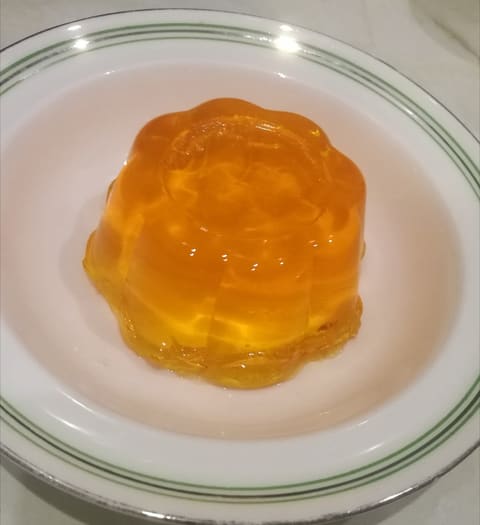
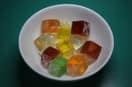
Photo: Ineffablebookkeeper · CC BY-SA 4.0
Scholarly differences
The cited Hanafi answer permits fish gelatin without land-animal slaughter. Sistani’s official Jaʿfari guidance limits edible fish to species with scales and requires the fish to be caught alive or die in the net. This page therefore separates source verification from the school-sensitive species ruling.
What decides the answer
-
Verified fish-only gelatin from a permissible species
Halal -
A blend containing porcine gelatin
Haram -
For followers of Sistani’s Jaʿfari ruling: verify a scaled fish species and the capture condition
-
Generic gelatin or E441 with no species: source-unknown; do not assume fish
How to verify
- Require the words fish gelatin or marine gelatin and confirm there is no mammalian blend.
- Ask the manufacturer for the fish species when it is not named.
- If following Sistani’s Jaʿfari guidance, verify that the source fish has scales and meets the capture condition.
- Treat a label that says only gelatin or E441 as source-unknown.
- For capsules, request the shell specification or choose HPMC.
Quick checks
- Fish-only source, not a mammalian blend
- Named species where school-specific rules require it
- Generic gelatin or E441 remains unverified
Why this ruling
Fish gelatin, also sold as marine gelatin, is collagen extracted from fish skin or bones. It can be a permissible alternative to pork or uncertified mammalian gelatin, but the source still has to be established.
The ruling depends on the source and school
A Hanafi answer published by Muftisays permits fish gelatin and explains that fish does not require the slaughter used for land animals.[1]
Sistani’s official Jaʿfari guidance is narrower: edible fish must have scales, and the fish must be caught alive or die in the net.[2] “Marine” is therefore not enough information for every consumer. The manufacturer may need to name the species and source controls.
What the label proves
“Fish gelatin” or “marine gelatin” identifies a category, but it may not identify the species. A current specification or certificate should confirm that the gelatin is entirely fish-derived and not blended with porcine or uncertified mammalian gelatin.
A label that says only gelatin or E441 does not prove a fish source. It remains source-unknown; it should not be treated as Halal until the manufacturer or a current certificate supplies the missing information.
Capsules and confectionery
For capsules, check the shell specification rather than the active ingredient list alone. For gummies, marshmallows and desserts, read the full panel for gelatin blends and other separate ingredients. An HPMC or clearly plant-based capsule avoids the animal-source question.
Practical check
- Confirm fish-only gelatin.
- Ask for the species if your school requires it.
- Verify the relevant capture condition where applicable.
- Reject any porcine blend.
- Keep unnamed gelatin unverified.
Bottom line: fish gelatin involves a Scholarly difference. The cited Hanafi ruling permits a verified fish source; the cited Jaʿfari guidance also requires a scaled species and the relevant capture condition.
For how pork, beef and fish gelatin compare, see the overview: is gelatin halal?
Where you'll find it
- Gummies and marshmallows
- Dessert gels
- Softgel capsules
- Bakery glazes
Frequently asked questions
Is fish gelatin always Halal?
Does fish need zabiha slaughter?
Can I assume plain ‘gelatin’ means fish gelatin?
What about fish-gelatin capsules?
Sources
Named Islamic, certifier, manufacturer, and regulatory sources used on this page. Inline markers like [1] jump here. Retrieval dates show when we last checked the live URL. Editorial methodology.
Islamic / scriptural
-
Muftisays — vitamins with fish gelatine
Muftisays (via IslamQA.org) Retrieved
Hanafi answer: fish gelatin is permissible and fish does not require the slaughter used for land animals.
-
Sistani — rules about fish and seafood
Office of Grand Ayatollah Sistani Retrieved
Official Jaʿfari guidance: fish with scales is permissible; scaleless fish is not, and the fish must be caught alive or die in the net.
People also check
Related ingredients and products for this item.

Halal-conscious recipes
A substitution-led recipe that uses this analysis.

Browse this topic
Open the parent category hub for more foods in the same group.