
Additive identity
Possible source pathways
The finished molecule can be identical across feedstocks. The Halal ruling follows the pathway, not the code alone.
E406 Possible source pathways
- plant Halal Typical Seaweed gel. Classic Halal and vegan gelatin substitute.
What decides the answer
-
Agar-agar / E406 from seaweed
Halal -
Finished sweets: still check colours, flavours, and alcohol syrups
-
Prefer agar/pectin/carrageenan over unlabeled gelatin
-
Home cooking: boil to activate; conversion differs from gelatin
Where you'll find it
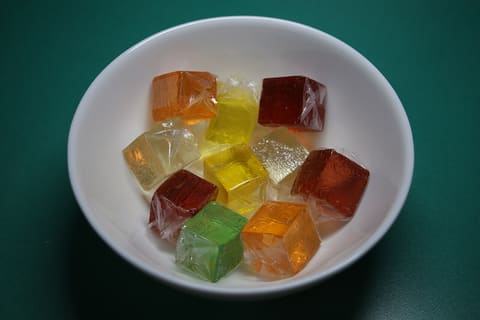
- Gelatin-free jellies and desserts
- Asian sweets (kanten, halo-halo, grass jelly styles)
- Vegan marshmallows and gummies
- Microbiology culture plates
- Thickening jams and custards
Why this ruling
Agar-agar is the Halal kitchen’s answer to gelatin: a gelling agent extracted from red seaweed, used across East and Southeast Asia for centuries (Japanese kanten, Filipino gulaman) and now a standard set-and-gel ingredient in Halal, kosher, and vegan manufacturing worldwide. On labels it appears as agar or E406.
Straight-line Halal analysis
Seaweed is sea vegetation—plant-category food, permissible in every school, untouched by debates over sea animals. Extraction is hot water and filtration: the algae are boiled, the gel is pressed, dried, and milled, with no animal materials, enzymes, or alcohol anywhere in standard processing. Halal authorities list E406 as permissible without conditions, and it anchors certified Halal gummies, marshmallows, and jelly desserts precisely because it makes gelatin unnecessary. International food-standards literacy around additives is available via Codex Alimentarius (fao.org, retrieved 20 July 2026). Consumer label reading in the US context is covered by FDA food labeling pages (fda.gov, retrieved 20 July 2026).
Cooking personality
As a cook’s tool, agar does what gelatin does with a few personality differences:
- It must boil briefly to activate (gelatin just dissolves warm)
- It sets faster and firmer—holding shape at room temperature where gelatin sags
- Its gel is cleanly brittle rather than bouncy
- Rough conversion: one teaspoon of agar powder replaces a tablespoon of gelatin
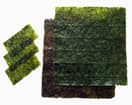
Asian groceries sell it cheapest (powder, flakes, or traditional bars); health stores label it for the vegan aisle.
Label strategy for Muslims
For Muslims scanning candy and dessert labels, agar is the good-news word: where “gelatin” triggers a source interrogation, “agar” ends that particular question. Alongside pectin (fruit-derived) and carrageenan (another seaweed extract), it forms the plant trio that lets confectionery run gelatin-free—and lets home panna cotta, marshmallows, and gummy experiments stay unambiguous. Still check marshmallows and gummies for shellac and carmine even when agar is present.
Halal certification programs such as JAKIM (MYeHALAL, retrieved 20 July 2026) often prefer agar systems in certified sweets; the mark audits the whole formula, not only the gelling agent.
Home desserts and industrial candy
Home cooks should expect a learning curve the first time they swap gelatin for agar. Boil the powder with liquid, simmer briefly, then pour; under-activated agar stays soft or separates. Fruit acids and some tropical enzymes can weaken gels—pineapple and papaya need cooking first in many recipes.
For candy makers, agar is only one pillar of a Halal formula: pectin jellies, starch gums, and carrageenan systems all appear in modern Halal confectionery. If a gummy lists agar but also lists carmine or an alcohol flavour extract, the agar line does not rescue the pack.
Microbiology and lab uses of agar are outside food rulings for consumers; the food-grade powder in grocery aisles is the product this page addresses. When comparing “gelatin-free” claims, read the full ingredient list anyway—marketing highlights the absence of one additive while remaining silent on glaze and colour. Keep agar powder sealed and dry; humidity clumps make measuring unreliable and lead cooks to over-dose bitterness into desserts.
How to verify
- Treat agar / E406 as plant seaweed gel—Halal by default.
- Prefer products that list agar, pectin, or carrageenan instead of unlabeled gelatin.
- Still read finished desserts for other additives (flavours, colours, alcohol syrups).
- For home use, buy powder/flakes labelled agar or kanten.
- Do not assume 'gelatin-free' automatically means Halal-certified—check colours and glazes too.
Quick checks
- Agar/E406 = seaweed gel → Halal plant additive.
- Use it to replace unlabeled gelatin in desserts.
- Still scan colours, flavours, and glazes on finished candy.
- Home tip: boil briefly to activate agar gels.
Frequently asked questions
Is agar-agar really a full gelatin substitute?
Is E406 Halal?
Is seaweed itself Halal?
Where do I buy agar for home cooking?
Does agar make a candy automatically Halal?
Scholarly view
Agar (E406) is extracted from red algae by hot-water extraction—seaweed is plant-category food, Halal by default, and no animal inputs or alcohol are involved in standard processing. Certifiers list E406 as Halal without qualification. It is the ingredient Halal and kosher manufacturers reach for to replace gelatin. Codex/additive literacy: fao.org, retrieved 20 July 2026.
Sources
Named Islamic, certifier, manufacturer, and regulatory sources used on this page. Inline markers like [1] jump here. Retrieval dates show when we last checked the live URL. Editorial methodology.
Certifier / jurisdiction
-
Retrieved
Regulatory / labelling
-
EFSA — Re-evaluation of agar (E406)
European Food Safety Authority Retrieved
Substance identity—not a Halal certificate for a finished pack.
-
U.S. eCFR Retrieved
U.S. identity / GRAS or colour-additive listing—not a Halal ruling.
-
Retrieved
-
Retrieved
People also check
Related ingredients and products for this item.
Halal-conscious recipes
A substitution-led recipe that uses this analysis.

Browse this topic
Open the parent category hub for more foods in the same group.