

Halal-conscious recipe
Falooda
Pakistani falooda layered with rose syrup, basil seeds, cornflour vermicelli, milk and kulfi, using agar jelly and gelatin-free ice cream.
Each method follows published technique for the dish, and every Halal substitution is checked against the ingredient pages we cite. Photographs come from our ingredient library rather than the finished dish.
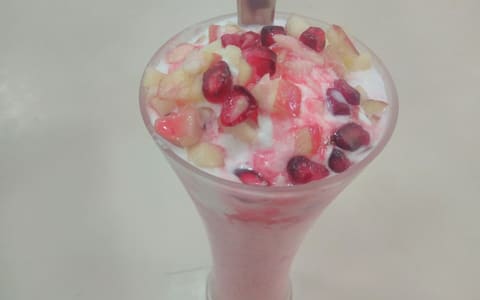
Photo: Thamizhpparithi Maari · CC BY-SA 4.0

Why Halal checks matter here
The jelly cubes in falooda are usually gelatin, and shop ice cream and kulfi can contain gelatin or E471 of animal origin.
Falooda is Pakistan's summer dessert drink: a tall glass of rose syrup, soft basil seeds, slippery vermicelli, jelly and chilled milk, crowned with kulfi or ice cream and chopped pistachios. It is sold at every sweet shop and street stall when the heat comes, and in Ramadan it is a favourite after iftar.
The Halal problem is not the milk or the syrup. It is the jelly and the ice cream. Falooda jelly is usually made from packet jelly crystals, and most of those are gelatin, often pork gelatin in Europe and the UK. Shop ice cream and some commercial kulfi add gelatin or E471 that may be of animal origin.
The fix is easy. Agar-agar is made from seaweed, sets in half an hour at room temperature and holds its shape in a cold glass better than gelatin does. For the top, use kulfi or ice cream certified Halal or labelled vegetarian.
Everything except the final assembly can be made a day ahead: the jelly, the soaked basil seeds and the cooked vermicelli all keep in the fridge. Build the glasses just before serving so the milk is ice cold.
Halal-critical ingredients
- Jelly cubes Falooda jelly is usually made from packet jelly crystals, which are mostly gelatin; in the UK and Europe that gelatin is often pork. Make agar jelly as here, or buy jelly marked Halal or vegetarian. See Gelatin and Agar-agar.
- Ice cream or kulfi Shop ice cream can contain gelatin, E471 of animal origin, or alcohol-based flavourings; some commercial kulfi uses gelatin as a stabiliser. Choose a certified or vegetarian tub, or homemade kulfi. See Ice cream and E471.
- Falooda mix boxes All-in-one falooda kits can include a gelatin jelly sachet. Read the box, and swap the jelly sachet for agar.
Safe substitutes
- Gelatin jelly crystals → Agar-agar jelly, made in 30 minutes
- Ice cream with gelatin or unspecified E471 → Kulfi or ice cream certified Halal or labelled vegetarian
- Falooda sev → Thin rice vermicelli
Allergens
milk, nuts (pistachio, almond)
Ingredients
Agar jelly (make ahead)
- 300 ml (1¼ cups) water
- 2 g (¾ tsp) agar-agar powder
- 40 g (3 tbsp) sugar
- 30 ml (2 tbsp) rose syrup, for colour and flavour
Falooda
- 10 g (1 tbsp) sweet basil seeds (tukmaria / sabja)
- 40 g (1½ oz) falooda sev (cornflour vermicelli), or thin rice vermicelli
- 80 ml (⅓ cup) rose syrup (such as Rooh Afza), plus extra to drizzle
- 600 ml (2½ cups) whole milk, chilled
- 20 g (1½ tbsp) sugar, to taste
- 4 (4 scoops) kulfi or vanilla ice cream without gelatin
- 30 g (¼ cup) pistachios and almonds, chopped
Method
- Make agar jelly instead of gelatin jelly. Whisk the agar powder into the cold water in a small pan, bring to a boil and simmer, whisking, for 2 minutes. Stir in the sugar and rose syrup and pour into a small tray. It sets at room temperature in about 30 minutes and firms in the fridge. Cut into small cubes. Most packet jelly crystals are gelatin, often pork; agar is plant-based and sets firmer.
- Soak the basil seeds. Soak the basil seeds in 250 ml of water for 20 minutes, until each seed is wrapped in a soft, clear gel. Drain.
- Cook the vermicelli. Boil the falooda sev in plenty of water for 3–5 minutes, or as the pack says, until soft. Drain, rinse under cold water and chill. Shop falooda mixes sometimes include jelly crystals; read the box and leave out any gelatin sachet.
- Sweeten the milk. Stir the sugar into the chilled milk until dissolved. Keep it very cold.
- Layer the glasses. In each tall glass, drizzle 1–2 tablespoons of rose syrup down the sides. Add a spoon of basil seeds, a spoon of vermicelli and a few jelly cubes. Pour in the cold milk to three-quarters full. Top with a scoop of kulfi or ice cream, the chopped nuts and a last drizzle of rose syrup. Serve with a long spoon and a straw.
How this recipe was researched
Method specified editorially from Pakistani and North Indian falooda technique (soaked sweet basil seeds, cornflour vermicelli, rose syrup, chilled milk, jelly and kulfi or ice cream layered in a tall glass) and this site's Gelatin, Agar-agar, Ice cream and E471 pages. Timings follow published technique rather than a kitchen test.
Technique and ingredient sources
-
Falooda — Wikipedia
Retrieved:
Rose syrup, vermicelli, sweet basil seeds, jelly and milk, often topped with ice cream or kulfi.
-
Gelatin analysis — isithalal.food
Retrieved:
Pork, bovine and fish gelatin, and how to read the label.
-
Agar-agar analysis — isithalal.food
Retrieved:
Seaweed-based gelling agent and the standard Halal substitute for gelatin.