
Is Shellac Halal?
Yes — this one is Halal.
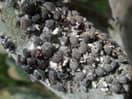
Shellac (E904) is a purified resin secreted by the lac insect (Kerria lacca), used as a confectionery glaze and pharmaceutical coating.
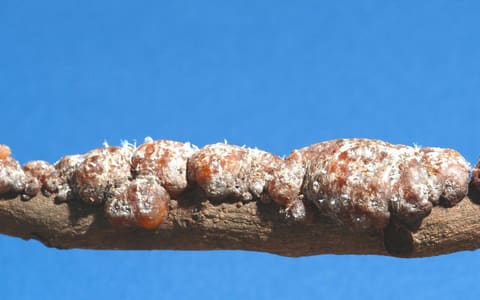
Photo: Jeffrey W. Lotz · CC BY 3.0
Additive identity
Possible source pathways
The finished molecule can be identical across feedstocks. The Halal ruling follows the pathway, not the code alone.
E904 Possible source pathways
- insect Halal Typical Purified lac-insect resin. SANHA lists E904 as Halaal; LPPOM MUI discusses MUI Fatwa 27/2013. That is an ingredient ruling, not a certificate for every glazed sweet or tablet.
What decides the answer
-
Food-grade shellac / E904 as an ingredient
Halal on this site (SANHA E904; MUI Fatwa 27/2013 discussion) -
Personal insect-avoidance
choose alternatives (carnauba wax, etc.) -
Finished candy or tablet
SANHA listing E904 does not certify the whole product; still verify gelatin, carmine, alcohol fillings -
Industrial ethanol may dissolve shellac flakes—dried food glaze is not a drink; check process alcohol if that is your standard
Where you'll find it
- Shiny glaze on chocolate lentils and sugar-coated candies
- Pharmaceutical and supplement tablet coatings
- Fruit coatings and protective food polishes
- Non-food wood finishes (not edible grades)
Why this ruling
Shellac is a natural resin secreted by the lac insect (Kerria lacca), harvested mainly in India and Thailand, purified into dry flakes, and used as a brilliant food glaze. In the EU it is coded E904; U.S. candy labels often say confectioner’s glaze or resinous glaze. The same resin family appears on some pills and shiny chocolate lentils.
What shellac is—and is not
Shellac is not pork fat, not gelatin, and not carmine dye. Workers scrape lac deposits from host trees; processors wash and refine the resin. Food grades are specified for human consumption; wood-varnish grades are a different supply chain and should not be eaten.
U.S. regulations recognise shellac as a food glaze and multipurpose additive (see FDA food-additive / colour-adjacent listings via eCFR Title 21, retrieved 20 July 2026). That authorisation is food-safety identity, not a Halal ruling.
| Coating | Source | Halal note on this site |
|---|---|---|
| Shellac (E904) | Lac insect resin | Halal (insect secretion) — SANHA E904; MUI Fatwa 27/2013 discussion |
| Carnauba wax | Palm leaf wax | Halal plant wax |
| Beeswax | Bee secretion | Generally Halal |
| Carmine (E120) | Cochineal insect | Separate—scholarly difference (see Carmine) |
| Gelatin glaze | Animal collagen | Species/slaughter dependent |
Named ingredient rulings (not a finished-product certificate)
The fiqh analogy used in contemporary discussion is secretion vs flesh: honey is a bee product that is Halal; shellac is a purified insect exudate used in tiny glaze amounts, not a meal of insects. SANHA’s E-number page lists E904 Shellac as Halaal, source “resin of lac insect” (sanha.org.za/2009/12/10/e904-shellac, retrieved 25 August 2026).
An LPPOM MUI article summarises MUI Fatwa No. 27/2013: shellac is pure (suci), and its use as a food/medicine/cosmetic additive is Halal when beneficial and not harmful—while flagging ethanol used in the dissolution process as a critical check (halalmui.org shellac article, retrieved 25 August 2026).
This site follows those named ingredient rulings and notes personal insect-avoidance as optional strictness. SANHA accepting E904 as an ingredient does not certify every finished sweet, fruit coating, or pharmaceutical tablet that happens to contain it. Do not treat eCFR or EU additive listings as Halal proof.
Candy aisle reality
Shiny sugar shells on chocolate beans, dragées, and some fruit snacks use shellac for moisture protection and gloss. A Halal mark on a specific bag (for example a JAKIM-certified product checked via MYeHALAL, retrieved 20 July 2026) audits glaze and fillings for that product—not the E904 category worldwide. Uncertified Western candy may still be fine on shellac specifically while failing on gelatin centres or alcohol liqueurs.
How much shellac is on candy—and what else shares the bag
A confectioner’s glaze is a thin film. It is not a hidden meat filling. The Halal conversation is almost entirely about accepting an insect-derived resin, not about pork contamination myths. Where shellac coexists with other debated additives—carmine for pink shades, gelatin centres, alcohol-filled liqueur chocolates—each line needs its own ruling. A Halal-certified dragée has already cleared that stack; an uncertified shiny bean has not. Listing E904 as Halaal does not collapse those other checks.
Pharmacies use pharmaceutical shellac grades on some tablets for moisture protection or delayed release. The same insect-resin logic applies; capsule gelatin is a separate animal-collagen check. Wood-finish shellac from a hardware aisle is not a food ingredient—do not improvise edible glaze from varnish stocks.
Consumers who already avoid honey for personal reasons sometimes avoid shellac for consistency; that is stricter than this site’s default Halal status for E904.
Realistic verification
- Spot shellac / E904 / confectioner’s glaze.
- Decide whether you accept insect secretions (site default: yes).
- Read the rest of the candy for gelatin and carmine.
- For tablets, check both coating and capsule shell.
How to verify
- On candy, look for shellac, confectioner’s glaze, resinous glaze, or E904.
- If you accept insect secretions, standard food shellac is Halal.
- If you personally avoid insects, choose unwaxed candy or carnauba/beeswax alternatives as labelled.
- Still check the candy’s other ingredients (gelatin, carmine, alcohol flavourings) separately.
Frequently asked questions
Is shellac Halal?
What is E904?
Is shellac the same as gelatin?
Does shellac involve alcohol?
Is shellac vegan?
Scholarly view
Shellac is lac bug resin, not minced insect meat. SANHA lists E904 as Halaal (lac insect resin). LPPOM MUI discusses MUI Fatwa 27/2013, which treats shellac as pure and permissible in food/medicine/cosmetics when beneficial and not harmful—while noting ethanol used in dissolution as a critical process check.
Those named sources support this site’s ingredient ruling; they are not a claim that every certifier worldwide agrees, and they do not certify finished candy or pharmaceuticals. U.S. eCFR/EU additive identity only shows food-use authorisation; it is not a Halal certificate.
A minority of consumers avoid all insect-derived inputs; carmine (E120) is a different insect product with a stronger colourant debate. Do not conflate shellac glaze with gelatin or pork fat polish myths.
Sources
Named Islamic, certifier, manufacturer, and regulatory sources used on this page. Inline markers like [1] jump here. Retrieval dates show when we last checked the live URL. Editorial methodology.
Islamic / scriptural
-
LPPOM MUI — Shellac and MUI Fatwa 27/2013
LPPOM MUI Retrieved
Discusses MUI Fatwa No. 27/2013: shellac is pure; use in food/medicine/cosmetics is Halal when beneficial and not harmful; ethanol in dissolution is a critical process point.
Certifier / jurisdiction
-
SANHA Retrieved
Status: Halaal; source: resin of lac insect. Ingredient listing—not a certificate for every confection or pharmaceutical that contains E904.
-
Retrieved
Directory to check a claimed Malaysian Halal mark on a finished candy or tablet. Not proof that E904 is Halal, and not a certificate for every shellac-glazed product.
Regulatory / labelling
People also check
Related ingredients and products for this item.
Browse this topic
Open the parent category hub for more foods in the same group.