Scholarly differences
All agree that drinking an intoxicant is forbidden; the Prophet said 'every intoxicant is khamr and every intoxicant is forbidden'. The difference is ethanol inside food. Darul Iftaa Chicago, a Hanafi body, allows ethanol not made from dates or grapes as a solvent if the food doesn't intoxicate.
IslamQA forbids adding alcohol to food but permits eating food where it is absorbed and leaves no trace in colour, taste or smell. IslamWeb applies 'whatever intoxicates in large amounts is forbidden in small amounts' to any proven alcohol.
What decides the answer
-
Non-grape, non-date ethanol as a solvent, food not intoxicating
permitted per Darul Iftaa Chicago -
Alcohol absorbed with no discernible trace
permitted to eat per IslamQA, though adding it is not -
Any proven alcohol
not permitted per IslamWeb -
Small natural fermentation alcohol
Halal per MUI if the process uses nothing forbidden -
Ethanol drunk, or in an intoxicating food
Haram for all
How to verify
- 'Alcohol', 'ethanol' or 'ethyl alcohol' in an ingredients list means it was added; IslamQA says added alcohol whose trace remains makes the food impermissible.
- Vanilla extract and other flavour extracts use ethanol as a solvent; see the vanilla extract page for the views.
- Fermented foods such as kefir form a little alcohol naturally; scholars differ on these.
- Wine, rum or liqueur as ingredients are a drink added to food, not a solvent.
Quick checks
- Drinking ethanol: forbidden.
- Solvent traces: scholars differ.
- Added wine or spirits: not a solvent.
Why this ruling
Ethanol, or ethyl alcohol, is the alcohol in wine, beer and spirits. Drinking it is forbidden. The question on food labels is different: ethanol as a solvent, a preservative or a by-product of fermentation, and there scholars differ.
What it is and where it turns up
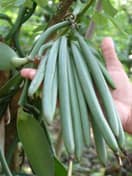
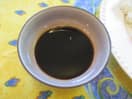
US food rules define ethyl alcohol (ethanol) as "the chemical C2H5OH", and allow it as an antimicrobial on pizza crusts before baking, up to 2% of the product's weight.[1] More often it reaches food as a solvent: vanilla extract is vanilla beans steeped in a mix of water and ethanol.[3] And fermentation makes it naturally: kefir's yeasts produce about 0.1 to 0.5% in normal preparation, sometimes up to 3%.[5] Brewed soy sauce raises the same question.
Three views on ethanol in food
All three start from the hadith that "every intoxicant is khamr and every intoxicant is forbidden".[2]
Allowed as a solvent. Darul Iftaa Chicago, a Hanafi body, allows alcohol "not produced from dates or grapes" if it is not consumed directly, the food does not intoxicate, it "serves a legitimate purpose, such as being a solvent, and is not used as a direct ingredient", and it is not a hallmark product of drinkers. On that basis vanilla extract in baking is permissible.[3]
Not to be added, but a vanished trace is fine. IslamQA says alcohol "is not permissible to deliberately add" to food. Where it has been added and is absorbed so "no trace of it remains" and no amount intoxicates, the food may be eaten; where the trace remains discernible, as in some chocolates, it may not.[4]
Any proven amount is forbidden. IslamWeb rules that if alcohol is proven in a drink, "it is not permissible to get benefit from it, even if the percentage of alcohol is little".[6]
For alcohol formed by fermentation, Indonesia's MUI fatwa 10 of 2018 treats fermented foods containing ethanol as Halal if nothing forbidden is used and they are harmless.[7]
Wine and spirits in food are a different case
The solvent allowance does not cover a drink added for its own sake. Darul Iftaa Chicago's conditions exclude alcohol "used as a direct ingredient", and it is grape and date alcohol that the Hanafi view treats strictly.[3] So rum in a cake or champagne in a truffle is not the same question as the ethanol in a vanilla extract.
Where you'll find it
- Solvent in vanilla and other flavour extracts
- Antimicrobial on baked goods such as pizza crusts
- Formed naturally in fermented foods and drinks
Frequently asked questions
Is ethyl alcohol Halal?
Is ethanol the same as alcohol?
Does cooking remove the alcohol?
Is synthetic ethanol different from alcohol made from grapes?
Sources
Named Islamic, certifier, manufacturer, and regulatory sources used on this page. Inline markers like [1] jump here. Retrieval dates show when we last checked the live URL. Editorial methodology.
Islamic / scriptural
-
Sahih Muslim 2003a — every intoxicant is khamr
Sunnah.com Retrieved
Every intoxicant is khamr and every intoxicant is forbidden.
-
Is vanilla extract halal? The Islamic ruling on alcohol in foods
Darul Iftaa Chicago (via IslamQA.org) Retrieved
'In principle, alcohol that is not produced from dates or grapes can be utilized, provided it meets the following criteria: The alcohol is not consumed directly; The end product containing alcohol does not intoxicate if consumed in a reasonable amount; The alcohol serves a legitimate purpose, such as being a solvent, and is not used as a direct ingredient; and It is not a hallmark product, generally used by non-Muslims or openly sinful individuals.' Also: 'When cooked, most of the alcohol evaporates and leaves the flavor of vanilla behind.'
-
IslamQA 249339 — adding alcohol to food
IslamQA Retrieved
'Alcohol is an intoxicant and subject to the same rulings as wine, so it is not permissible to deliberately add it to food, medicine, or anything else.' If it is 'so small that it is absorbed into the food, so that no trace of it remains and the one who eats or drinks a lot of this food or medicine will not become intoxicated, then there is nothing wrong with consuming it', unlike foods where 'the traces of alcohol or wine remain discernible, such as some types of chocolate'.
-
Ruling on drinking kefir (184243)
IslamQA Retrieved
Alcohol in kefir 'varies... between 0.1 and 0.5% of the volume, and may reach as much as 3%'. Drinks whose alcohol 'is very small, in such a way that it will not cause intoxication no matter how much a person drinks of it' are halal.
-
Ruling on fermented Kefir (Fatwa 199037)
IslamWeb Retrieved
'If it is proved that there is a percentage of alcohol in that drink, then it is not permissible to get benefit from it, even if the percentage of alcohol is little', citing 'Whatever causes intoxication when taken in a large quantity is also forbidden to take in small quantities' (Ahmad).
Certifier / jurisdiction
-
LPPOM MUI Retrieved
27 October 2019. Cites MUI Fatwa 10 of 2018: 'Fermented food products containing alcohol/ethanol are legally halal, as long as the process does not use illicit substances and if medically harmless.'
Regulatory / labelling
-
21 CFR § 184.1293 — Ethyl alcohol
US Code of Federal Regulations (via Cornell LII) Retrieved
'Ethyl alcohol (ethanol) is the chemical C2H5OH.' Affirmed as GRAS for use 'as an antimicrobial agent... on pizza crusts prior to final baking at levels not to exceed 2.0 percent by product weight'.
People also check
Related ingredients and products for this item.