

How to verify
- Read for gelatin—if present without Halal source/certification, treat as mashbooh/avoid for strict practice.
- Note confectioner's glaze/shellac and know your scholarly position.
- Scan reds/pinks for carmine/E120.
- Prefer Halal-certified jelly beans when available.
- Do not generalize one brand's formula to the whole category.
Quick checks
- Scan for gelatin, shellac, and carmine.
- Prefer certified Halal jelly beans.
- Do not generalize across brands or countries.
- Starch/pectin centers help but do not finish every check.
What decides the answer
-
Gelatin or carmine
problem ingredients for many Muslims -
Shellac (glaze) is debated—know your standard
-
Halal-certified brands remove the guesswork
-
Starch/pectin centers clear the biggest gelatin hurdle
Why this ruling
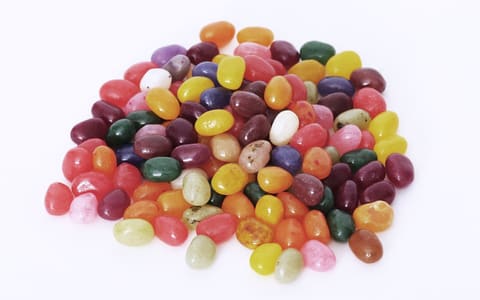
Jelly beans—sugar-shelled, chewy-centered, and sold in every flavour chemistry allows—are a three-question candy for Halal purposes, and the answers differ brand by brand more than almost any sweet in the aisle.
Three decisive ingredients
Question one: what makes the chew? Some traditional and budget jelly beans list gelatin, virtually never source-labelled—those beans stay mashbooh for careful practice. A named current example of a gelatin-free gourmet line is Jelly Belly: its international FAQ (retrieved 15 August 2026) states the beans do not contain gelatin, and Rainbow collection ingredient panels list modified food starch and confectioner’s glaze without gelatin. That is a current formulation snapshot, not a history of “every gourmet brand decades ago.”
Question two: what makes the shine? Nearly all jelly beans are polished with confectioner’s glaze—shellac, a resin secreted by the lac insect. SANHA’s E904 page lists shellac as Halaal (lac insect resin). LPPOM MUI discusses MUI Fatwa 27/2013 treating shellac as pure and permissible in food when beneficial and not harmful (ethanol used to dissolve flakes remains a process check). A stricter minority still avoids insect-related inputs; this single call decides many “shiny candy” questions. See shellac.
Question three: what makes the red? Carmine (E120), from cochineal insects, appears in some brands’ reds and pinks—a scholarly difference (follow your school; see Carmine); other brands use plant or synthetic reds. Colour-additive literacy: fda.gov (retrieved 20 July 2026). General labelling: fda.gov (retrieved 20 July 2026).
Brand reality
Run brands through the gauntlet. Gelatin-free gourmet beans may still be shellac-glazed and uncertified: acceptable to those following the SANHA/MUI shellac view, skipped by the strict. Not every Turkish or Gulf producer is Halal-certified, so buy a pack that prints a current mark. Generic Easter-aisle beans: read the label; expect gelatin unless the list says otherwise.
One-logo solution
The label ritual takes ten seconds—gelatin? carmine? glaze?—and a Halal certification mark collapses all three questions into one logo. Programs such as JAKIM (MYeHALAL, retrieved 20 July 2026) audit full confectionery formulas. Compare related sweets: gummy bears, marshmallows, and plant gels like agar-agar and pectin.
Holidays, kids' mixes, and online orders
Holiday bulk bins and mixed “party blends” are the worst place to verify jelly beans because bags combine brands and loose stock rarely shows a full ingredient list. Buy sealed branded packs instead. For children’s party bags, Halal-certified beans from Muslim-market producers remove the shellac debate for families who want one standard.
Online imports may sit in warehouses across seasons—re-check photos of the ingredient panel, not only the store title claiming “gelatin free.” Gourmet flavour lists that include cocktail-inspired names (margarita, mojito) are usually flavour chemistry, not real alcohol, but alcohol-derived flavour extracts are still worth a manufacturer question when a brand is vague.
Baking with jelly beans (cookies, cupcake toppers) does not change the ruling of the candy itself. If shellac is your only remaining doubt on an otherwise clean bean, follow your local scholar consistently across all shiny candies rather than making a one-off exception for jelly beans alone.
Where you'll find it
- Easter and holiday candy
- Gourmet flavour assortments (Jelly Belly style)
- Baking decoration and party mixes
- Sport 'energy bean' products
Frequently asked questions
What makes jelly beans doubtful?
Are Jelly Belly-style gourmet beans Halal?
Is shellac Halal?
Does 'kosher' on jelly beans mean Halal?
How do I read colours on the label?
Scholarly view
Three ingredients decide a jelly bean: the gel (gelatin vs starch/pectin), the shine (shellac/confectioner's glaze—SANHA lists E904 as Halaal; LPPOM MUI discusses Fatwa 27/2013), and the colours (carmine/E120—scholarly difference; see Carmine). Jelly Belly’s current FAQ states its beans contain no gelatin and use confectioner’s glaze. FDA colour additive pages help identify listed colours (fda.gov, retrieved 20 July 2026).
Sources
Named Islamic, certifier, manufacturer, and regulatory sources used on this page. Inline markers like [1] jump here. Retrieval dates show when we last checked the live URL. Editorial methodology.
Islamic / scriptural
-
LPPOM MUI — Shellac and MUI Fatwa 27/2013
LPPOM MUI Retrieved
Discusses MUI Fatwa No. 27/2013: shellac is pure; food use Halal when beneficial and not harmful.
Certifier / jurisdiction
-
-
Retrieved
Manufacturer / product
-
Jelly Belly International FAQ — gelatin / confectioner’s glaze
Jelly Belly Retrieved
States Jelly Belly jelly beans do not contain gelatin; confectioners glaze and beeswax used for shine (not vegan).
-
Jelly Belly Rainbow collection ingredients
Jelly Belly Retrieved
Current collection panels list modified food starch and confectioner’s glaze; gelatin is not listed on those panels.
Regulatory / labelling
-
Retrieved
-
Retrieved
People also check
Related ingredients and products for this item.
Browse this topic
Open the parent category hub for more foods in the same group.
.jpg)