
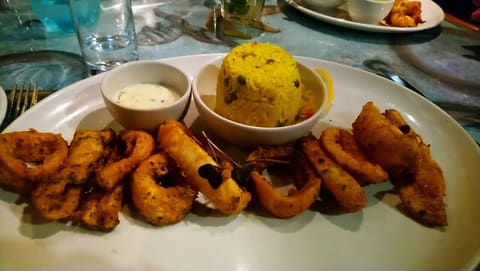
Photo: Wiki.cullin · CC BY-SA 4.0
Scholarly differences
Squid is not a fish. Majority sea-catch permissibility (Qur'an 5:96; IslamWeb 81789’s preponderant view; Ibn Baz on all sea animals) includes this cephalopod. Direct Hanafi answers on calamari/squid (SeekersGuidance; Albalagh/Mufti Ebrahim Desai) restrict seafood to samak and do not permit squid.
Alseraj’s Ja‘fari Q&A on الحبار states squid is not a fish, so it is unlawful except for scaled fish and shrimp. The dispute is classification, not zabiha. Follow your school; this page is Scholarly difference rather than a universal Halal headline.
What decides the answer
-
Majority (Shafi‘i, Maliki, Hanbali; Ibn Baz / IslamWeb sea-catch line): plain squid / calamari is lawful sea catch—no slaughter required
-
Hanafi (named calamari/squid fatwas): not fish (samak)—not permitted on that view
-
Ja‘fari (Alseraj on squid): not scaled fish and not shrimp—not permitted
-
School-agnostic strict approach: choose scaled fish instead of disputed cephalopods
-
Fried or sauced calamari: oil, batter, and sauces are secondary kitchen checks after the animal ruling
How to verify
- Follow your madhhab on squid/calamari (a cephalopod, not a fish).
- Majority lane: plain grilled, boiled, or plant-oil squid is lawful sea catch.
- Hanafi lane: named fatwas treat calamari/squid as not samak—do not eat it if you follow that view.
- Ja‘fari lane: squid is not scaled fish and is not shrimp—do not eat it on that view.
- If you avoid the dispute, order scaled fish.
- Only after the animal ruling, check fryer oil, batter, and sauces.
Quick checks
- Follow your school on squid/calamari vs fish; this page is Scholarly difference.
- Squid is a cephalopod, not a fish—do not copy fish-only rulings onto it.
- If you eat squid, still verify fryer oil, batter, and sauces.
- Scaled fish is the low-dispute alternative.
Why this ruling
Squid (menu calamari) is a marine cephalopod—eight arms, two tentacles, sold as tubes, rings, or tentacles. It is not a fish. The Halal question is whether this non-fish sea animal is lawful in the school you follow. This site marks squid Scholarly difference because recognised schools reach different table decisions, not because squid is pork.
Majority position first
Shafi‘i, Maliki, and Hanbali jurists commonly read Qur'an 5:96’s permission of sea game as covering sea catch beyond fish.[1] IslamWeb fatwa 81789 records that view as the preponderant one: Maliki and Shafi‘i treat all sea animals as lawful.[2] Ibn Baz likewise treats sea animals as lawful from the same verse and the hadith that the sea’s dead are lawful.[3] On that majority lane, plain squid / calamari is lawful seafood and needs no land-animal zabiha.
Those sources discuss sea catch as a class. They are the majority evidence for eating squid; they are not a claim that every scholar agrees.
Hanafi lane (named squid / calamari)
Squid is a cephalopod, not samak. Direct Hanafi answers name the animal:
- SeekersGuidance (Hanafi): the only permitted seafood is what falls into the fish category; calamari would not be permitted.[4]
- Albalagh (Mufti Ebrahim Desai): from seafood, only fish is Halal; squid is not a vertebrate fish, hence not permitted.[5]
A Hanafi ruling on crab does not automatically extend to squid. If you follow this Hanafi view, skip squid, calamari, and the same cephalopod family (octopus, cuttlefish).
Ja‘fari lane (named squid)
Alseraj’s marine-animal Q&A answers squid (الحبار) directly: it appears to be a sea animal that is not a fish, and every sea animal other than scaled fish is unlawful except shrimp.[6] Squid has no scales and is not shrimp, so it is not permitted on that view.
Kitchen checks are secondary
Decide the animal first. Shared fryers, beer or wine batter, wine sauces, shrimp paste, and pork stuffing matter only if your school already permits squid. They do not override a Hanafi or Ja‘fari no.
FAO fisheries pages describe commercial squid (Loligo, Illex, and related genera) as ordinary cephalopod catch for human food (FAO fishery search — squid, retrieved 2026-08-25). That is trade identity—not a Halal fatwa or a labelling rule.
If you only eat unanimously accepted seafood, order fish.
Where you'll find it
- Fried calamari appetizers
- Grilled or stir-fried squid in Mediterranean and East Asian cuisine
- Squid in paella, pasta, and rice dishes
- Dried squid snacks
- Stuffed squid and stews
Frequently asked questions
Is squid Halal or Haram?
Is calamari the same as squid for Halal purposes?
Why do Hanafi readers often avoid squid?
What is the Ja‘fari ruling on squid?
Does squid need Islamic slaughter?
Is fried calamari in a mixed restaurant the main Halal question?
Sources
Named Islamic, certifier, manufacturer, and regulatory sources used on this page. Inline markers like [1] jump here. Retrieval dates show when we last checked the live URL. Editorial methodology.
Islamic / scriptural
-
Qur'an Retrieved
Sea-game verse cited for majority permissibility of sea catch; how far it extends beyond fish is the school split.
-
IslamWeb 81789 — sea creatures being Halal
IslamWeb Retrieved
Majority/preponderant line: Maliki and Shafi‘i treat all sea animals as lawful; records four-Imam disagreement on non-fish sea life. Not a squid-named fatwa.
-
Ibn Baz — are all sea animals unconditionally lawful?
Office of Shaykh Ibn Baz Retrieved
Broad permissibility of sea animals from Qur'an 5:96 and the sea-water hadith. Does not name squid; covers sea animals as a class.
-
SeekersGuidance — is calamari permitted in the Hanafi school?
SeekersGuidance (Hanafi) Retrieved
Direct Hanafi answer: only fish is permitted seafood; calamari (squid) is not permitted. Cites al-Marghinani, al-Hidaya.
-
Albalagh / Mufti Ebrahim Desai — is squid Halal? (Hanafi)
Albalagh.net Retrieved
Direct Hanafi answer on squid: only fish is Halal from seafood; squid is not a vertebrate fish, hence not permitted.
-
Alseraj — marine animals (squid / الحبار)
Alseraj (Ja‘fari / Sistani fatwas) Retrieved
Direct Ja‘fari Q&A on squid (الحبار): not a fish; every sea animal other than scaled fish is unlawful except shrimp.
Context / background
-
Food and Agriculture Organization of the United Nations Retrieved
Background: squid as commercial cephalopod catch for food—not Halal regulation or labelling evidence.
People also check
Related ingredients and products for this item.