
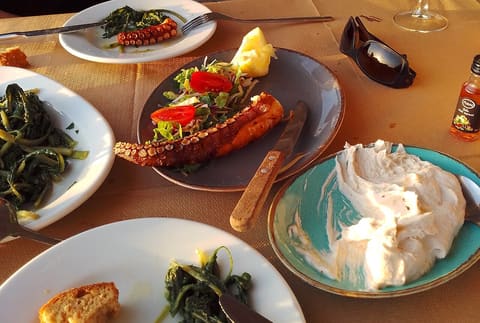
Photo: Andrew Dalby · CC BY-SA 4.0
Scholarly differences
Cephalopods (octopus, squid, cuttlefish) sit in the wider 'game of the sea' discussion. The Shafi'i, Maliki and Hanbali schools permit them without slaughter; Hanafi scholarship that limits seafood to fish does not. This site therefore marks octopus a scholarly difference, as it does squid, cuttlefish and shrimp. It is a question of classification, not a claim that octopus is impure.
What decides the answer
-
Shafi'i, Maliki, Hanbali: plain octopus is Halal
-
Hanafi (seafood limited to fish): not permissible
-
Fried or sauced octopus: verify oil, batter, and condiments
-
No zabiha slaughter requirement for seafood
How to verify
- If you follow majority seafood permissibility, plain octopus is Halal.
- If your Hanafi teacher restricts non-fish sea animals, follow that consistently (same family as squid).
- At restaurants, verify fryer oil, batters, and sauces—wine, pork fat, and shrimp paste are common spoilers.
- Frozen plain octopus with salt/water is the cleanest retail form.
Why this ruling
Octopus is a soft-bodied cephalopod with eight arms, sold whole, tentacle-only, or as frozen cleaned portions. It is staple protein in Mediterranean, East Asian, and Latin American coastal cooking—from Greek grilled octopus to Japanese takoyaki to Galician pulpo. For Muslim diners the first question is classification of the animal; the second is what the kitchen does to it.
Majority ruling and school nuance
Across much of the Muslim world, sea creatures are treated as broadly permissible. That majority practice includes octopus alongside squid in restaurant and home cooking. Classical comfort with “what the sea casts up” underwrites that view for Maliki, Shafi‘i, and Hanbali practice in particular.
Some Hanafi positions historically emphasize fish as the clear seafood category and are more cautious about other sea animals. Readers who follow a restrictive Hanafi seafood rule should ask their local scholar and apply the answer consistently to octopus, squid, and similar cephalopods. That split is why this page marks octopus Scholars differ: for the Shafi‘i, Maliki and Hanbali schools plain octopus is Halal, and for a Hanafi fish-only reading it is not.
Octopus is not swine, and it does not require zabiha. Confusing cephalopod fiqh with lamb slaughter rules is a category error.
FAO fisheries materials treat octopus species (Octopus vulgaris and related taxa) as ordinary commercial cephalopod catch for human food (FAO fishery search — octopus, retrieved 20 July 2026). That trade context confirms octopus is seafood commodity protein—not a pork derivative.
Where Halal status breaks in practice
- Shared fryers — octopus or takoyaki components fried with pork items.
- Wine and spirits — Mediterranean braises sometimes use wine; Rockefeller-style toppings are more oyster territory but cocktail sauces nearby may include alcohol.
- Dashi and pastes — Japanese builds may include bonito (fish—usually fine) plus sauces with mirin; ask about alcohol content in mirin-style seasonings.
- Mayonnaise and aioli — common with fried octopus; see mayonnaise for emulsifier checks.
- Stuffed recipes — European stuffings can hide non-Halal sausage.
Markets and products
Fresh and frozen octopus travel from Atlantic, Mediterranean, and Pacific fisheries. Pre-cooked vacuum packs are popular for grilling at home—usually just octopus, salt, and water. Seasoned snack shreds and ready sauces need label diligence. Surimi “seafood mix” that merely looks like octopus follows fish/binder rules, not cephalopod cookery myths.
Retail cuts and frozen formats
Grocery freezers usually stock cleaned tentacles, whole baby octopus, or pre-cooked packs with ingredient lists short enough to audit. Mediterranean delis may sell marinated octopus in olive oil with herbs—check for wine vinegar blends or undisclosed “natural flavors.” Asian markets carry dried octopus and snack shreds seasoned with shrimp powder, chili, and MSG; those seasoning lines deserve the same sauce audit as fresh cephalopods. Canned octopus in oil is still octopus meat; octopus in tomato sauce needs a read for wine or anchovy paste.
Restaurant portions differ: pulpo a la gallega is boiled then paprika-oiled; takoyaki hides octopus inside batter balls; sushi/nigiri pairs raw octopus with soy and wasabi—usually fine on species grounds, but ask about alcohol in soy reductions at high-end counters. None of these cooking styles changes the core majority Halal classification of plain octopus; they change what else enters the bite.
Travel, school events, and mixed buffets
Airline and hotel seafood buffets often line octopus salads beside wine-poached mussels and bacon-wrapped scallops. Even if octopus is acceptable under your school, the serving spoon may have touched Haram items. School international days and corporate catering sometimes serve “Mediterranean seafood platters” without ingredient cards—request a list or choose a plainly grilled fish option if you avoid disputed cephalopods entirely.
Realistic verification
- Confirm cephalopods are acceptable under your school (majority: yes).
- Prefer grilled, boiled, or stewed octopus in plant oil or olive oil.
- At fry shops and takoyaki stands, ask about oil dedication and sauce ingredients.
- If you avoid all disputed shellfish/cephalopods, order fish instead.
Bottom line: plain octopus is Halal for the Shafi‘i, Maliki and Hanbali schools and not for a Hanafi fish-only reading. Follow your school, and always check the fryer and the sauce.
Where you'll find it
- Grilled octopus with lemon and olive oil
- Takoyaki and Japanese octopus dishes
- Mediterranean salads and stews
- Galician-style pulpo a la gallega
Frequently asked questions
Does octopus need Islamic slaughter?
Why is octopus marked 'Scholars differ'?
Is takoyaki Halal?
Is dried or canned octopus Halal?
What about baby octopus vs large octopus?
Sources
Named Islamic, certifier, manufacturer, and regulatory sources used on this page. Inline markers like [1] jump here. Retrieval dates show when we last checked the live URL. Editorial methodology.
Islamic / scriptural
-
Qur'an Retrieved
Sea-game verse commonly cited in seafood discussions; madhhab nuance remains.
-
IslamWeb 87405 — crabs and school opinions
IslamWeb Retrieved
Names Hanafi / Maliki / Shafi‘i / Hanbali positions on crab (and analogous shellfish).
-
IslamWeb 81789 — sea creatures being Halal
IslamWeb Retrieved
Summarises four-Imam disagreement on non-fish sea animals.
Certifier / jurisdiction
-
Portal Halal Malaysia (MYeHALAL)
JAKIM Retrieved
Public directory when a Malaysian Halal mark is claimed on the pack.
Regulatory / labelling
-
Food and Agriculture Organization of the United Nations Retrieved
Trade identity for octopus as commercial cephalopod seafood.
People also check
Related ingredients and products for this item.