
Is Red Wine Vinegar Halal?
Scholars differ on this one.
Red wine vinegar is made by turning an alcoholic liquid into acetic acid on purpose.
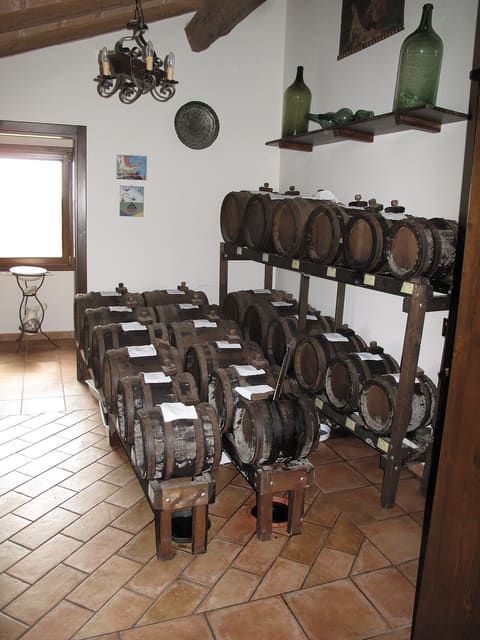
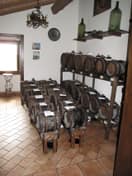
Photo: Chapeau.judicael · CC BY-SA 3.0
Scholarly differences
Wine that turns to vinegar by itself is Halal by consensus (IslamQA 2283; Dar al-Ifta 6245). Deliberately made vinegar is disputed: the Hanafi school permits it; Indonesia's MUI (Fatwa 10/2018) rules vinegar from khamr Halal and pure whether it turned by itself or was engineered; IslamQA 191176 and 276185, following Ibn 'Uthaymin, permit vinegar made by non-Muslims.
The classical Shafi'i rule (Reliance of the Traveller e14.6) and Malaysia's National Fatwa Committee (2006) do not accept vinegar made by intervention, though Shafi'i answers at Qibla and SeekersGuidance allow following the Hanafi view.
What decides the answer
-
Wine or another alcoholic drink that turned to vinegar by itself — by consensus
Halal -
Commercial red wine vinegar, Hanafi, MUI and IslamQA rulings
Halal -
Commercial red wine vinegar, classical Shafi'i rule and Malaysia's 2006 fatwa: not accepted
-
Wine, beer, cider or cooking wine listed as an ingredient: not vinegar; a separate ruling
-
Flavoured products, glazes, dressings, gummies: read the other ingredients
How to verify
- Confirm the label says vinegar, not wine, beer, cider or cooking wine.
- Follow your school on deliberately made vinegar: Hanafi, MUI and IslamQA rulings permit commercial vinegar; the Shafi'i rule and Malaysia's fatwa do not.
- If you avoid it, look for vinegar certified by the body you follow, or use lemon juice.
- Flavoured vinegars, glazes, dressings, gummies and drinks: read the other ingredients.
Quick checks
- Is it vinegar, not wine, beer, cider or cooking wine?
- Deliberately made vinegar: follow your school (Hanafi, MUI, IslamQA permit; Shafi'i rule and Malaysia's fatwa do not).
- Read the other ingredients in flavoured products.
Why this ruling
Red wine vinegar is made from red wine whose alcohol acetic acid bacteria have turned into acetic acid; better wine vinegars are matured in wood.[6]
The ruling
Red wine vinegar is made on purpose from wine, so it is deliberately made vinegar, the case the schools differ on. The Hanafi school permits it: a SeekersGuidance answer says "Vinegar from wines and spirits is permitted",[7] Indonesia's MUI rules such vinegar Halal and pure,[8] and IslamQA, following Ibn 'Uthaymin, permits vinegar made by non-Muslims.[11] The classical Shafi'i and Hanbali position does not accept vinegar made by intervention,[10][1] and Malaysia's National Fatwa Committee ruled processed wine vinegar haram in 2006.[9] Shafi'i answers from Qibla and SeekersGuidance allow following the Hanafi view for commercial vinegar.[4] See vinegar for the full picture.
White wine vinegar
White wine vinegar is made the same way from white wine, so everything above applies to it unchanged: it is deliberately made vinegar, permitted by the Hanafi school, Indonesia's MUI and IslamQA, and not accepted by the classical Shafi'i rule or Malaysia's 2006 fatwa.[3][8][2][9] It is not the same as "white vinegar", a label name for spirit or distilled vinegar, which is made from alcohol rather than wine and has its own spirit vinegar page.
What to check
Red wine, cooking wine and "wine reduction" sauces are not vinegar. Vinaigrettes and marinades can add other ingredients; read the label.
Where you'll find it
- Vinaigrettes and salad dressings
- Marinades for meat and vegetables
- Pickling
- Pan sauces and gastriques
Frequently asked questions
Is red wine vinegar Halal?
Is white wine vinegar Halal?
Is white wine vinegar the same as white vinegar?
Does red wine vinegar contain alcohol?
Is red wine vinegar the same as red wine?
Sources
Named Islamic, certifier, manufacturer, and regulatory sources used on this page. Inline markers like [1] jump here. Retrieval dates show when we last checked the live URL. Editorial methodology.
Islamic / scriptural
-
IslamQA Retrieved
Wine that turns to vinegar by itself is permissible by consensus; vinegar made by deliberate treatment is disputed, with the Shafi'is, Hanbalis and some Malikis prohibiting it.
-
Ruling on vinegar made from wine (276185)
IslamQA Retrieved
Records the Hanafi and some Maliki permission for deliberate conversion, and concludes that vinegar produced by non-Muslims by treating wine, such as commercial wine and balsamic vinegar, is permissible to consume.
-
White wine vinegar: permissible or not?
SeekersGuidance (Shaykh Faraz Rabbani) Retrieved
Hanafi, 8 May 2010: wine vinegar is permitted whether it transformed by itself or through intervention.
-
Is vinegar permissible in the Shafi'i school?
SeekersGuidance (Shaykh Jamir Meah) Retrieved
Shafi'i, 17 March 2018: permissible on condition nothing external was added during fermentation; for commercial vinegar, where the process is hard to know, there is no harm in adopting the Hanafi position.
-
Food mixed with alcohol: is it permissible?
Dar al-Ifta al-Misriyyah Retrieved
"Scholars have unanimously agreed that alcohol is deemed pure if it transforms into vinegar"; minute quantities of an intoxicant that cannot intoxicate are lawful.
-
Are wine vinegar and spirit vinegar permissible?
SeekersGuidance (via IslamQA.org) Retrieved
Hanafi. Ustadh Tabraze Azam, checked by Shaykh Faraz Rabbani: "Vinegar from wines and spirits is permitted" (citing al-Kasani); the hadith against making vinegar from wine are read as belonging to the early prohibition period or as a matter of propriety.
-
Fatwa MUI No. 10 Tahun 2018: food and drink containing alcohol/ethanol
Majelis Ulama Indonesia Retrieved
Operative ruling: "Vinegar/cuka yang berasal dari khamr baik terjadi dengan sendirinya maupun melalui rekayasa, hukumnya halal dan suci" (vinegar from khamr, whether it turned by itself or was engineered, is Halal and pure). The fatwa records that scholars differ on engineered vinegar.
-
Can one consume vinegar in the Shafi'i school?
Qibla, Ustadha Shazia Ahmad (via IslamQA.org) Retrieved
Shafi'i. Quotes Reliance of the Traveller e14.6: wine that becomes vinegar without anything introduced into it is pure, but if anything was introduced, turning to vinegar does not purify it. Adds that it is permissible to follow the Hanafi school, which holds vinegar made by intervention pure and permissible.
-
IslamQA Retrieved
Deliberately turning wine into vinegar is not permissible (citing Ibn Taymiyyah), but following Ibn 'Uthaymin, vinegar made by non-Muslims who believe it lawful, including vinegar imported from non-Muslim countries, is permissible for Muslims.
Context / background
-
Wikipedia Retrieved
How vinegar is made: acetic acid bacteria turn alcohol into acetic acid; wine, cider, malt, spirit and rice vinegar varieties.
-
Cuka wain dari perspektif Islam: analisis fatwa Malaysia dan Indonesia
Jurnal Fiqh, University of Malaya (2016) Retrieved
Quotes the 2006 decision of Malaysia's National Fatwa Committee (paper JKF 3/73/2006): "Haram menggunakan cuka wain yang diproses dan dicampur dengan bahan-bahan luar" (using wine vinegar that has been processed and mixed with outside substances is haram), and notes that commercial vinegar is made by deliberately adding acetic acid bacteria.
People also check
Related ingredients and products for this item.