
What decides the answer
-
Yellow mustard (vinegar + seed)
Halal -
French’s Classic Yellow and Heinz Yellow Mustard (current manufacturer lists)
Halal -
Dijon made with wine vinegar (not wine)
Scholarly difference over the wine vinegar (see the vinegar page) -
Dijon or other mustard that lists white wine or beer as an ingredient: apply IslamQA 201520; this page has not measured residual ethanol in a finished jar
Where you'll find it
- Yellow mustard on burgers and hot dogs
- Dijon in dressings and sauces
- Whole-grain and spicy brown mustards
- Honey mustard
- Mustard in marinades and rubs
Why this ruling
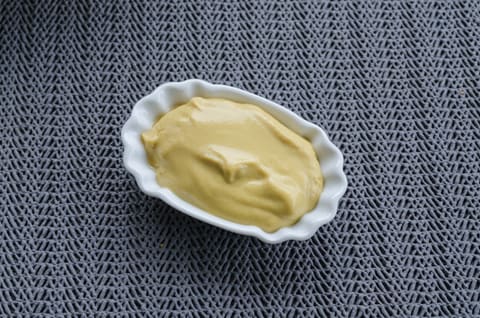
Everyday yellow mustard is Halal. It is ground mustard seed in distilled vinegar, water, salt, and spices. The two yellow products below are that recipe. Dijon that lists white wine is a different, narrower question.
What's in yellow mustard
French’s Classic Yellow Mustard (US foodservice panel). Distilled vinegar, water, #1 grade mustard seed, salt, turmeric, paprika, spice, natural flavours, and garlic powder (retrieved 25 August 2026).[4]
Heinz Yellow Mustard (US). Distilled white vinegar, mustard seed, water, salt, turmeric, spices, natural flavour (retrieved 25 August 2026).[5]
Neither list is wine or beer.
| Label wording | What it means |
|---|---|
| Distilled vinegar / spirit vinegar | Finished vinegar — Halal under the rulings cited |
| Wine vinegar / white wine vinegar | Finished vinegar — same rulings, not khamr |
| Verjuice | Unripe grape juice — plant |
| White wine / wine (as ingredient) | Not wine vinegar — IslamQA 201520 |
| Beer listed as an ingredient | IslamQA 201520; this page has not cited a current beer-mustard product |
Vinegar vs wine still in the jar
IslamQA 2283 and SeekersGuidance cover vinegar.[7][8] They do not cover unconverted wine. For the distilled vinegar in yellow mustard, the Shafi'i answer allows following the Hanafi view,[1] IslamQA allows vinegar made by non-Muslims,[2] and JAKIM certifies condiments made with vinegar.[3] For the distilled vinegar in yellow mustard, the Shafi'i answer allows following the Hanafi view,[1] IslamQA allows vinegar made by non-Muslims,[2] and JAKIM certifies condiments made with vinegar.[3]
Grey Poupon Dijon Mustard (US) lists distilled white vinegar, mustard seed, water, salt, white wine, citric acid, tartaric acid, fruit pectin, sugar, and spices (retrieved 25 August 2026).[6] There is no published measure showing the wine’s alcohol is gone, and no named scholars ruling it permissible. IslamQA 201520: if the essence of an intoxicant remains (taste, colour, odour), the food is not Halal; it is also not permitted to put beer or other intoxicants into condiments.[9] We have not measured residual ethanol in Grey Poupon. Prefer yellow mustard, or Dijon that lists wine vinegar rather than wine, when you want to stay on the vinegar ruling.
Beer mustard, briefly
No current official beer-mustard ingredient page is cited here. If a jar lists beer, apply IslamQA 201520. The words “beer mustard” on a front label are not a lab result. Yellow mustard remains the everyday bottle.
Honey mustard is yellow mustard plus honey when the base matches the vinegar-and-seed pattern.
Realistic verification
- Yellow mustard: the cited lists are enough.
- Dijon: wine vinegar vs white wine on the actual panel.
- Beer as an ingredient: IslamQA 201520—not a name-only Haram.
How to verify
- Yellow mustard: mustard seed, distilled vinegar, water, salt, spices.
- Distilled or spirit vinegar is accepted in condiments; a label that says wine vinegar is the one case scholars dispute (see the vinegar page).
- If the list says white wine or beer—not wine vinegar—apply IslamQA 201520 (intoxicant added to food/condiments; traces that remain are not excused).
- The name alone is not a No; the ingredient list decides.
Frequently asked questions
Is yellow mustard Halal?
Is Dijon mustard Halal?
Does mustard contain alcohol?
Is beer mustard Halal?
Are mustard powder and prepared mustard the same check?
Scholarly view
Mustard seed is a Halal plant food. Prepared yellow mustard uses distilled vinegar, which Shafi'i answers allow by following the Hanafi view and IslamQA allows when made by non-Muslims. Dijon made with wine vinegar falls under the dispute over deliberately made wine vinegar.
White wine listed as wine is not that ruling. IslamQA 201520: an intoxicant whose traces remain in food is not Halal; fully absorbed traces with no colour, taste, or odour are a different scenario—and it is still not permitted to add beer or wine to condiments.
No one has measured whether the wine’s alcohol is gone from Dijon, and no named majority of scholars treats it leniently.
Sources
Named Islamic, certifier, manufacturer, and regulatory sources used on this page. Inline markers like [1] jump here. Retrieval dates show when we last checked the live URL. Editorial methodology.
Islamic / scriptural
-
Is vinegar permissible in the Shafi'i school?
SeekersGuidance (Shaykh Jamir Meah) Retrieved
Shafi'i, 17 March 2018: permissible on condition nothing external was added during fermentation; for commercial vinegar, where the process is hard to know, there is no harm in adopting the Hanafi position.
-
IslamQA Retrieved
Deliberately turning wine into vinegar is not permissible (citing Ibn Taymiyyah), but following Ibn 'Uthaymin, vinegar made by non-Muslims who believe it lawful, including vinegar imported from non-Muslim countries, is permissible for Muslims.
-
IslamQA 2283 — Is wine vinegar Halal?
IslamQA Retrieved
Self-transformed wine vinegar permissible by consensus; deliberate conversion is disputed.
-
SeekersGuidance — wine vinegar and spirit vinegar
SeekersGuidance Retrieved
Hanafi: vinegar from wines and spirits is permitted.
-
IslamQA 201520 — alcohol in food
IslamQA Retrieved
Remaining traces of an intoxicant in food are not Halal; fully absorbed traces with no colour, taste, or odour are a different scenario. Permanent Committee: it is not permitted to put beer or other intoxicants into condiments.
Manufacturer / product
-
French’s Classic Yellow Mustard — ingredients
McCormick / French’s Retrieved
Distilled vinegar, water, #1 grade mustard seed, salt, turmeric, paprika, spice, natural flavors, garlic powder.
-
Heinz Yellow Mustard (US) — ingredients
Kraft Heinz / Heinz Retrieved
Distilled white vinegar, mustard seed, water, salt, turmeric, spices, natural flavor.
-
Grey Poupon Dijon Mustard (US) — ingredients
Kraft Heinz / Grey Poupon Retrieved
Distilled white vinegar, mustard seed, water, salt, white wine, citric acid, tartaric acid, fruit pectin, sugar, spices. White wine is listed as wine, not wine vinegar.
Context / background
-
Kewpie Mayonnaise (Japanese Style) is Halal-certified (9 September 2015)
Halal Media Japan Retrieved
Kewpie mayonnaise made at its Malacca factory is Halal-certified by JAKIM; its ingredients include vinegar.
People also check
Related ingredients and products for this item.