
Is Ketchup Halal?
Yes — this one is Halal.
Current Heinz tomato ketchup in the United States, Canada, Ireland, and the United Kingdom is a tomato-vinegar recipe.
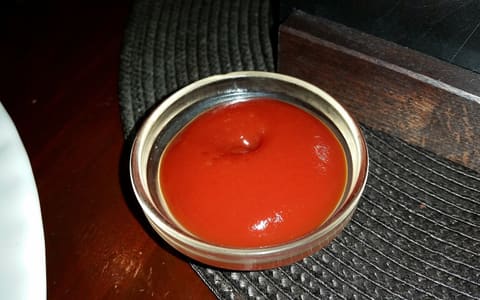
Photo: Kim Holger Kelting · CC BY 4.0
What decides the answer
-
Plain tomato ketchup (tomato, vinegar, sweetener, salt, spices)
Halal -
Heinz tomato ketchup US / Canada / Ireland / UK (current manufacturer lists)
Halal -
Halal-marked ketchup in a given market — for that sealed pack
Halal -
Another brand of plain tomato ketchup (Hunt's, Hellmann's, supermarket own-label): read that panel; the same five ingredient families give the same answer
-
A named speciality product that lists wine or meat as an ingredient: judge that list; it is not plain ketchup
Where you'll find it
- Fries, burgers, and hot dogs
- Meatloaf and casserole glazes
- Base for cocktail or barbecue-style sauces
- Dipping sauce for fried foods
Why this ruling
Everyday plain tomato ketchup is Halal. It is a cooked tomato-vinegar condiment. The bottles below are the evidence for that answer.
What's in Heinz tomato ketchup
United States — Heinz Tomato Ketchup. Tomato concentrate from red ripe tomatoes, distilled vinegar, high fructose corn syrup, corn syrup, salt, spice, onion powder, natural flavouring (manufacturer page retrieved 25 August 2026).[4]
Canada — Heinz Tomato Ketchup, prepared in Canada. Tomato paste (from fresh, ripe tomatoes), sugar, vinegar, salt, seasonings (retrieved 25 August 2026).[5]
Ireland — Heinz Tomato Ketchup. Tomatoes (148 g in 100 g of ketchup), spirit vinegar, sugar, salt, spice and herb extracts (contain celery), spices (retrieved 25 August 2026).[6]
United Kingdom — Heinz Tomato Ketchup. Tomatoes (148 g per 100 g of tomato ketchup), spirit vinegar, sugar, salt, spice and herb extracts (contain celery), spice (retrieved 26 August 2026).[7]
None of those four lists wine, meat, gelatin, or fish. Do not treat those ingredients as ordinary ketchup risks.
| Component | Ruling note |
|---|---|
| Tomato concentrate / paste | Plant — Halal |
| Distilled / spirit vinegar | Finished vinegar — see below |
| Sugar / corn syrup | Plant — Halal |
| Salt, onion, spices, seasonings | Plant — Halal |
Vinegar, not khamr
Ketchup uses vinegar, not drinking wine. IslamQA 2283: vinegar that becomes vinegar by itself is permissible by consensus; deliberate conversion of wine is disputed.[8] SeekersGuidance (Hanafi) states vinegar from wines and spirits is permitted.[9] IslamQA 113941 treats ordinary ketchup among vinegar sauces after transformation.[10] For vinegar that comes inside a bought product, the Shafi'i answer allows following the Hanafi view,[1] IslamQA allows vinegar made by non-Muslims,[2] and Malaysia's JAKIM certifies a mayonnaise made with vinegar.[3] See vinegar.
Other brands: Hunt's, Hellmann's, own-label
Heinz is cited above because Kraft Heinz publishes its ingredient panels online. That doesn't make other brands worse: read their bottles the same way.
For every other plain tomato ketchup—Hunt's, Hellmann's, Tesco, Asda, Sainsbury's, a restaurant sachet—the check is the same and it is short:
- Tomato concentrate, paste, or purée.
- Vinegar—distilled, spirit, or unqualified. Ruled on below.
- A sweetener—sugar, corn syrup, or high fructose corn syrup.
- Salt, onion, garlic, spices, seasonings.
- Sometimes modified maize starch as a thickener, which is plant-derived.
A panel that holds only those is the same product as the bottles cited above, and the same ruling reaches it. A panel that names wine or meat is a different product and needs its own read. There is no third case hiding in the brand name.
Speciality bottles, briefly
A jar that lists wine or meat as an ingredient is a different product from plain tomato ketchup. Plain tomato ketchup does not need checking for bacon fat, gelatin or anchovy; those questions belong to the flavoured versions.
Restaurant “house ketchup” reduced with wine or stock is a new sauce. BBQ sauce is a separate tomato-vinegar family with its own cited bottles.
Realistic verification
- Plain supermarket tomato ketchup: the short list above is enough.
- Confirm a market change on the manufacturer page for that product.
- Only a bottle that actually lists wine or meat needs a separate read.
How to verify
- For plain tomato ketchup, the ingredient list is the ruling: tomato, vinegar, sweetener, salt, spices.
- Confirm your market bottle against the manufacturer page for that product if the formula might have changed.
- A front-label wine, meat, or other speciality name is a different product—read that list rather than assuming it matches plain ketchup.
- Vinegar in ketchup is the finished condiment, not drinking wine (IslamQA 2283; SeekersGuidance on spirit/wine vinegar).
Frequently asked questions
Is Heinz tomato ketchup Halal?
Is Hunt's ketchup Halal?
Is Hellmann's, Tesco, Asda, or another own-label ketchup Halal?
Which ketchup brands has this page actually verified?
Does the vinegar in ketchup come from alcohol?
Do I need to check ketchup for wine, bacon, gelatin, or anchovy?
Is ketchup vegan the same as Halal?
What about banana ketchup or house restaurant ketchup?
Scholarly view
Tomato ketchup’s acid is vinegar. IslamQA 2283: wine that becomes vinegar by itself is permissible by consensus; deliberate conversion is disputed. SeekersGuidance (Hanafi) permits vinegar from wines and spirits. Heinz US lists distilled vinegar; Heinz Ireland and Heinz UK list spirit vinegar; Heinz Canada lists vinegar.
Shafi'i answers allow commercial vinegar by following the Hanafi view, and IslamQA 191176 allows vinegar made by non-Muslims, so the vinegar in ketchup does not change its answer. A regulator's or certifier's homepage is not evidence about a particular bottle.
Sources
Named Islamic, certifier, manufacturer, and regulatory sources used on this page. Inline markers like [1] jump here. Retrieval dates show when we last checked the live URL. Editorial methodology.
Islamic / scriptural
-
Is vinegar permissible in the Shafi'i school?
SeekersGuidance (Shaykh Jamir Meah) Retrieved
Shafi'i, 17 March 2018: permissible on condition nothing external was added during fermentation; for commercial vinegar, where the process is hard to know, there is no harm in adopting the Hanafi position.
-
IslamQA Retrieved
Deliberately turning wine into vinegar is not permissible (citing Ibn Taymiyyah), but following Ibn 'Uthaymin, vinegar made by non-Muslims who believe it lawful, including vinegar imported from non-Muslim countries, is permissible for Muslims.
-
IslamQA 2283 — Is wine vinegar Halal?
IslamQA Retrieved
Self-transformed wine vinegar permissible by consensus; deliberate conversion is disputed.
-
SeekersGuidance — wine vinegar and spirit vinegar
SeekersGuidance Retrieved
Hanafi: vinegar from wines and spirits is permitted.
-
IslamQA 113941 — vinegar and mayonnaise-type sauces
IslamQA Retrieved
Finished vinegar after transformation; ketchup named among ordinary vinegar sauces.
Manufacturer / product
-
Heinz Tomato Ketchup (US) — ingredients
Kraft Heinz / Heinz Retrieved
Tomato concentrate from red ripe tomatoes, distilled vinegar, high fructose corn syrup, corn syrup, salt, spice, onion powder, natural flavoring. No wine, meat, gelatin, or fish on this panel.
-
Heinz Tomato Ketchup, Prepared in Canada — ingredients
Kraft Heinz / Heinz Retrieved
Tomato paste (from fresh, ripe tomatoes), sugar, vinegar, salt, seasonings.
-
Heinz Tomato Ketchup (Ireland) — ingredients
Kraft Heinz / Heinz Retrieved
Tomatoes (148g in 100g of ketchup), spirit vinegar, sugar, salt, spice and herb extracts (contain celery), spices.
-
Heinz Tomato Ketchup (United Kingdom) — ingredients
Kraft Heinz / Heinz Retrieved
Tomatoes (148g per 100g Tomato Ketchup), spirit vinegar, sugar, salt, spice and herb extracts (contain celery), spice.
Context / background
-
Kewpie Mayonnaise (Japanese Style) is Halal-certified (9 September 2015)
Halal Media Japan Retrieved
Kewpie mayonnaise made at its Malacca factory is Halal-certified by JAKIM; its ingredients include vinegar.
People also check
Related ingredients and products for this item.