
How to verify
- Choose fish or vegetable nigiri/maki you accept; skip pork, eel-with-wine sauces, and shellfish if your school restricts them.
- Ask whether rice seasoning, glazes, or sauces use mirin, sake, or wine.
- Verify soy sauce (no added alcohol) or bring a Halal-certified bottle.
- Ask about shared knives and boards with non-Halal items.
- Prefer Halal-certified sushi restaurants when available.
What decides the answer
-
Plain fish or vegetable sushi with Halal condiments
can be Halal -
Shellfish sushi
follow your madhhab (see shrimp/shellfish pages) -
Uncertified mixed kitchens
Halal if verified until you ask -
Mirin, sake, wine glazes, or pork
Haram / avoid
Why this ruling
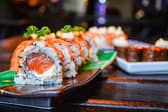
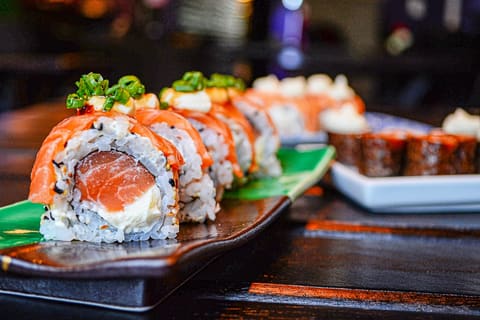
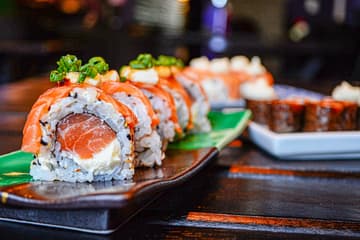
Sushi is vinegared rice (shari) plus toppings or fillings (neta)—nigiri, maki, temaki, and related forms. It is not a single Halal or Haram food. A plain salmon nigiri in a careful kitchen can be fine; an unagi roll brushed with wine-based eel sauce is not. This page stays Halal if verified because the word “sushi” hides too many formulas.
What is usually fine vs what fails
| Element | Typical issue |
|---|---|
| Scaled fish (tuna, salmon, etc.) | Species Halal; sauces may not be |
| Rice + rice vinegar | Usually Halal; some kitchens add mirin/sake |
| Soy sauce | Check added alcohol (see soy sauce page) |
| Wasabi / gari | Usually fine |
| Shrimp, crab, octopus, eel | School and sauce problems |
| Spicy mayo / imitation crab | Additive and surimi checks |
| Shared knives with pork or eel | Cross-contact |
U.S. seafood handling and “sushi-grade” freezing guidance address parasites and safety (FDA seafood guidance, retrieved 20 July 2026)—not Islamic law. MSC/ASC logos are sustainability marks (msc.org, retrieved 20 July 2026), not Halal certificates.
Alcohol is the most common hidden problem
Many Western and Japanese-style kitchens season rice or brush cooked seafood with mirin or cooking sake. Unagi (eel) sauce is a frequent offender. Even when the fish itself is Halal, a wine glaze flips the plate. Ask specifically: “Any mirin, sake, or wine in the rice or sauces?” If staff cannot answer, order plain fish nigiri without glaze or choose a Halal-certified sushi bar.
Soy sauce on the table needs its own read—naturally brewed bottles without added alcohol are widely used; cooking-wine soy blends are not. See the soy sauce page.
Shellfish and madhhab splits
Shrimp nigiri, soft-shell crab rolls, and oyster specials inherit the shellfish-vs-fish debate documented on the shrimp and shellfish pages. Many Shafi‘i, Maliki, and Hanbali consumers eat them; many Hanafi-oriented consumers do not. Sushi restaurants will not resolve that for you—apply your school, then still check sauces.
Mirin, shellfish and certified kitchens
- Alcohol in rice, glazes, and soy: Mainstream contemporary fatwa bodies treat deliberately added intoxicants (mirin, sake, cooking wine) as a plate-level problem even when the fish is Halal. See e.g. IslamQA’s discussions of alcohol in food and drink (islamqa.info, search alcohol in food; retrieved 20 July 2026)—use the article that matches your question, then verify the kitchen.
- Shellfish vs fish: School-dependent; this site does not force a single madhhab. Cross-check shrimp, prawns, and shellfish.
- Certified sushi kitchens: Prefer a named certifier for the jurisdiction (e.g. JAKIM directory entries for Malaysian outlets) rather than staff guesses.
Home sushi and takeaway
Home kits with plain rice vinegar, nori, cucumber, avocado, and Halal fish are the easiest path. Supermarket “sushi platters” often include imitation crab and mayonnaise salads prepared on shared lines—read labels. Conveyor-belt restaurants multiply cross-contact risk: plates pass many hands and shared utensils. Prefer made-to-order Halal venues when available.
In Malaysia, Indonesia, and Gulf cities, Halal-certified sushi chains publish marks covering fish sourcing and kitchen alcohol policy. Use JAKIM’s Portal Halal / MYeHALAL (retrieved 20 July 2026) for Malaysian directory checks. In cities without certified options, a practical pattern is: vegetable rolls + tuna/salmon nigiri, no eel, no shellfish if you avoid them, no glossy brown sauces, personal Halal soy sauce packet.
Realistic verification
- Name the protein and school (fish vs shellfish).
- Ask about mirin/sake/wine in rice and glazes.
- Check soy sauce brand or bring your own.
- Assess knife/board cross-contact if the kitchen also serves pork or eel.
- Prefer certified Halal sushi when the stakes are high (events, kids’ parties, travel).
Where you'll find it
- Nigiri and sashimi
- Maki and temaki rolls
- Conveyor-belt and takeaway sushi
- Home sushi with store-bought fish
Frequently asked questions
Is sushi Halal?
Is salmon or tuna sushi Halal?
Does mirin make sushi Haram?
Is California roll Halal?
Where can I check Halal sushi restaurants?
Scholarly view
Fish do not require zabiha. The sushi problem is almost always additives and kitchen practice: mirin/sake in unagi sauce, alcohol in some soy blends, imitation crab binders, and shellfish for Hanafi-oriented consumers. Vegetarian sushi still needs vinegar/seasoning and cross-contact checks. ‘Sushi-grade’ describes freezing/parasite control, not Halal certification.
Sources
Named Islamic, certifier, manufacturer, and regulatory sources used on this page. Inline markers like [1] jump here. Retrieval dates show when we last checked the live URL. Editorial methodology.
Islamic / scriptural
-
Qur'an 5:96 — sea game baseline
Retrieved
-
IslamWeb 87405 — crabs and school opinions
IslamWeb Retrieved
Names Hanafi / Maliki / Shafi‘i / Hanbali positions on crab (and analogous shellfish).
-
IslamWeb 81789 — sea creatures being Halal
IslamWeb Retrieved
Summarises four-Imam disagreement on non-fish sea animals.
-
IslamQA 7327 — ruling on alcohol / khamr
IslamQA Retrieved
-
IslamQA 148690 — alcohol in food
IslamQA Retrieved
Certifier / jurisdiction
-
Retrieved
Regulatory / labelling
-
Retrieved
Context / background
-
Retrieved
People also check
Related ingredients and products for this item.
Halal-conscious recipes
A substitution-led recipe that uses this analysis.
Browse this topic
Open the parent category hub for more foods in the same group.