
What decides the answer
-
Fresh/frozen plain tuna
Halal -
Canned tuna in water or vegetable oil
Halal -
Flavoured pouches / restaurant preparations: check sauces and added ingredients
-
Sustainability logos are not Halal certification
Where you'll find it
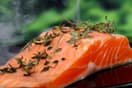
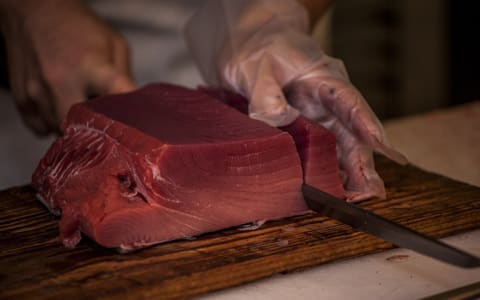
- Grilled or seared tuna steaks
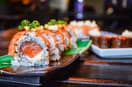
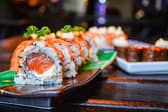
- Sushi and sashimi
- Canned tuna salads and sandwiches
- Tuna melts and casseroles
Why this ruling
Tuna are large ocean fish in the mackerel family (tribe Thunnini)—skipjack, yellowfin, albacore, bigeye, and bluefin are the names shoppers meet as steaks, sushi, or canned protein. For Halal purposes tuna is straightforward: it is fish, and fish does not need zabiha.
Qur'an 5:96 permits the game of the sea and its food as provision.[1] A named Hanafi answer states that tuna is Halal because it is a fish.[2] IslamQA 182508 records the Standing Committee position that all fish are Halal, again on 5:96 and the report that the sea’s dead are lawful.[3] These rulings are about fish; crab, prawns and other sea animals that are not fish are a separate question.
Species and forms
| Form | Typical Halal read |
|---|---|
| Fresh/frozen steaks or loins | Halal |
| Canned in water or vegetable oil | Halal |
| Canned in olive oil | Halal (oil is plant) |
| Flavoured pouches (sweet chilli, smoked, etc.) | Check sauce lines |
| Sushi / sashimi | Fish Halal; condiments vary |
U.S. identity and labelling rules for canned tuna live under FDA seafood regulations (seafood labelling resources, retrieved 25 August 2026). Those rules protect species naming and safety; they do not issue Halal certificates—nor do MSC “certified sustainable seafood” logos (msc.org, retrieved 25 August 2026).[4][5]
What can make a tuna dish doubtful
The fish stays Halal. Check ingredients actually added:
- Wine or mirin on seared tuna or in sushi sauces
- Bacon-wrapped tuna, or pouches with meat recipes
- Non-Halal stock in tuna casseroles
- Cheese or wine sauces in flavoured cans
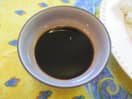
Soy sauce served with tuna sushi should be checked on its own terms (added alcohol vs natural brew)—see the soy sauce page.
Packaged tuna and claimed marks
Plain canned tuna in water or oil does not need a Halal logo for the fish itself. If a pack claims a Malaysian Halal mark covering oil or flavour variants, Portal Halal / MYeHALAL (retrieved 25 August 2026) can confirm that claim; the directory is not the fish ruling.[6]
Realistic verification
- Species/form: tuna fish → Halal.
- Open the can: only tuna + water/oil + salt? Done.
- Flavoured cans, sushi sauces, or restaurant preparations: read what was added.
- Do not confuse sustainability labels with Halal marks.
How to verify
- Plain tuna steaks or cans listing only tuna, water or vegetable oil, and salt are Halal—no certification needed.
- Read flavoured cans and pouches for wine, cheese sauces, meat stock, or other added ingredients.
- Sushi/sashimi tuna is Halal as fish—verify soy sauce, mirin, and eel sauce on the plate.
- ‘Dolphin-safe’ or MSC labels are sustainability marks, not Halal certificates.
Frequently asked questions
Is tuna Halal?
Is canned tuna Halal?
Is tuna sushi Halal?
Does ‘dolphin-safe’ mean Halal?
Is bluefin or rare tuna different religiously?
Scholarly view
Fish do not require Islamic slaughter. Muftisays (Hanafi) answers that tuna is Halal because it is fish. IslamQA 182508 records the Standing Committee position that all fish are Halal, citing Qur'an 5:96. Shellfish rulings do not apply to tuna, which is a fish with scales.
Sources
Named Islamic, certifier, manufacturer, and regulatory sources used on this page. Inline markers like [1] jump here. Retrieval dates show when we last checked the live URL. Editorial methodology.
Islamic / scriptural
-
Qur'an Retrieved
Sea catch and its food are lawful provision—fish evidence, not a shellfish analogy.
-
Muftisays (Hanafi, via islamqa.org) Retrieved
Named Hanafi answer: tuna is Halal because it is a fish (Thunnus / Scombridae).
-
IslamQA 182508 — all fish are Halal
IslamQA.info (Standing Committee cited) Retrieved
Standing Committee: all fish are Halal, citing 5:96 and the sea’s dead being lawful. Fish ruling—not crab or shellfish.
Certifier / jurisdiction
-
Retrieved
Directory when a Malaysian Halal mark is claimed on packaged tuna—not a fish ruling.
Regulatory / labelling
-
U.S. FDA Retrieved
Canned-tuna identity and seafood labelling—not a Halal certificate.