
Is Shellfish Halal?
Scholars differ on this one.
Shellfish is a category (crustaceans and mollusks), not one animal.
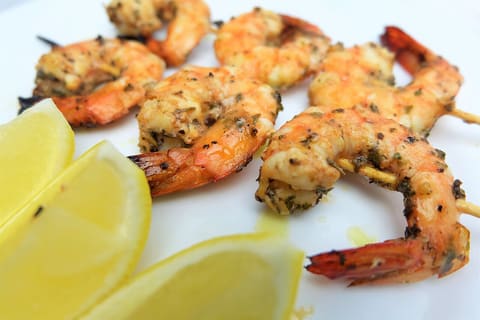
Photo: Eximiousincorp · CC BY-SA 4.0
Scholarly differences
Classical disagreement centers on whether every sea creature is ‘fish’ in the fiqh sense. Quran 5:96’s permission of sea game is read broadly by many non-Hanafi jurists and more narrowly by many Hanafi authorities who emphasize fish.
Ja‘fari practice per Sistani’s office permits scaled fish (plus shrimp category) and states shellfish is not Halal. Readers should follow their school or a trusted local scholar. Shellfish (the category) and oysters (the species) are covered on separate pages.
What decides the answer
-
Shafi‘i, Maliki, and Hanbali majority practice: shellfish treated as permissible seafood
-
Many Hanafi positions: shellfish not equivalent to fish—follow your school
-
Ja‘fari / scale-requiring views: many shellfish excluded
-
School-agnostic strict approach: choose fish instead of disputed shellfish
-
Cooking method still needs Halal fats, stocks, and sauces
How to verify
- Decide whether you follow a madhhab that permits shellfish broadly (common Shafi‘i/Maliki/Hanbali practice) or a restrictive Hanafi seafood view.
- Apply that ruling consistently across shrimp, crab, lobster, oysters, mussels, clams, and similar animals—or note any finer distinctions your scholar gives.
- If you only eat unanimously accepted seafood, choose fish.
- Separately verify cooking fats, broths, and sauces.
Quick checks
- Follow your madhhab (or local scholar) on shellfish vs fish.
- If you avoid disputed seafood, choose fish instead of shellfish platters.
- Still verify fats, sauces, beer batters, and shared fryers in restaurants.
Why this ruling
Shellfish is an English category word for aquatic invertebrates eaten as food—mainly crustaceans (shrimp, crab, lobster, prawns) and mollusks (oysters, clams, mussels, scallops, and often squid/octopus in casual speech). It is not one species and not one global fatwa line. The Halal question that matters is whether non-fish sea animals are lawful in the school you follow.
Why scholars differ
A large body of scholarship—especially among Shafi‘i, Maliki, and Hanbali jurists—permits shellfish under broad readings of sea-game permissibility. Many Hanafi authorities draw a tighter line: fish are clear; shellfish are not treated the same. Ja‘fari practice per Sistani’s seafood Q&A excludes shellfish (only scaled fish and shrimp category are permitted).[6] Because sincere Muslims reach different practical answers, IsItHalal marks shellfish Scholarly difference because scholarly rulings differ, rather than forcing a single Halal or Haram label on the whole category.
An English rendering of the sea-game verse often cited in these discussions is Qur'an 5:96 on Quran.com (retrieved 20 July 2026). How far that verse extends beyond fish is the heart of the madhhab split.
What is not the dispute
Shellfish do not require land-animal zabiha. Alcohol is not inherent in shellfish meat. Farmed vs wild is food-safety/sustainability, not the core madhhab split. Imitation crab (surimi) follows fish plus additive rules.
Kitchen reality after the fiqh answer
If your school permits shellfish, you still need Halal cooking: no pork fat, no beer batter, no wine mignonette, no shared fryer with bacon. Seafood restaurants that serve alcohol and pork are a separate verification problem from crustacean/mollusk classification.
FAO and fishery portals describe commercial shellfish as ordinary global seafood commodities (FAO fishery search — shellfish, retrieved 20 July 2026)—useful to separate trade identity from fiqh classification.
Species quick reference (same school logic)
| Group | Examples | Typical school split |
|---|---|---|
| Crustaceans | Shrimp, crab, lobster, langoustine | Permitted by the Maliki, Shafi‘i and Hanbali schools, except crab for Shafi‘is (their stronger view forbids it); the Hanafi school permits only fish, and Hanafi scholars differ on shrimp[1] |
| Bivalves | Oysters, mussels, clams, scallops | Same broad shellfish-vs-fish debate; oyster sauce extract is a separate product question |
| Cephalopods | Octopus, squid | Permitted by the Maliki, Shafi‘i and Hanbali schools; not by the Hanafi school |
This table does not override your mufti. It helps you apply one consistent answer across a mixed seafood platter instead of improvising plate by plate.
Buffets, weddings, and travel
Seafood towers at weddings and cruise ships stack shrimp, oysters, and crab on shared ice beds next to champagne mignonette and beer-steamed pots. Even permissive-school Muslims still reject alcohol sauces and pork-andouille gumbo served beside the shellfish. All-you-can-eat buffets reuse tongs between bacon-wrapped scallops and plain mussels.
Muslim-majority coastal cities (Jeddah, Kuala Lumpur, Jakarta) often serve shellfish in restaurants that also sell non-Halal alcohol—classification fiqh and kitchen compliance remain two checks. Travelers who avoid all madhhab disagreement should order grilled fish with lemon, not the shellfish combo.
How to decide personally
- Ask your madhhab teacher how they classify crustaceans and mollusks.
- Apply that answer across the platter unless they distinguish species.
- If you only eat items accepted across schools, order fish.
- Use species pages—shrimp, crab, oysters, mussels—for dish-level sauce and fryer detail.
Bottom line: Shellfish is a school-dependent seafood category. Many Muslims eat it with scholarly cover; many Hanafi-oriented consumers do not. Match your platter to your fiqh—not to a restaurant “seafood tower” slogan.
Where you'll find it
- Seafood platters and boils
- Paella, cioppino, and chowders
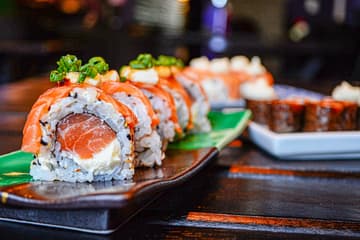
- Sushi and sashimi shellfish
- Stir-fries and grilled shellfish
Frequently asked questions
Is shellfish Halal?
Do shrimp, crab, and oysters share one ruling?
Does zabihah slaughter apply to shellfish?
What should I order if I want zero school disagreement?
Sources
Named Islamic, certifier, manufacturer, and regulatory sources used on this page. Inline markers like [1] jump here. Retrieval dates show when we last checked the live URL. Editorial methodology.
Islamic / scriptural
-
The ruling of prawns and shrimps
Darul Uloom Trinidad and Tobago (Hanafi), via IslamQA.org Retrieved
Hanafi: only fish is permitted from the sea. Scholars who count shrimp as a fish (al-Damiri; Mawlana Ashraf Ali Thanwi) permit it; those who follow its classification as a crustacean do not.
-
-
IslamWeb 87405 — crabs and school opinions
IslamWeb Retrieved
Names Hanafi / Maliki / Shafi‘i / Hanbali positions on crab (and analogous shellfish).
-
IslamWeb 81789 — sea creatures being Halal
IslamWeb Retrieved
Summarises four-Imam disagreement on non-fish sea animals.
-
Ayatollah Sistani — Fish / seafood Q&A (scales; shellfish not Halal)
Office of Ayatollah Sistani Retrieved
Ja‘fari/Imami: only scaled fish (+ shrimp category); lobster and shellfish not permissible.
Regulatory / labelling
-
FAO fishery search — shellfish
Food and Agriculture Organization of the United Nations Retrieved
Trade identity for commercial shellfish commodities.
People also check
Related ingredients and products for this item.
Halal-conscious recipes
A substitution-led recipe that uses this analysis.