

Is Worcestershire Sauce Halal?
It depends on what the label says.
Most scholars accept both the anchovies and the vinegar in a bought Worcestershire sauce; what a label can't tell you is where the natural flavourings come from.
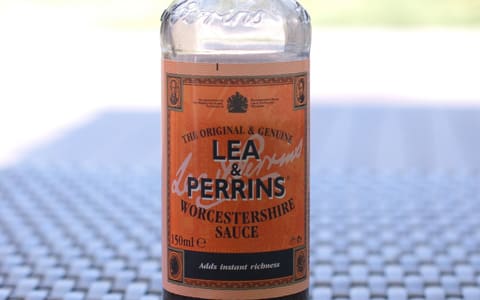
Photo: Dimitri “Diti” Torterat · CC BY 2.0 fr
How to verify
- Read the bottle you're holding: the vinegar, whether it has anchovies, and whether alcohol is listed.
- Spirit, malt or distilled vinegar is accepted in a bought sauce; if it says wine vinegar, follow your school's view.
- For certainty about the natural flavourings, buy a bottle with a Halal mark, or use soy sauce, tamari or a homemade tamarind, molasses and vinegar mix.
What decides the answer
-
A bottle with a recognised Halal mark
Halal -
Anchovies (fish)
Halal -
Spirit, malt or distilled vinegar, no Halal mark
Halal if verified (the natural flavourings are unchecked) -
Wine vinegar
Scholarly difference (see the vinegar page)
Why this ruling
Worcestershire sauce (in Britain often just "Worcester sauce") is a fermented liquid condiment from Worcester, England, first sold by the chemists John Lea and William Perrins in the 1830s. Typical recipes use vinegar, molasses, tamarind, anchovies and spices, aged together before bottling. Each brand, and sometimes each country, has its own recipe, so the answer depends on the bottle you're holding.
What's in Lea & Perrins
Kraft Heinz's US page for Lea & Perrins The Original Worcestershire Sauce lists distilled white vinegar, molasses, sugar, water, salt, onions, anchovies, garlic, cloves, tamarind extract, natural flavourings and chili pepper extract.[4] No alcohol is added, and the anchovies are fish. The bottle carries no Halal mark, and UK bottles have their own label.
The vinegar
Vinegar starts as alcohol, so scholars ask whether the change into vinegar (istihalah) makes it lawful. Wine that turns into vinegar on its own is permissible by consensus; turning wine into vinegar on purpose is disputed, and Shafi'i, Hanbali and some Maliki scholars avoid it.[5] Hanafi scholars permit vinegar made from wine or spirits either way.[6]
For vinegar in a bought product, the gap mostly closes. A Shafi'i answer allows following the Hanafi view when the process is unknown,[1] and IslamQA allows vinegar made by non-Muslims.[2] JAKIM certifies sauces made with vinegar, such as Kewpie mayonnaise.[3] So a sauce made with spirit, malt or distilled vinegar is accepted, and wine vinegar is where the schools still differ (see vinegar).
Natural flavourings
The label doesn't say what the "natural flavourings" are made from. An ingredient list can't settle that; a Halal mark can. If a bottle claims a Malaysian mark, the JAKIM directory will confirm it.[7]
Where you meet it
| Where | What else is in it | Halal? |
|---|---|---|
| Caesar salad dressing | Anchovy, egg, Parmesan (made with animal rennet) | Check the cheese |
| Bloody Mary, Caesar cocktail | Vodka | No |
| Shepherd's and cottage pie, gravies | Meat and stock | Check the meat |
| Welsh rarebit | Cheese sauce, often made with beer | Check for beer |
| Barbecue sauces and marinades | Vinegar, sugar, spices | Check the bottle |
The splash of Worcestershire is rarely the deciding ingredient in these dishes; the meat, the cheese or the drink beside it usually is. See barbecue sauce for bottled marinades.
Vegetarian and anchovy-free versions
Several brands sell vegetarian Worcestershire without anchovies, using extra tamarind, soy or mushroom for depth. That answers a vegetarian question rather than a Halal one.
Frequently asked questions
Is Worcestershire sauce Halal?
Are the anchovies the problem?
Is Lea & Perrins Halal?
Does Worcestershire sauce contain alcohol?
What can I use instead?
Scholarly view
Fatwa.org.au (Mufti Faizal Riza, Hanafi, 2012) answered a question about Worcestershire and oyster sauce together: Worcestershire sauce is Halal as long as it contains no haram ingredients, and oyster sauce is not permissible in the Hanafi school, because it is made from oysters. Read the answer.
Sources
Named Islamic, certifier, manufacturer, and regulatory sources used on this page. Inline markers like [1] jump here. Retrieval dates show when we last checked the live URL. Editorial methodology.
Islamic / scriptural
-
Is vinegar permissible in the Shafi'i school?
SeekersGuidance (Shaykh Jamir Meah) Retrieved
Shafi'i, 17 March 2018: permissible on condition nothing external was added during fermentation; for commercial vinegar, where the process is hard to know, there is no harm in adopting the Hanafi position.
-
IslamQA Retrieved
Deliberately turning wine into vinegar is not permissible (citing Ibn Taymiyyah), but following Ibn 'Uthaymin, vinegar made by non-Muslims who believe it lawful, including vinegar imported from non-Muslim countries, is permissible for Muslims.
-
IslamQA 2283 — Is wine vinegar Halal?
IslamQA Retrieved
Self-transformed wine vinegar permissible by consensus; deliberate conversion is disputed.
-
SeekersGuidance — wine vinegar and spirit vinegar
SeekersGuidance Retrieved
Hanafi: vinegar from wines and spirits is permitted.
-
Fatwa.org.au: Oyster sauce and Worcestershire sauce
Fatwa.org.au (via IslamQA.org) Retrieved
Mufti Faizal Riza (Hanafi), 28 March 2012: Worcestershire sauce is halal if it contains no haram ingredients; oyster sauce is not permissible in the Hanafi school.
Certifier / jurisdiction
-
Retrieved
Malaysia's Halal directory: use it to confirm a Malaysian Halal mark on a bottle.
Manufacturer / product
-
Lea & Perrins Original Worcestershire Sauce (US) — ingredients
Kraft Heinz / Lea & Perrins Retrieved
US product: distilled white vinegar, molasses, sugar, water, salt, onions, anchovies, garlic, cloves, tamarind extract, natural flavorings, chili pepper extract. Not a Halal certificate; UK packs can differ.
Context / background
-
Kewpie Mayonnaise (Japanese Style) is Halal-certified (9 September 2015)
Halal Media Japan Retrieved
Kewpie mayonnaise made at its Malacca factory is Halal-certified by JAKIM; its ingredients include vinegar.
Halal-conscious recipes
A substitution-led recipe that uses this analysis.
Browse this topic
Open the parent category hub for more foods in the same group.