Halal-conscious recipe
Baklava with ghee
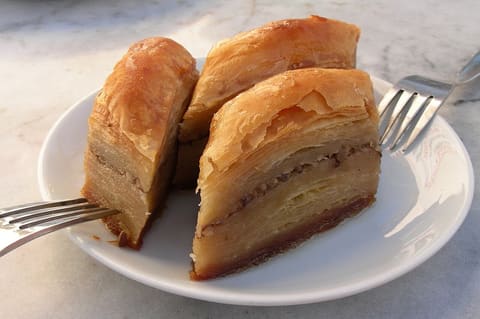
Layered nut baklava brushed with ghee or butter, finished with lemon sugar syrup — no brandy, rose liqueur, or unnamed gelatin.
Each method follows published technique for the dish, and every Halal substitution is checked against the ingredient pages we cite. Photographs come from our ingredient library rather than the finished dish.
Why Halal checks matter here
Traditional trays are usually Halal; hotel syrups may include alcohol; packaged baklava can use gelatin; fat should be named butter or ghee.
Classic nut baklava is mostly phyllo, nuts, fat, and sugar. The Halal work is naming the fat and keeping alcohol out of the syrup. See baklava and ghee.
Halal-critical ingredients
- Syrup Alcohol in some tourist or hotel recipes. Sugar, water, lemon, floral water only.
- Fat Anonymous margarine / emulsifiers. Named ghee or butter.
- Gelatin Not traditional in phyllo baklava; appears in some commercial sweets. None in this method.
Safe substitutes
- Butter → Ghee (same weight) Ghee is more heat-stable; butter browns faster — watch the top sheets.
- Brandy or liqueur in syrup → Lemon plus orange-flower or rose water
- Unnamed bakery margarine → Packed butter or a Halal-certified ghee
Allergens
gluten, tree nuts, milk (if using butter rather than ghee, or if ghee is not fully clarified to your standard)
Ingredients
Pastry and filling
- 400 g (1 pack, about 20 sheets) phyllo / filo pastry, thawed in the fridge
- 250 g (1 cup plus 2 tbsp) ghee, melted, or unsalted butter, melted
- 300 g (2½ cups) walnuts or pistachios, finely chopped
- 40 g (3 tbsp) caster sugar, in the nuts
- 2 g (1 tsp) ground cinnamon, optional
Syrup (no alcohol)
- 300 g (1½ cups) granulated sugar
- 200 ml (scant 1 cup) water
- 20 ml (1½ tbsp) lemon juice
- 10 ml (2 tsp) orange-flower water or rose water (the floral hydrosol, not a liqueur)
Method
- Syrup first. Simmer sugar, water, and lemon juice 8 minutes until slightly thickened. Stir in orange-flower or rose water off the heat. Cool completely. Do not add brandy, arak, or ‘baklava flavouring’ with alcohol. See Wine.
- Fat. Use ghee or butter. Ghee is clarified dairy fat — usually Halal; unnamed ‘bakery margarine’ is the risk, not traditional ghee. See Ghee. Brush a 23 × 33 cm tin.
- Layer. Lay phyllo sheets one by one, brushing each with melted ghee. After 8–10 sheets, add half the nuts mixed with sugar and cinnamon. Repeat, finishing with 8–10 brushed sheets. Cut into diamonds before baking so the syrup can enter later.
- Bake. Bake at 170 °C (fan 150 °C) for 40–45 minutes until deep gold. Traditional pairing: **hot pastry, cool syrup** (or cool pastry, hot syrup) so the layers stay crisp rather than sodden. Pour syrup evenly; rest 3 hours.
- No gelatin. This tray does not use gelatin. Packaged baklava and some hotel platters might — see Baklava and Gelatin.
How this recipe was researched
Method specified editorially from Levantine/Turkish baklava technique (buttered phyllo, nut filling, hot pastry / cool syrup or the reverse pairing) and this site's Baklava, Ghee, Gelatin, and Wine pages. Timings follow published technique rather than a kitchen test. This is a home tray, not a claim to be Gaziantep’s protected style.
Technique and ingredient sources
-
Pistachio baklava — BBC Good Food
— BBC Good Food
Retrieved:
Phyllo layering and sugar syrup. Floral water here replaces any spirit some modern recipes add.
-
Baklava analysis — isithalal.food
— isithalal.food
Retrieved:
Shop trays versus gelatin and alcohol edge cases.