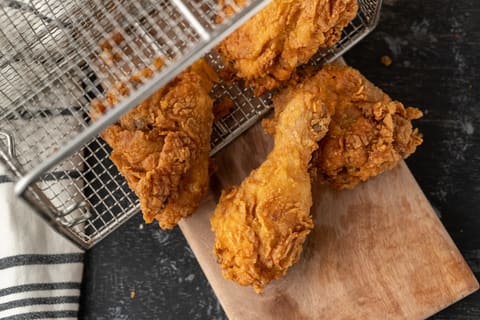
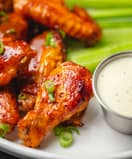
Dave’s Hot Chicken is a fast-casual Nashville hot chicken chain: tenders and sliders in escalating spice levels, usually with slaw, pickles, house sauce, fries, and mac and cheese. It started as a 2017 East Hollywood pop-up and scaled across the United States and into Canada through franchising. Popularity does not create a Halal supply chain.
Corporate information for locations and menus is on the official site.[1] Those pages do not publish a U.S. national Halal certification program. U.S. poultry remains under ordinary USDA FSIS inspection for hygiene[2]—inspection is not Zabiha. Compare how national Halal systems publish certified premises via portals such as MYeHALAL[3] in markets that actually certify quick-service chicken.
The UK: Halal chicken, not a Halal kitchen
Dave's also operates in the UK, and its UK FAQ answers the question directly: "All the chicken served in our restaurants is Halal. We source it from trusted suppliers who are certified as leading providers of Halal chicken." It says "all our Halal chickens are pre-stunned … before being hand-slaughtered", and that supplier certificates can be seen on request in its restaurants. It is also clear about the limits: "our supply chain and kitchen do not operate under Halal procedures. We do not currently hold Halal certification for any of our other ingredients."[4]
So in the UK the chicken is Halal by Dave's own account, if you accept stunned slaughter (see chicken); the fryers, sauces and sides are not covered. Wingstop UK is in a similar position.
The US: no Halal programme
- Slaughter — U.S. commodity chicken is not Zabiha unless a Halal program says so. Dave’s does not publish a national Halal meat specification for U.S. restaurants.
- Kitchen — Hot-chicken concepts fry protein and sides in high volume. Shared oil and prep are normal; that blocks “fries-only” or “no spice tenders” workarounds.
- Seasonings and sauces — Spice pastes, buttermilk-style brines, and finishing sauces can include alcohol-based flavours or animal-derived additives in the broader category. Without a certificate, you cannot audit them from the menu board.
- Jurisdiction — This is not McDonald’s Malaysia. There is no JAKIM/BPJPH-style corporate Halal story for Dave’s. See KFC, Popeyes, and Chick-fil-A for how market certification (or its absence) changes chain rulings.
Canada and franchise rumours
Treat Canadian locations the same way unless that franchise publishes a certifier and certificate. Expansion into a new country does not automatically mean Halal supply. Staff guesses and TikTok claims are not documents. If a location ever claims Halal, demand the certifier name, certificate date, and whether fryers and sauces are in scope.
Realistic verification
- Check the corporate site and local franchise page for a named certifier—expect none for standard U.S. stores.
- Ask managers only to point you to paperwork, not for a verbal “yeah it’s fine.”
- Do not use fries or sliders as a shared-fryer workaround.
- Choose a dedicated Halal fried-chicken shop when you want Nashville-style heat with clear evidence.
Bottom line: in the US, Dave’s Hot Chicken is a flavour brand, not a Halal brand. Until a location proves audited slaughter and kitchen controls, treat it as non-Halal for religious purposes.
Spice levels do not change slaughter
Ordering “No Spice” or “Light” does not create Halal meat or dedicated oil. The spice paste is a flavour layer on top of the same chicken and fryer system. Mac and cheese, slaw, and house sauces still need ingredient clarity even in a hypothetical certified shop—dairy sides can be fine while the tenders are not, or the reverse if a sauce uses wine vinegar or animal enzymes.