

Halal-conscious recipe
Beef nihari
Slow-cooked Pakistani beef shank stew thickened with toasted flour, made with Halal beef, butter ghee and a spice blend you can read.
Each method follows published technique for the dish, and every Halal substitution is checked against the ingredient pages we cite. Photographs come from our ingredient library rather than the finished dish.
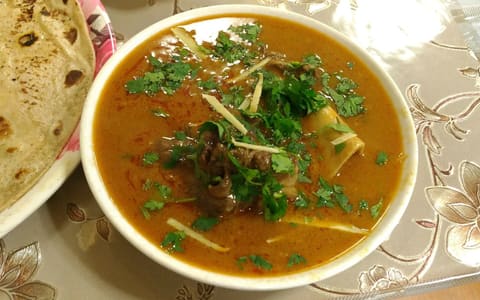
Photo: 赤猫法師 · CC BY-SA 4.0

Why Halal checks matter here
Nihari is a beef dish in Pakistan, where the meat is Halal by default; abroad the shank, the marrow bones and the ghee all need a Halal source.
Nihari takes its name from the Arabic nahar, morning: it was cooked overnight in the kitchens of Old Delhi and eaten after the dawn prayer. After partition it became a Karachi institution, and today it is sold from huge pots in the early morning and at weekends across Pakistan. The dish is simple in outline: beef shank on the bone, a fennel-heavy spice blend, many hours of very low heat, and a toasted flour slurry at the end to thicken the gravy.
The Halal checks are the meat and the fat. In Pakistan both are Halal by default. Elsewhere, buy the shank and marrow bones from a Halal butcher; supermarket shank is rarely Halal-slaughtered. Nihari uses a lot of ghee, and the spiced oil that floats on top is part of the dish, so use butter ghee or a vegetable ghee made only from plant oils.
Leave out stock cubes. The marrow bones make the stock, and many beef stock cubes contain beef extract that is not from Halal slaughter. The beef page covers what to ask a butcher.
Serve nihari with plenty of raw ginger, green chilli, coriander and lemon, and naan to scoop it up. Leftovers thicken overnight; loosen them with a splash of hot water.
Halal-critical ingredients
- Beef shank and marrow bones Outside Pakistan, supermarket shank and bones are rarely Halal-slaughtered unless the pack or butcher says so. Buy shank and bones from a Halal butcher. See Beef.
- Ghee Nihari needs a lot of fat, and restaurant kitchens sometimes use blended vegetable ghee or catering fats of unstated origin. Use butter ghee, or a vegetable ghee that lists plant oils only. See Ghee.
- Stock cubes and shop masala Some cooks add beef stock cubes, which can carry non-Halal beef extract or flavourings. Leave stock cubes out; the bones make the stock. Read any masala packet.
Safe substitutes
- Uncertified beef shank → Halal beef shank, or Halal lamb shanks (about 3 hours)
- Beef stock cube → Halal marrow bones in the pot, or nothing
- Blended catering ghee → Butter ghee or sunflower oil
Allergens
gluten (wheat flour), milk (ghee)
Ingredients
Nihari spice blend
- 6 g (2 tsp) fennel seeds
- 3 g (1 tsp) cumin seeds
- 2 black cardamom pods
- 6 green cardamom pods
- 6 cloves
- 3 g (1 tsp) black peppercorns
- 2 long pepper (pipli), or extra black pepper
- 3 g (1 tsp) dried ginger powder (sonth)
- 6 g (2 tsp) Kashmiri chilli powder
- 2 g (½ tsp) ground turmeric
- 1 g (¼ tsp) nutmeg and mace, ground
Stew
- 1.2 kg (2.6 lb) Halal beef shank on the bone, cut into large pieces
- 300 g (10 oz) Halal beef marrow bones (optional)
- 120 ml (½ cup) butter ghee
- 1 large onion, thinly sliced
- 30 g (2 tbsp) ginger-garlic paste
- 12 g (2 tsp) fine salt
- 2.5 litres (10½ cups) water
- 45 g (⅓ cup) chapati flour (atta) or plain flour
To serve
- 20 g (1½ in piece) ginger, cut into thin matchsticks
- 3 green chillies, sliced
- 10 g (¼ cup) fresh coriander, chopped
- 1 lemon lemon wedges
- 6 naan, to serve
Method
- Make the spice blend. Toast the fennel, cumin, both cardamoms, cloves, peppercorns and long pepper in a dry pan for 2 minutes until fragrant. Grind fine and mix with the dried ginger, chilli, turmeric, nutmeg and mace. A shop nihari masala works too; most are spices and salt, but read the pack for flavour enhancers.
- Brown the beef. Heat 80 ml of the ghee in a heavy pot. Fry half the onion until golden, then add the beef shank and marrow bones and the ginger-garlic paste. Fry on medium-high heat for 8–10 minutes until the meat is browned on all sides. Stir in two-thirds of the spice blend and the salt and fry 2 minutes more.
- Simmer low and slow. Pour in the water, bring to a boil, skim, then cover and keep at the lowest simmer for 4½–5 hours, until the meat pulls from the bone with a spoon. Traditionally the pot sits overnight on embers; a 140 °C oven or a slow cooker on low does the same job.
- Thicken with toasted flour. Dry-toast the flour in a pan until it smells nutty and turns pale beige, 4–5 minutes. Whisk it with 250 ml cold water until smooth. Stir it into the pot slowly and simmer uncovered for 20–25 minutes, stirring, until the gravy coats a spoon.
- Tarka and serve. Fry the rest of the onion in the remaining ghee until deep brown, add the last of the spice blend for 20 seconds, and pour it over the pot. Let the spiced oil sit on top as it should. Serve with ginger, green chilli, coriander, lemon and naan.
How this recipe was researched
Method specified editorially from Delhi and Karachi nihari technique (bone-in shank browned in ghee, simmered for hours with a fennel and dried-ginger spice blend, thickened with a toasted wheat-flour slurry) and this site's Beef and Ghee pages. Timings follow published technique rather than a kitchen test.
Technique and ingredient sources
-
Nihari — Wikipedia
Retrieved:
Origins in Delhi, the long overnight cook of shank and bone marrow, and the flour-thickened gravy.
-
Beef analysis — isithalal.food
Retrieved:
Slaughter and certification for beef bought outside Muslim-majority countries.
-
Ghee analysis — isithalal.food
Retrieved:
Butter ghee versus blended vegetable ghee.