

Halal-conscious recipe
Knafeh, cheese checked
Buttery kataifi knafeh with a stretchy cheese filling chosen for its rennet, soaked in rose or orange-blossom syrup and topped with pistachios.
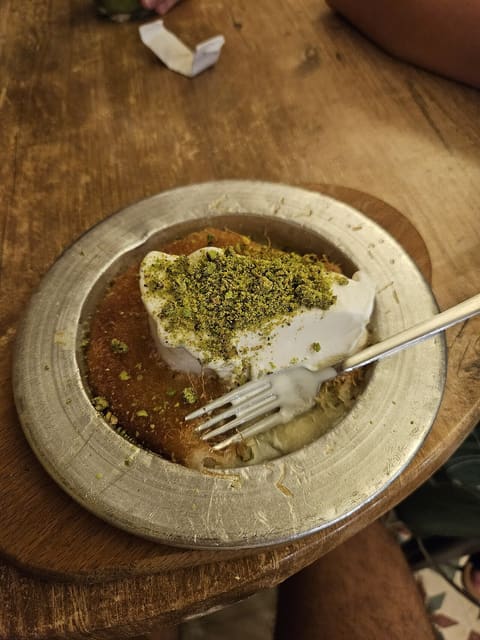
Each method follows published technique for the dish, and every Halal substitution is checked against the ingredient pages we cite. Photographs come from our ingredient library rather than the finished dish.
Why Halal checks matter here
Knafeh's Nabulsi, Akkawi and mozzarella cheeses are all set with rennet, which may be animal rennet from non-Halal slaughter; the pastry, syrup and nuts are not the issue.
Knafeh is shredded pastry, butter and syrup around a soft white cheese that stretches when it is hot. Nothing in the pastry, syrup or pistachios needs checking. The cheese does: Nabulsi and Akkawi, the traditional cheeses, and mozzarella, which many cooks outside the Levant use for its stretch, are all set with rennet. The knafeh page explains why that is the only Halal question in the dish.
So choose the cheese by its label. Mozzarella and Akkawi-style cheeses made with microbial or vegetable rennet are widely sold, and a Halal mark settles it. Ricotta, which softens the filling, is usually set with acid rather than rennet, but read the pack. The rennet and cheese pages cover the scholarly views on animal rennet if the label doesn't say.
The method follows The Cooking Foodie's kunafa: buttered kataifi, a mozzarella and ricotta filling, and cold rose or orange-blossom syrup poured over the hot pastry. If you would rather avoid cheese altogether, the cream-filled version, with ashta, is the other classic.
Halal-critical ingredients
- Cheese Nabulsi, Akkawi and mozzarella are set with rennet; animal rennet from a non-Halal-slaughtered calf is where scholars differ. A pack naming microbial or vegetable rennet, or a Halal mark. See Cheese and Rennet.
- Ricotta Most ricotta is set with acid and heat, but some is made with rennet. Read the label; if it lists rennet, apply the same check.
- Butter or ghee Butter and pure ghee are Halal; some catering 'ghee' blends add animal fats. Butter, or ghee that lists only milk fat. See Ghee.
Safe substitutes
- Animal-rennet Nabulsi, Akkawi or mozzarella → Mozzarella or Akkawi-style cheese made with microbial or vegetable rennet The published method already uses mozzarella; the swap is choosing it by its rennet.
- The cheese filling altogether → Ashta (thick set cream) or a semolina-milk cream The knafeh page notes cream-filled knafeh avoids the cheese question.
Allergens
gluten, milk, nuts (pistachio)
Ingredients
Syrup
- 125 g (½ cup + 2 tbsp) sugar
- 240 ml (1 cup) water
- 5 ml (1 tsp) lemon juice
- 2.5 ml (½ tsp) rose water or orange-blossom water
Pastry and filling
- 340 g (12 oz) kataifi (shredded filo), thawed if frozen
- 155 g (⅔ cup) unsalted butter or ghee, melted
- 140 g (5 oz) low-moisture mozzarella made with microbial or vegetable rennet (or Halal-certified), grated
- 140 g (5 oz) ricotta (check the label for rennet; many are acid-set)
- 35 g (¼ cup) roasted pistachios, chopped
Nutrition per serving
Estimated for 1 of 8 servings.
| Calories | 440 kcal |
|---|---|
| Fat | 27 g |
| of which saturates | 15 g |
| Carbohydrate | 40 g |
| of which sugars | 16 g |
| Fibre | 1 g |
| Protein | 10 g |
| Sodium | 350 mg |
Calculated from the metric quantities in the ingredient list, divided by 8, using USDA FoodData Central values for each raw ingredient. Cooking losses aren't modelled and brands differ, so these are estimates, not a lab analysis.
Where the list offers a choice, the first option is counted.
Orange-flower, rose or kewra water is counted as water.
Kataifi is counted as USDA phyllo dough, the nearest entry.
How each ingredient was counted
| Ingredient | USDA food | Counted |
|---|---|---|
| sugar | Sugars, granulated | 125 g |
| water | Beverages, water, tap, drinking | 240.2 g |
| lemon juice | Lemon juice, raw | 5.2 g |
| rose water or orange-blossom water | Beverages, water, tap, drinking | 2.5 g |
| kataifi | Phyllo dough | 340 g |
| unsalted butter or ghee | Butter, without salt | 155 g |
| low-moisture mozzarella made with microbial or vegetable rennet | Cheese, mozzarella, whole milk, low moisture | 140 g |
| ricotta | Cheese, ricotta, whole milk | 140 g |
| roasted pistachios | Nuts, pistachio nuts, raw | 35 g |
Method
- Syrup first. Boil the sugar and water, then simmer for 5–6 minutes. Stir in the lemon juice and rose or orange-blossom water and leave to cool completely. Cold syrup on hot pastry keeps the knafeh crisp.
- Butter the kataifi. Heat the oven to 190 °C (170 °C fan). Pull the kataifi strands apart, cut them shorter with scissors, and work the melted butter or ghee through with your fingers until every strand is coated.
- Layer. Press half the kataifi firmly into a 23 cm round tin. Mix the grated mozzarella and ricotta and spread it evenly, leaving a 1 cm border. Cover with the rest of the kataifi and press down.
- Bake. Bake for 25–30 minutes until deep golden underneath and on top. (Stovetop alternative: cook in a 23 cm non-stick frying pan over medium heat for about 5 minutes a side, flipping with a plate.)
- Syrup and serve. Turn out onto a plate, pour the cold syrup evenly over the hot knafeh, scatter with pistachios and serve warm while the cheese still stretches.
How this recipe was researched
Method specified editorially from The Cooking Foodie's kunafa (kataifi, butter, mozzarella and ricotta, sugar syrup with rose or orange-blossom water), with the cheese specified by rennet, plus this site's Knafeh, Cheese, Rennet and Ghee pages. Timings follow published technique rather than a kitchen test.
Technique and ingredient sources
-
The Best Kunafa (Knafeh) Recipe — The Cooking Foodie
Retrieved:
340 g kataifi, 155 g butter, ricotta and mozzarella filling, sugar syrup with lemon and rose or orange-blossom water; 23 cm pan, 5 minutes a side or 190 °C for 25–30 minutes. Notes that traditional recipes use Akkawi or Nabulsi.
-
Knafeh analysis — isithalal.food
Retrieved:
The cheese's rennet is the one thing to check; cream-filled versions avoid it.